UNESCO Adds Normandy D-Day Beaches and Cathar Castles to World Heritage List
France added two sites to UNESCO's World Heritage List in summer 2026: the Normandy D-Day landing beaches and the Capetian fortresses of Languedoc, popularly known as the Cathar castles.
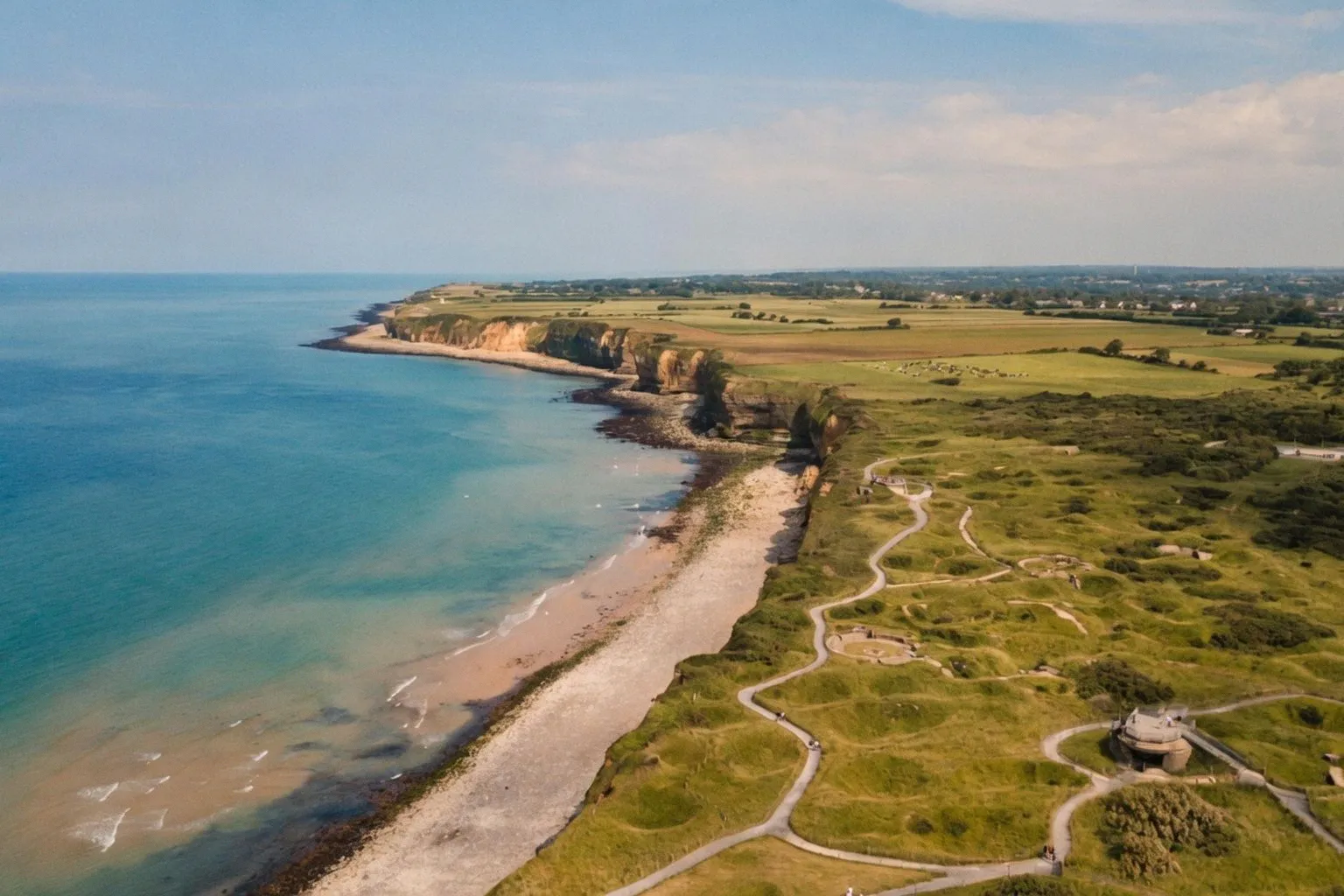
France now holds 56 inscribed properties, with the D-Day inscription formally recorded on 26 July. For a Dordogne gite guest, the audit question is not prestige — it is distance, footfall, and what the new buffer rules actually change on the ground.
What was inscribed, in measurable terms
The Normandy designation covers roughly 80 km of coastline in the Bay of the Seine. The inscribed zone includes the five codenamed beaches — Utah, Omaha, Gold, Juno, Sword — plus the Pointe du Hoc assault site, surviving elements of the German Atlantic Wall (bunkers, artillery batteries, fire-control posts), and the American Cemetery at Colleville-sur-Mer.
The Languedoc entry is a serial property of eight component sites: Carcassonne and seven hilltop fortresses — Aguilar, Lastours, Montségur, Peyrepertuse, Puilaurens, Quéribus, Termes — built under Capetian command during the 13th and 14th centuries following the Albigensian Crusade (1209–1229). The official justification stresses the fortresses' adaptation to topographical constraints and their role in establishing royal territorial control — language worth reading for what it implies about future buffer enforcement around the sites.
Distance and operational impact from a Dordogne base
A Sarlat or Périgueux gite places both sites within reach, but on sharply different timetables. Bordeaux-based travel press frames the Cathar fortresses as a three-hour run from the city; the Dordogne adds another 90 minutes minimum, pushing the closest component sites (Termes, Aguilar) to a four-hour leg one-way. Normandy beaches sit seven hours or more north via the A20 and A10 — a full driving day each way.
Three operational variables worth tracking after designation:
- Footfall. UNESCO status spikes first-season visitor counts. Normandy was already busy; the inscription worsens peak-season congestion. Expect saturated parking at Colleville-sur-Mer by late morning in July and August, with slow movement on the D517 coastal road. The Cathar fortresses, particularly Montségur and Quéribus, attract concentrated traffic in high season.
- Buffer-zone rules. The Connexion reports that the Normandy inscription has placed a proposed coastal wind farm under renewed scrutiny — a usable signal that future development in or near the inscribed perimeter will face tighter review, with implications for sightlines and any holiday accommodation stock built inside the buffer.
- Ticket economics. Per Bordeaux Secret, individual admission to most Cathar fortresses stays under €10. That figure is the floor, not the ceiling: a complete pass of all eight component sites in a single trip runs at a multiple of it, and Carcassonne's Château Comtal sits on a separate pricing tier. Confirm multi-site tariffs on arrival.
Verdict
As auditor, the call is binary. The Cathar castles justify a two-night detour from a Dordogne rental, provided the gite turnover day falls mid-week and the party accepts a four-hour drive in each direction. Outside that window, the math deteriorates. Treat Normandy as a standalone trip, not a side excursion — budget a full week and a separate booking. Anything shorter compresses on-site time below acceptable thresholds, particularly at Colleville-sur-Mer where visit windows are already narrowed by footfall.