Exploring Rural Heritage: A Professional Guide to Historic Mills and Farmsteads
The 2026 European Heritage Days run September 19–20, with a dedicated programming track spotlighting rural heritage sites, agricultural mills, and traditional farm buildings, according to Sortiraparis.
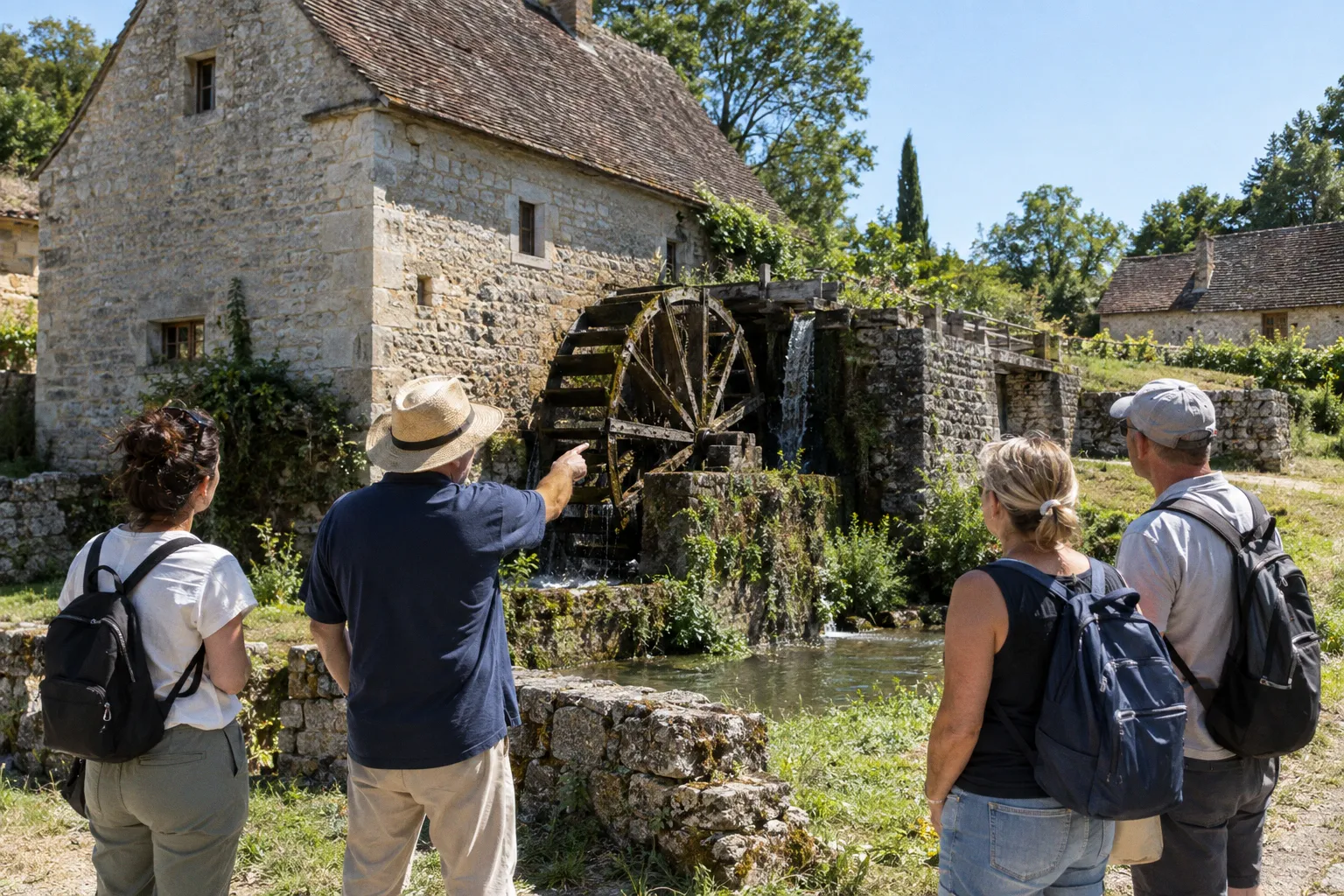
The weekend opens the doors of properties that are normally closed to the public — exactly the inventory profile a gite buyer or auditor needs: heavy oak framing, working water wheels, restored wood-fired ovens. For anyone sourcing renovation material or benchmarking conversion potential in Dordogne and Aquitaine, this is a free survey weekend.
What the rural track covers
The featured programming moves away from formal ministerial architecture and into working countryside: farmsteads built of honey-colored meulière rubble or local limestone, monumental dîmières granaries with nave-like bays, and watermills along the Essonne, Marne, and Yvette valleys. At Domaine de La Bouche du Roi in Yvelines, vineyard tours and tastings run alongside architectural commentary. At Moulin d'Ors in Châteaufort, a 19th-century wheat mill in the Chevreuse valley opens for visits. At Moulin de Russon in Bussy-Saint-Georges and at Moulin de la Tour in Ivry-sur-Seine, water-wheel mechanics are exposed to public view.
These are not staged open days. Volunteer associations, craftspeople, and tenant farmers provide site access, and several sites allow direct contact with the millers and operators currently running the structures. That matters when measuring thermal mass, load-bearing behavior, and footfall tolerance of period construction — visual inspection at this level of detail is normally unavailable during a commercial stay.
Practical uses for a Dordogne auditor
Heritage Days is a working reference, not a tourism brochure. For an inspector screening rural Aquitaine stock, the weekend offers three uses: calibrate regional conversion costs against visible substrate (limestone versus meulière equivalent); benchmark typical square-meterage per restored outbuilding; and observe which associations actually run the site — a proxy for ongoing maintenance liability.
The Paris municipal program, published by the Mairie de Paris, is less directly relevant to a Dordogne brief but useful for one data point: the City is opening its archaeological storage facilities in the 18th arrondissement for guided tours, covering roughly 800 m² of artifact storage. That figure is a usable benchmark when sizing an evidence room or insurance documentation vault on a heritage conversion.
What to verify before booking
Three checks before committing time. Registration is mandatory at several sites, including the Hôtel de Ville tour in Paris, where capacity is capped. Operating hours vary by site, and some rural properties only open one of the two days. Volunteer-run sites typically publish last-minute schedule changes on local municipal pages rather than national aggregators.
For an investor in converted rural stock, the binary read on this weekend: high value if treated as a reconnaissance pass, marginal value if treated as leisure.