Protecting the last citadels: Chinese, French heritage guardians join hands
As reported by Xinhua, Chinese and French heritage volunteers are continuing a long-running conservation programme in Yunshan Tun, a mountain settlement in Guizhou marked by roughly 600-year-old stone fortresses.
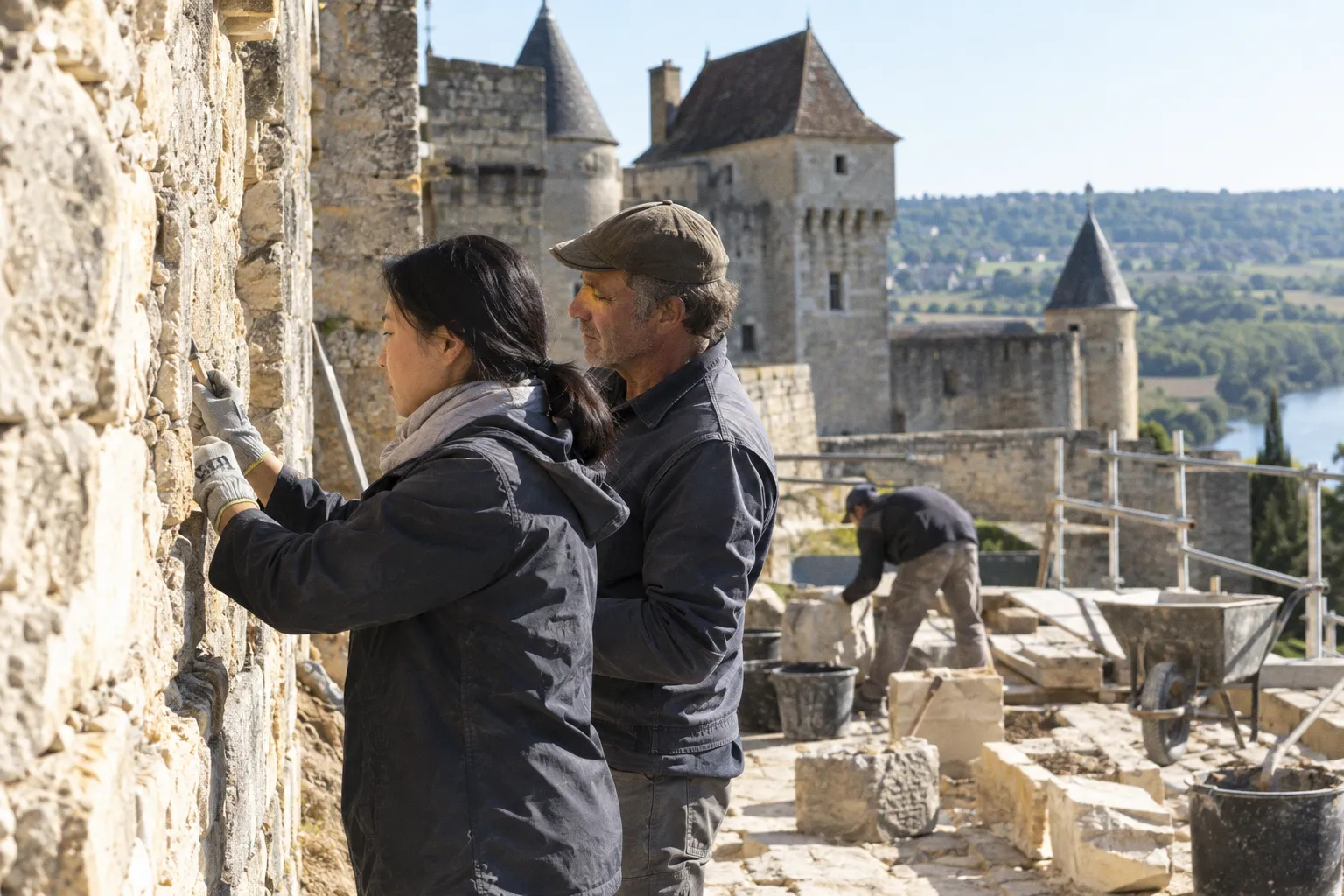
The work is practical rather than ceremonial: roof tiles, damaged walls and heavy timber beams are handled alongside local craftsmen. For visitors interested in Dordogne’s fortified villages and rural houses, the useful point is narrower than the headline suggests: heritage value is being measured here through surviving materials, construction methods and continued occupation.
Conservation is a building-site activity
The Yunshan Tun workcamp is organised by Guizhou architect Yue Jian with REMPART, a French heritage conservation volunteer network. According to Xinhua, international volunteers have taken part for nearly a decade, staying for two weeks or more and working with local craftsmen and construction teams.
The reported figures are substantial. More than 10 years of conservation workcamps have involved 429 volunteers from China and other countries, including 98 foreign volunteers. Fifty French volunteers have participated in the Tunpu workcamp. In the latest reported season, participants removed old roof tiles, cleared damaged walls and moved timber beams.
This is not the polished version of heritage commonly presented in accommodation marketing. It involves footfall through active work areas, heavy materials, exposed masonry and the slow correction of structural damage. The physical fabric comes first. Visitor access and visual presentation are secondary.
For anyone assessing a historic gite or village stay, that distinction matters. A restored building should be judged by what remains load-bearing, how old materials have been retained, and whether the building is still part of a lived settlement. A freshly pointed façade is not, by itself, evidence of competent conservation.
Stone, timber and the military plan
Yunshan Tun forms part of Guizhou’s Tunpu settlements, military fortress villages built during the Ming Dynasty between 1368 and 1644. The garrisons combined residential use, farming and frontier defence. Most of the settlements are concentrated around Anshun, less than 100 kilometres from Guiyang.
The construction is more specific than the generic label “traditional village” implies. Xinhua describes extensive stone walls combined with wooden structures, a response to the area’s military history. The region has consequently acquired a reputation as a “kingdom of stone”.
One house in the programme covers 128 square metres over two floors and stands on the site of a Ming Dynasty military outpost. That measurement is useful because it places the conservation in a real domestic footprint rather than an abstract monument. The work concerns houses with roofs, walls and internal spaces, not only defensive ruins.
The wider Chinese-French cooperation has also extended to ancient temples, walls and houses in other locations, including Pingyao in Shanxi and sites in Fujian. Xinhua reports that the Pingyao workcamp has been included in the UNESCO World Heritage Volunteers initiative. In Guizhou, the programme has helped repair 13 centuries-old houses.
What the Dordogne visitor should take from it
This report does not establish a new conservation project in the Dordogne, nor does it provide a direct link between Yunshan Tun and local French accommodation. Its relevance is methodological.
When a Dordogne property is described as historic, check the building rather than the adjective. Look for the relationship between masonry and timber, the condition of roof structures, signs of recent rebuilding, and whether the house is integrated into an inhabited village or isolated as a decorative rental object. Examine access as well: active conservation and fragile historic fabric rarely combine well with unrestricted circulation.
The Chinese-French programme also shows why heritage work cannot be reduced to façade retention. Volunteers are learning traditional craft skills while contributing physical labour under local direction. The reported model depends on duration, repetition and cooperation with craftsmen. Those are slow inputs. They do not produce instant visual results.
For Dordogne travellers, the practical verdict is binary: choose a historic stay because its construction and setting withstand inspection, not because its brochure uses the word heritage. Heritage is credible when the walls, roof and village plan support the claim.