Dordogne Valley Cycle Routes: Which Path Fits Your Style?
The best cycling Dordogne valley route options are not separated by scenery so much as by effort.
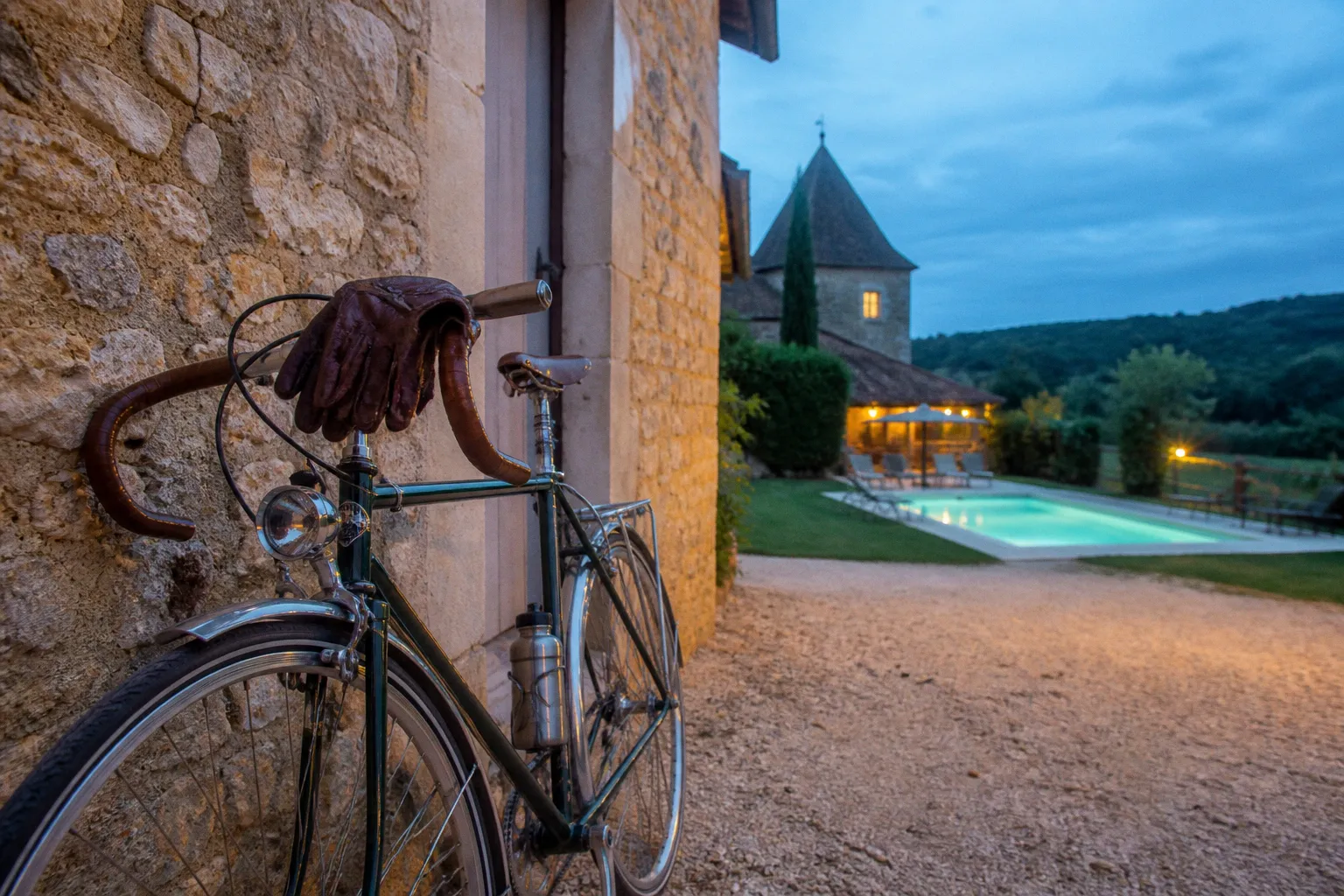
One route may give you a quiet riverside day with a picnic in the pannier; another may look gentle on the map before delivering a sharp climb into a medieval bastide. Both belong to the same Dordogne landscape, but they ask very different things of your legs, your bike, and your timing.
That distinction matters when you are planning a cycling holiday in the Dordogne. Families, leisure riders, e-bike users and experienced tourers can all find a satisfying route here, provided they choose the right starting point. The flat Voies Vertes are usually the easiest entry into the valley, while routes towards places such as Domme trade physical yield for high views, old stone streets and the particular satisfaction of earning your lunch.
The practical question is not simply which path is most beautiful. It is this: how much climbing do you want before the first coffee, and how much route-finding are you prepared to do after it?
Start with the landscape: valley floor or hilltop?
The Dordogne is generous to cyclists because its geography offers two quite different kinds of riding within a relatively compact area. Along the river and former railway corridors, the terrain can be smooth, quiet and forgiving. Once you turn towards the hilltop villages and bastides, the rhythm changes: gradients arrive, roads become more exposed to ordinary traffic, and a short distance on the map can take much longer than expected.
This is the first misconception to put aside: the Dordogne is not one continuous, flat cycle playground. The riverside paths may be comfortably level, but the famous villages above the valley were built for defence, not for easy access by bicycle.
Domme is the clearest example. Reaching the bastide involves a steep ascent from the valley, and the return journey is not necessarily a simple coast back down if your route continues across the plateau. An electric bike can change the calculation, especially for riders who want to combine the climb with a full day of sightseeing, but it does not remove the need to manage heat, water and braking on the descent.
Before choosing a route, weigh up these practical differences:
- Riverside greenways suit relaxed riders, families and anyone who wants the day to revolve around scenery, swimming and lunch rather than elevation gain.
- Hilltop village loops suit stronger cyclists and e-bike riders who enjoy a defined physical challenge with a cultural reward at the top.
- Long-distance routes work best for visitors treating the journey itself as the main activity, with careful attention to accommodation, luggage and recovery.
- Short family sections are easier to fit around markets, canoeing, pool time and the unpredictable energy yield of younger riders.
A route is only successful if everyone arrives at the next stop with enough reserve to enjoy it. That may sound obvious, but it is where many cycling days go wrong: the morning ambition is based on distance, while the afternoon is governed by gradient, temperature and the number of stops nobody planned for.
In the Dordogne, the distance on the signpost tells only half the story; the other half is whether the route stays beside the river or climbs towards the stone villages.
The Voies Vertes: the easiest way into Dordogne cycling
For most visitors, the dedicated greenways are the soundest starting point. The French term Voie Verte refers to a route designed for non-motorised travel, although the precise surface and surroundings vary from one section to another. These paths are particularly useful when you want a cycling day that can include children, a mixed-ability group or a leisurely stop every few kilometres.
The V91 includes a 40-kilometre greenway stretch between Prigonrieux and Mauzac, following the banks of the Dordogne. That is long enough to create a proper day out, but you do not need to treat the full distance as a target. A shorter out-and-back ride often works better for holiday groups, because it leaves space for a market visit, a riverside lunch or an unplanned swim when the afternoon becomes warm.
The route’s greatest strength is its adaptability. You can make it:
- a gentle morning ride followed by a long lunch;
- a return journey with one planned turning point;
- a longer training day for a confident cyclist;
- part of a wider itinerary linking cycling with the valley’s villages and river activities.
The former railway line between Sarlat-la-Canéda and Cazoulès offers a similar advantage. The Sarlat to Cazoulès Voie Verte runs for approximately 23 to 35 kilometres, depending on the section being used and the way your itinerary is arranged, passing through walnut groves and riverside countryside. Because it follows a converted railway corridor, the character is generally more measured than a road route over the surrounding hills. You are not constantly deciding whether the next bend will turn into a climb.
This makes it one of the best cycle routes in the Dordogne for riders who want a sense of progress without a full mountain-style effort. The former railway setting also gives the ride a useful visual rhythm: woods, open farmland, villages and valley views arrive in sequence rather than all at once.
What to plan before setting out
A greenway is not a guarantee that every service will be open exactly when you need it. Small villages may have limited opening hours, and a café stop that looks obvious on a map may be closed outside the main season. Carry enough water for the section you have chosen, particularly in the warmer months, and do not rely on finding a shop at the precise moment your youngest rider decides the snacks have disappeared.
A simple packing list is usually enough:
- water for the full planned section rather than only the next stop;
- food that tolerates warmth and movement in a pannier;
- a light layer for the return ride;
- basic puncture equipment and a charged phone;
- sun protection, even when the morning begins cool;
- lights if there is any chance of returning later than planned.
The same practical thinking applies to luggage. If you are moving between gîtes, keep the day’s riding separate from the main bags whenever possible. A small pannier or handlebar bag is easier to manage than a fully loaded touring setup on a route intended for a light leisure ride.
River paths versus hilltop climbs
A comparison is most useful when it acknowledges what each option gives you and what it costs. Flat riverside cycling is not a lesser version of the Dordogne experience; it simply places the emphasis on continuity, conversation and the landscape at eye level. Hilltop routes deliver wider views and historic villages, but they demand more from the day.
| Route style | Best for | Main reward | Main demand | Planning note |
|---|---|---|---|---|
| V91 riverside greenway | Leisure riders, families, mixed groups | Long stretches beside the Dordogne with limited route stress | Distance management and heat | Choose your own turning point rather than assuming you must ride all 40 km |
| Sarlat–Cazoulès Voie Verte | Riders who want a longer, steady outing | Former railway line through walnut groves and countryside | Endurance over a sustained distance | Useful for a full day with a planned lunch stop |
| Domme and other bastide climbs | Strong cyclists and e-bike riders | Hilltop views, medieval streets and a clear sense of arrival | Steep ascent and a careful descent | Treat elevation, not kilometres, as the day’s main measure |
| Lalinde Canal Voie Verte | Families and relaxed short rides | Flat, manageable riding near the Tuilières dam | Limited distance compared with a full touring route | The 9 km stretch works well as part of a wider day |
| Céou Voie Verte | Families avoiding busy main roads | Dedicated car-free riding near Saint-Cybranet and Castelnaud-la-Chapelle | A shorter, local outing rather than a grand crossing | Pair it with village visits or another nearby activity |
| La Flow Vélo | Experienced tourers | A 400 km journey from Sarlat-la-Canéda to Île d’Aix | Multi-day preparation, luggage and route stamina | Plan stages around accommodation and recovery, not just daily distance |
The table shows why the phrase best cycle routes Dordogne is slightly misleading. There is no single best route without knowing the rider. The V91 may be the best choice for a family with two different cycling speeds, while the climb to Domme may be the highlight for a fit couple on e-bikes. A route’s value is created by the match.
When the climb is worth it
There are days when a flat path is exactly what you need, and there are days when you want the landscape to change under you. The hilltop bastides belong to the second category.
A climb towards Domme or another elevated village gives the ride a more pronounced structure. You begin in the valley, work through the ascent, arrive at a place with a different relationship to the surrounding countryside, and then decide whether the return is a direct descent or part of a larger loop. The views are the obvious reward, but the practical pleasure is also in the contrast: the cool, enclosed streets of the village after the exposed effort of the road; a shaded drink after the final bend; the appetite created by the climb.
The key is to stop treating a hilltop visit as a small detour. It is not. Even a modest-looking ascent can alter the whole day’s timing, particularly if the weather is warm or the group includes riders with different levels of experience.
Plan the climb as you would plan a proper outdoor activity:
1. Start earlier than feels necessary. Morning temperatures are usually kinder, and an early departure gives you more flexibility if the ascent takes longer.
2. Reduce the day’s distance elsewhere. Do not combine a demanding climb with a long flat mileage target simply because both appear on the same map.
3. Carry food and water before the ascent. Shops and cafés are not guaranteed to appear at the point where the gradient becomes serious.
4. Leave time for the descent. Descending is physically different from climbing and deserves concentration, especially on unfamiliar roads.
5. Build in a proper stop at the top. The climb is not only a technical obstacle between two villages; it is the centrepiece of the day.
An e-bike can be an excellent bridge between ambitions. It allows a less confident rider to join a group without turning the entire route into a test of strength. It also makes it possible to enjoy the plateau and the descent without arriving at the village too depleted to walk through it. The battery, however, becomes part of your route planning. Assistance level, temperature, rider weight and gradient all affect the yield of a charge, so a hilltop route should never be planned on the assumption that the final bars will behave like the first ones.
If your accommodation has secure storage and a place to recharge bikes, that can make a substantial difference to the ease of a multi-day itinerary. A gîte with room to rinse dusty tyres, dry kit and store bikes away from the midday sun is not a minor luxury after a full day outdoors; it is part of the practical infrastructure of a cycling holiday.
The long-distance choice: La Flow Vélo
For riders who want the route itself to define the holiday, La Flow Vélo offers a much larger undertaking. The national route V92 starts in Sarlat-la-Canéda and continues for 400 kilometres to the Atlantic coast at Île d’Aix. Across the full route, the total ascent is listed at 2,115 metres.
Those figures change the nature of the planning. This is no longer a day ride with a flexible turning point. It is a sequence of decisions about stage length, luggage, accommodation, food, bike maintenance and recovery. A long-distance route can be wonderfully absorbing, but it leaves less room for improvisation when one stage finishes later than expected.
The total elevation is spread across a long journey rather than concentrated into one mountain day, yet that does not mean every section feels equally easy. The route’s character varies, and individual stages should be chosen according to the riders rather than divided into identical daily distances.
A sensible approach is to decide which kind of touring experience you want:
- A point-to-point journey, where you move on each night and accept the discipline of carrying or transferring luggage.
- A base-led cycling holiday, where you ride selected sections and return to one gîte, keeping the rest of the holiday flexible.
- A hybrid itinerary, with several riding days interrupted by pool time, markets, canoeing or village visits.
The third option often suits visitors who want active holidays in France without turning every morning into a departure day. The Dordogne rewards a slower pattern: ride while the temperature is comfortable, return for a late lunch or a swim, and keep the evening for a market, a simple supper or a walk through a nearby village.
For riders choosing a multi-day section, accommodation should be assessed from the bicycle outward. The most convenient gîte is not necessarily the one with the shortest driving distance to a famous town. Consider whether there is somewhere secure for the bikes, whether kit can dry overnight, whether breakfast timing fits an early start, and whether the final kilometre to the property is itself a steep climb. A charming rural location can become a daily nuisance if every return involves pushing a loaded bike up a narrow lane.
A successful cycling holiday has a recovery plan hidden inside it: shade, water, dry kit, secure bike storage and one day that does not need to prove anything.
Short family routes: Lalinde Canal and the Céou
Families often need a route with a clear end point rather than an impressive total distance. The Lalinde Canal Voie Verte covers a flat 9-kilometre stretch beginning near the Tuilières dam, making it a useful choice when the day needs to remain manageable. Nine kilometres can be ridden as a straightforward outing, but it also leaves room for a picnic, a second activity or the inevitable pause to investigate something beside the path.
Its scale is part of its strength. Younger riders can understand the distance, adults can keep the pace relaxed, and nobody has to make a dramatic decision at the halfway point about whether the group has enough energy to get home. If the family is staying at a gîte with a pool, this type of ride also fits neatly around swimming: a morning outdoors, a return before the hottest part of the day, and an afternoon with no further logistical demand.
The Voie Verte du Céou provides another family-friendly option near Saint-Cybranet and Castelnaud-la-Chapelle. Its dedicated route helps families avoid busy main roads, which is often more valuable than shaving a few kilometres from the itinerary. Children may be perfectly capable of riding farther than expected, but that does not mean they are comfortable sharing every road with traffic. A calmer path allows adults to pay attention to the scenery and the group rather than constantly managing road position.
These local routes are particularly easy to combine with other outdoor recreation in the Southwest France countryside:
- cycling in the cooler part of the day;
- a canoeing or kayaking trip on a suitable river section;
- a village or château visit;
- a picnic beneath walnut trees;
- an afternoon at the pool;
- a market stop for bread, fruit and local cheese.
That combination is often more satisfying than scheduling one large sporting objective. Active holidays do not need to be measured by exhaustion. A child who cycles comfortably, eats lunch outdoors and still has energy for a swim has had a successful day, even if the route was shorter than the adults first imagined.
Timing the ride: March to November, with a summer adjustment
The recommended cycling season in the Dordogne Valley runs broadly from March to November, while the strongest weather window for cycle touring is generally May to October. That longer season is useful because different months offer different advantages.
In March and April, the countryside can be particularly rewarding for riders who prefer cooler conditions and do not need every café or seasonal service to be operating. The days may require more flexible packing, with a light waterproof layer and clothing that can handle a sharp change between morning and afternoon.
May and June are often well suited to longer rides. The heat is usually more manageable than at the height of summer, and a strong cyclist can plan a route with more confidence around the middle of the day. These months are also comfortable for combining cycling with walking trails, canoeing and time beside the pool.
July and August require a different rhythm. A route that feels moderate on a spring morning may become unnecessarily punishing when ridden in the afternoon heat. Set off early, protect the midday recovery window and avoid interpreting a clear sky as an invitation to extend the ride indefinitely. The storage temperature of your food matters too: chocolate, soft cheese and some picnic items do not remain pleasant in a hot pannier, while sturdy bread, fruit and well-wrapped savoury provisions travel more reliably.
September and October can be excellent for riders who want warm days without building the entire itinerary around peak summer conditions. It is still sensible to check opening arrangements locally and to keep a little flexibility in the plan, particularly if your ride depends on a seasonal café or bike service.
By November, the route may remain rideable, but the practical balance shifts. Shorter daylight, cooler weather and reduced seasonal availability make shorter outings more attractive than ambitious touring stages.
The daily harvest window
Think of the riding day in terms of a harvest window: there is a period when the conditions are most productive, and the rest of the day should support rather than undermine it.
For a summer family ride, that may mean:
- breakfast and departure in the cooler morning;
- the main route before midday;
- a long lunch in shade;
- a return to the gîte for rest or swimming;
- a short evening walk rather than another demanding excursion.
For a stronger rider, the window may be longer, but the principle remains. The Dordogne is not a place where you need to collect every possible kilometre. A well-chosen route with time to stop will usually give you more of the valley than a rushed itinerary that turns every view into something passed at speed.
Choosing your route by the holiday you want
If you are still deciding among the Dordogne valley cycle paths, start with the holiday rather than the map.
Choose the V91 if you want a flexible riverside day with the option to ride a substantial distance or turn back early. It is particularly useful for mixed groups because the route can be adjusted without abandoning the landscape.
Choose the Sarlat to Cazoulès Voie Verte if you want a longer, steady ride through walnut groves and countryside, with the character of a former railway line rather than a road-heavy tour.
Choose the Lalinde Canal Voie Verte for a compact family outing or a gentle addition to a day that already includes another activity.
Choose the Céou Voie Verte when avoiding busy roads is a priority and you want a dedicated route near Saint-Cybranet and Castelnaud-la-Chapelle.
Choose a Domme or bastide loop when the climb is part of the attraction rather than an inconvenience. Allow extra time, carry water from the start and judge the route by elevation as much as distance.
Choose La Flow Vélo when you want a genuine touring project, are comfortable organising several stages and are prepared to let accommodation and recovery shape the itinerary.
The most useful final tip is to reserve one route for your strongest day, not your first day. Let your legs settle, learn how your group handles the heat and distance, then choose whether the next outing should be a flat greenway, a hilltop challenge or a longer section towards the coast. That small adjustment gives your cycling holiday a better yield: fewer forced decisions, more time for the valley, and enough energy left to enjoy what waits at the end of the road.