La Roque-Gageac: Navigating the Dordogne’s Most Dramatic Riverside Village
La Roque-Gageac delivers what its brochures promise, though not without trade-offs.
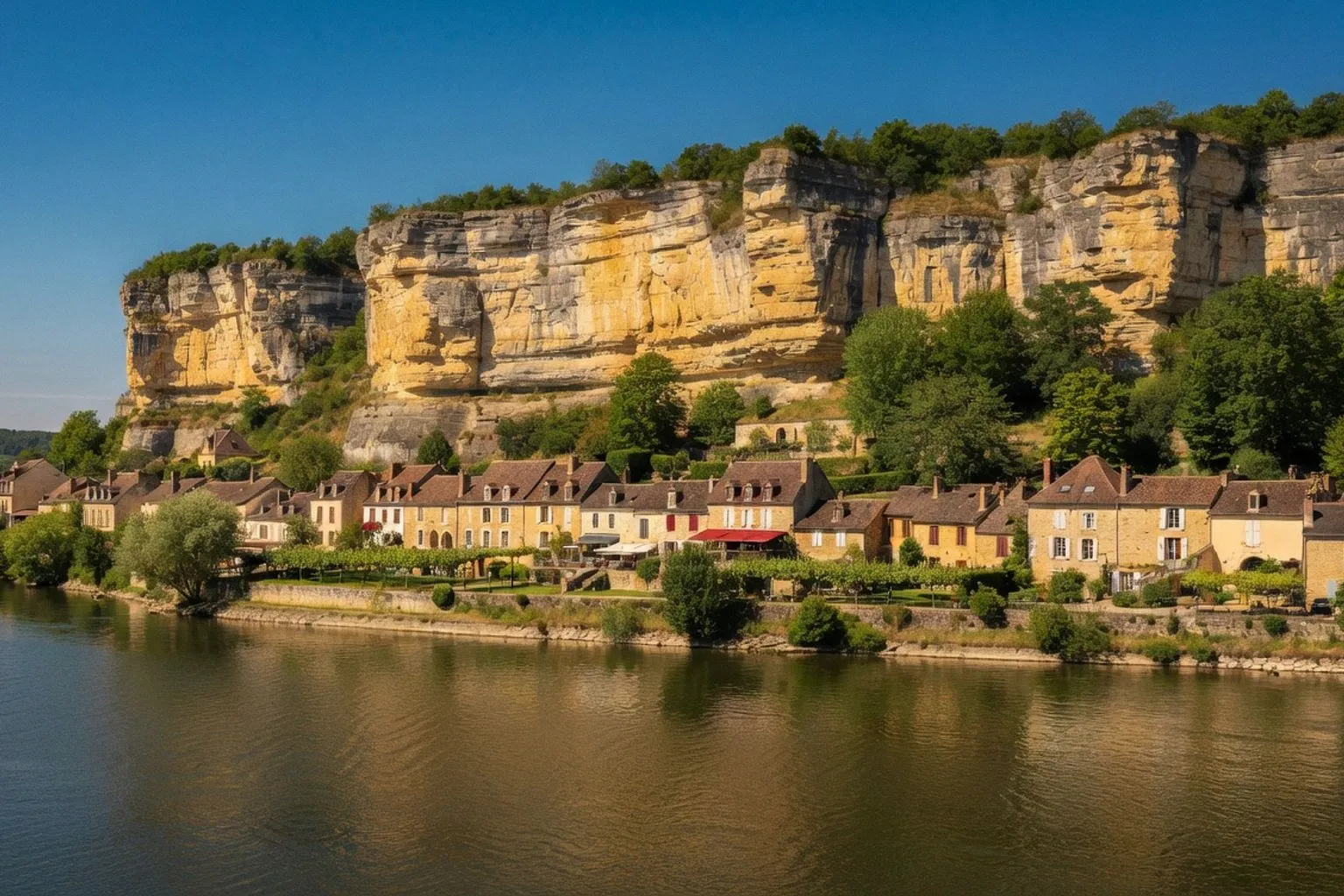
According to a recent feature from Journée Mondiale, the village sits compressed between a 394-foot limestone cliff and the Dordogne itself, with pale stone houses pressed against the rock face in Périgord Noir, roughly 7.5 miles from Sarlat-la-Canéda via the D703. For self-catering visitors with a gite as a base, this is the valley's most efficient day out — provided the logistics are read correctly.
The geometry of the site
This is not a sprawling medieval town. It is a single linear settlement, pinched between water and wall, with the river on one side and the cliff on the other. The cliff faces due south, which produces an unexpected microclimate: palms, bamboo, and Mediterranean species appear beside traditional blond masonry and lauze roofing. For guests arriving by car, the practical consequence is clear. The riverside parking fills quickly in peak summer, and late arrivals end up parked further uphill, walking back down stepped lanes to reach the quay.
The narrowness carries measurable limits. Some lanes slope upward; the ascent to the troglodyte fort — built directly into the rock and tracing back to a medieval defensive system — includes stairs and inclined passages. Visitors with mobility concerns should stay at river level and read the village from below. The fort itself offers little in the way of interior content. Its main asset is the overlook across the valley, where the river's curve and the settlement pinned beneath the cliff become legible. Plan the climb before midday heat sets in.
Scheduling the day
The gabarre cruise — a traditional flat-bottomed boat, once used for wood, wine, and other goods along the Dordogne — runs roughly one-hour circuits and places the village in its correct context. From the water, the reason for the tight building footprint becomes obvious. Reservations for specific departure slots can require advance planning in July and August, but the boats generally run on flexible timing outside peak hours.
A producers' market runs Friday mornings at the foot of the village from May through September. For guests in surrounding gites, this is the timing anchor: arrive Thursday evening, walk the market before the D703 gets busy, then move on to the boat or the fort.
At street level, three structures carry the cultural weight: the Manoir de Tarde, Notre-Dame church, and Château de la Malartrie across the river. None demands more than a brief stop. The day scales cleanly by adding Castelnaud-la-Chapelle, Beynac-et-Cazenac, or the gardens of Marqueyssac as a valley extension.
Verdict for self-catering guests
May, June, and September are the working months. The south-facing warmth remains, footfall drops, and the village has room to breathe. July and August are a compromise: the place is operational but popular and reservation-dependent.
Allow two to four hours for the lanes, the fort, and a gabarre ride. For a luxury gite base in the Périgord Noir, La Roque-Gageac is a high-value half-day or full-day excursion. The only real variables are parking and timing. Read those correctly and the village delivers.