Planning a Dordogne Harvest Holiday: How Shifting Seasons Impact Your Luxury Gite Stay
Nomad Lawyer's analysis identifies a continent-wide compression of ripening, driven by frost-heat-drought cycles rather than the old seasonal rhythm.
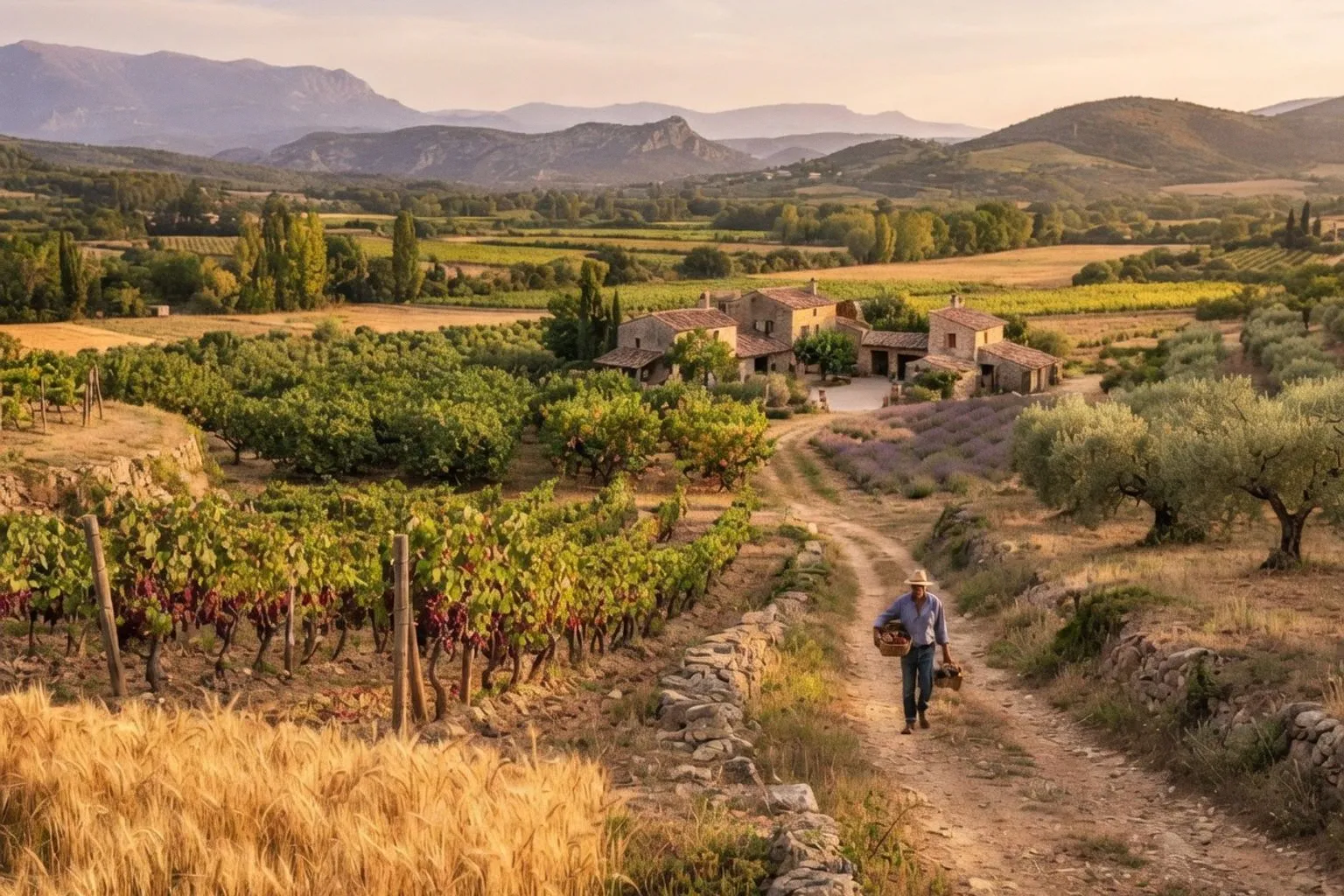
According to Nomad Lawyer's 2026 agricultural data, Spain now accounts for 23.8% of EU vegetable production while Italy leads fruit and nut output at 27.8%. France and Spain are positioned as the structural anchors of a new harvest-tourism calendar. For Dordogne gite operators and their guests, the booking question shifts from "when is the weather good" to "what is being picked within 40 km of the property."
The Calendar Has Moved
The Cool Down reported this week that France's Champagne region opened its official harvest between August 12 and 17, roughly a month ahead of the historical late-September norm. Alexandre Gobillard, production director at Gobillard & Fils, told the Associated Press that four heat waves and a late-March frost compressed the entire picking window. In Hautvillers, a UNESCO World Heritage landscape, crews were in the fields by 6:30 a.m. to protect fruit and workers from midday heat.
That acceleration is not isolated to Champagne. Nomad Lawyer's analysis identifies a continent-wide compression of ripening, driven by frost-heat-drought cycles rather than the old seasonal rhythm. For Dordogne visitors, the practical consequence is that the strawberry window (March–July), the melon run, and the walnut harvest no longer align with the dates printed in three-year-old guidebooks.
What to Verify Before Booking a "Harvest" Gite
Marketing language around "culinary nomads," "harvest trails," and "Slow Travel" is doing heavy lifting across the sector. Audit the listing against these checkpoints:
- Crop claim vs. crop calendar. If a gite advertises truffle hunting in October, confirm the local marché still has fresh truffles at that date. The 2026 shift has pulled some harvests forward by weeks.
- Proximity metric. A working farm within walking distance beats a branded "harvest experience" requiring a 60-minute drive. Measure the actual distance on a map, not the listing's "nearby."
- Thermal mass and pool timing. Earlier heat waves extend the pool-use window but also extend the evening-cooling requirement. A gite with thick stone walls and a shaded terrace outperforms a modern build with thin insulation when August nights stay above 20°C.
- Kitchen capacity. A genuine harvest-led stay requires prep space: large sinks, adequate fridge volume, and a working range. Inspect photos for a domestic-size fridge, not a mini-bar with a kettle.
- Footfall and access. Harvest weekends concentrate visitors at markets and u-pick sites. Check the gite's road access for the September–October walnut and grape window — narrow Dordogne lanes clog quickly.
Verdict on Value
The 2026 data is real: harvests are running 3–4 weeks early in much of southern France, and France holds a structural position in EU production. The marketing overlay is heavier. "Harvest tourism" as a category risks becoming the same off-season filler that diluted "wellness retreats" two seasons ago. Book the property that sits inside a verifiable crop window; skip the one selling the brochure's version of the calendar.