Dordogne Gite Pool Heating Options for Every Season
You’ve booked that perfect stone farmhouse with its own pool in the Périgord. The photos look idyllic, but anyone who’s spent time in the Dordogne valley knows a truth the glossy listings often underplay: the swimming season has edges.
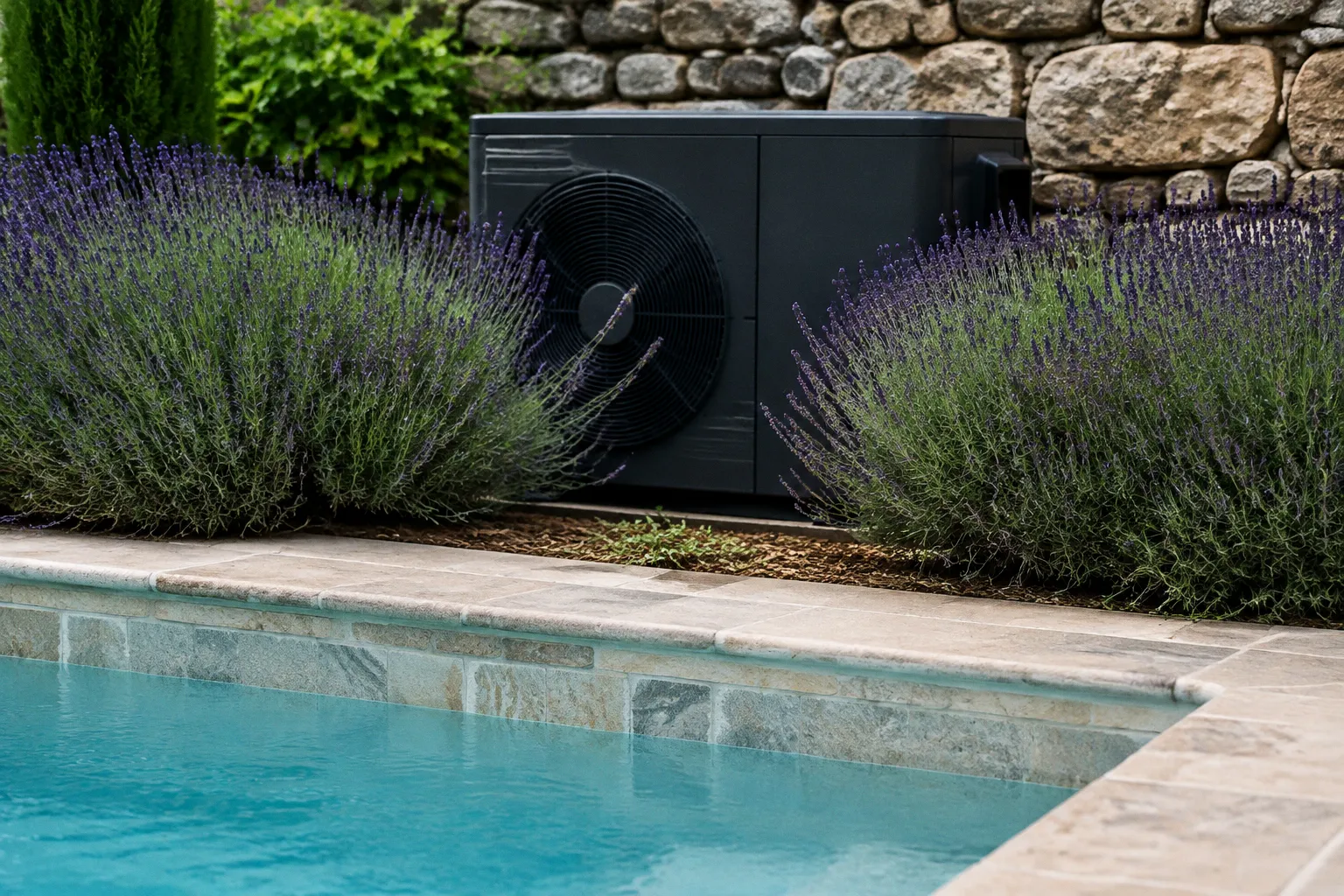
When May Mornings Are Still Too Cool for a Dive
Those shoulder months—April, May, early June, and again in late September and October—hold a particular magic. The crowds thin, the light turns golden, and the markets overflow. But the air at dawn can bite, and an unheated pool sits there, beautiful but bracing.
This is the gap between aspiration and reality for a luxury gite stay. The answer is less about finding one miraculous piece of equipment than understanding how several modest systems work together: the heating method, the pool cover, the amount of sun, the night-time temperature, and the way the owner operates everything between guest arrivals. Your holiday comfort hinges on that combination, not simply on a listing having the words “heated pool” somewhere in its amenities.
For anyone comparing luxury self-catering holiday gites with pools, the useful question is not only whether heating exists. It is whether the system can hold a pleasant temperature during the particular week you want to travel.
The Physics of Shoulder Season Swimming in the Dordogne
Forget abstract averages. The deciding factor is often the night temperature.
In July and August, a Dordogne pool without heating will usually benefit from long, strong days of sunshine. A well-positioned pool may settle into a comfortable 24–26°C, particularly when it is protected from prevailing wind and covered overnight. Step outside that window, however, and the equation changes. A May night that dips to 8°C will pull precious degrees from the water, no matter how bright the following afternoon becomes. The same is true in September, when warm days can sit beside surprisingly cool evenings.
The aim in these months is not tropical heat. It is consistency. For most guests, the comfortable range is around 25–27°C (77–80°F): warm enough for an unhesitating swim, but not so hot that the pool becomes another version of the midday weather. Children, older swimmers, and anyone hoping to use the pool early in the day may prefer the upper end of that range. A couple planning slow morning swims may be content with slightly less, provided the water does not lose several degrees overnight.
The pool’s physical setting matters as well:
- Surface area affects heat loss. A broad, shallow pool loses heat more quickly than a compact pool with less exposed water.
- Wind can matter as much as sunshine. Moving air accelerates evaporation, which is one of the fastest ways for a pool to cool.
- Shade is not always an advantage. A mature tree may create a beautiful terrace, but it can also reduce solar gain and leave the water cooler for longer.
- Depth changes the rhythm of heating. A deeper pool contains more water to bring up to temperature, while shallow areas may warm quickly but cool just as quickly.
- Night-time covering is crucial. A pool that is heated during the day but left open after sunset is being asked to replace heat that has been allowed to escape.
This is where a reliable heating system earns its place. It works not to boil the pool, but to counteract overnight loss and nudge the water temperature up to around seven degrees Celsius above what it would naturally reach, depending on the conditions and the system’s capacity. That distinction matters. Heating is often most valuable when it stabilises the pool rather than attempting to rescue it from a prolonged period of cold weather.
A pool can also feel colder than its displayed temperature. A breeze across wet skin, a shaded terrace, or an air temperature that has not yet caught up with the season will alter the experience. Conversely, a sunny deck and sheltered position can make a pool at the same temperature feel entirely inviting. A dordogne villa pool temperature guide therefore needs to account for more than a number on a control panel. The location, exposure and daily operating routine all shape how usable the water feels.
Air-to-Water Heat Pumps: The Industry Standard for Extended Stays
When a gite is advertised with a heated pool available from spring through autumn, the workhorse behind that promise is very often an air-to-water heat pump. This is not the old-fashioned electric resistance heater that simply turns electricity into heat. A heat pump extracts available heat from the outside air and transfers it into the pool water through a refrigerant cycle. In simple terms, it works like a refrigerator in reverse.
That does not mean it produces the same results in every kind of weather. Its performance depends on outdoor temperature, humidity, airflow and the quality of the installation. On a mild, bright May day it can work efficiently. On a cold, damp evening, it may still provide useful heat, but the rate of recovery can be slower and the system may consume more energy to maintain the desired temperature. This is why the best pool heating for a French villa is not necessarily the largest or most powerful unit. It is the system correctly matched to the pool and operated with realistic expectations.
For a typical gite pool of 40–50 cubic metres, a system rated around 12 kW is a common starting point, although sizing depends heavily on surface area, exposure, insulation, cover use and the owner’s preferred recovery time. A large pool with a wide, uncovered surface may need considerably more effort than a smaller pool that is protected from wind and covered every night. The same unit may perform differently in two otherwise similar properties simply because one pool sits in a sheltered courtyard and the other occupies an exposed lawn.
The major brands you may encounter, including Zodiac, Hayward and Poolex, offer models intended for seasonal pool heating. The important specification is not only the kilowatt rating but also the Coefficient of Performance, or COP. A COP of 5 means that, under the stated test conditions, the unit delivers five units of heat for every one unit of electricity it consumes. Actual performance varies with air temperature and operating conditions, so the figure should be understood as an efficiency indicator rather than a permanent guarantee.
Heat pumps have become standard because they make a longer swimming season economically plausible. They can maintain water through the cooler edges of the year without the running cost associated with continuously using resistance heating. For owners, that may mean a separate seasonal supplement. For guests, it means asking what that supplement actually covers rather than assuming that “heated” guarantees the same temperature in April as in July.
The difference between a well-managed heat pump and a nominal one can be considerable. Some owners preheat the pool before arrival and maintain it steadily throughout the stay. Others switch the system on only after guests request it, which may leave the water needing time to recover. Neither approach is automatically wrong, but they create different holiday experiences. If you are booking for a particular occasion, or travelling with children who will want to swim from the first afternoon, the operating timetable is worth clarifying.
The real value of a heat pump is not simply warmer water in May; it is the consistent, predictable comfort that lets you plan a poolside afternoon without checking the forecast every hour.
A heat pump is therefore a more reliable backup than solar heating when the weather turns unsettled, while its performance still depends on outdoor temperature and conditions. That qualification is not a technical footnote. It is the difference between a sensible promise and an absolute one.
Thermal Retention Strategies: Why Covers Are Non-Negotiable
Installing an effective heat pump and then leaving the pool uncovered is like heating a house with all the windows open. The system may be capable, but it is being forced to replace avoidable losses continuously.
Evaporation accounts for the vast majority of heat loss from an open pool, with losses reaching as much as 90% in some conditions, particularly on a breezy, cool evening. The water does not need to be visibly steaming for evaporation to be significant. Every movement of air across the surface carries moisture away, and that process takes heat with it.
This is where the humble thermal cover changes from a nice extra into a central part of the system. Floating solar bubble covers, often made from blue or silver bubble-wrap-like material, sit directly on the water. Heavier thermal blankets provide a similar insulating function in a more substantial form. Neither is glamorous, and neither will feature prominently in the photographs that sell a luxury rental. Both can have more day-to-day impact than an impressive equipment-room specification.
A good cover does several jobs at once:
- It reduces evaporation when the pool is not being used.
- It limits overnight cooling and makes the heat pump’s recovery work easier.
- It helps keep leaves, insects and other debris out of the water.
- It can reduce the time needed to restore a comfortable temperature after a cool night.
- It protects the owner’s energy budget, which may influence whether heating is offered throughout the shoulder season.
A quality cover can retain around 60% to 90% of the pool’s heat, depending on its type, fit, condition and the weather. The range is broad because a neatly fitted cover on a sheltered pool is doing a different job from a damaged or awkwardly stored cover that is rarely used. For guests, the practical result is easy to understand: a pool that feels ready in the morning rather than one that requires several hours of sunshine before it becomes inviting.
There is also a matter of usability. A cover that takes two people to remove, has no proper roller, or must be dragged across gravel may be treated as an inconvenience. A simple roller or well-designed storage arrangement makes regular use much more likely. When comparing private pool options for holiday rentals, look beyond the existence of a cover and consider whether it appears manageable in ordinary daily use.
The cover should also be removed whenever the pool is being used and according to the owner’s instructions when the heating system is running. It is not a substitute for supervision or a universal safety device. Its main role here is thermal retention. A responsible owner will explain both its purpose and the practical routine for putting it on and taking it off.
When an owner mentions the pool cover alongside the heating system, it usually indicates a more integrated approach to pool management. The equipment is not being treated as a decorative amenity switched on for the listing photographs; it is part of a system that has to cope with real weather, real energy costs and real guest habits.
Solar Integration and the Reality of Temperature Gains
Solar heating has an obvious appeal in the Dordogne. The technology is relatively simple: pool water is circulated through dark collectors, often installed on a nearby roof or ground rack, where sunlight warms it before the water returns to the pool. On a clear summer day, this can provide useful free heat and reduce the time the heat pump needs to run.
Its limitation is equally simple. Solar heating requires sun at the moment the system needs to gain temperature. It is not a stored reserve of warmth. A sequence of bright afternoons may produce excellent results, while several overcast days in April or October can sharply reduce the contribution. The pool may still benefit from the installation, but the benefit cannot be promised in the same way as a controlled mechanical heating system.
The collector area is important. A common rule of thumb is that the collector area should be at least 50% of the pool’s surface area for meaningful gains. A small panel installation may help take the chill off, but it will not necessarily maintain a full-size pool at a preferred temperature during a cool spell. Orientation, angle, shading and the timing of circulation also affect performance.
On a cloudless July day, solar collectors may do much of the work and allow the heat pump to rest. In the shoulder season, they are better understood as a supplement. Relying solely on solar power to guarantee 28°C water on a chilly May evening is not realistic. The sensible arrangement is a hybrid one: solar for free gains when the conditions allow, a heat pump as a more reliable backup when the weather is less cooperative, and a thermal cover to prevent the day’s gains from disappearing overnight.
That arrangement also makes sense from an energy-efficiency perspective. The heat pump does not have to be operated as though it is the only source of warmth. It can maintain a baseline, recover the pool after cooler periods and take over when solar contribution falls away. The cover reduces the amount of energy required in the first place. None of the components is asked to perform a task it is poorly suited to handle.
For guests, the key is to distinguish between “solar heated” and “heated with solar assistance.” The first may suggest a dependable temperature in every month named by the listing. The second is more honest: solar makes a contribution, but another system may be needed to provide consistency. Clear wording matters particularly in April, May and October, when a beautiful forecast can still be followed by a cold night.
Balancing Energy Efficiency with Guest Comfort Expectations
For the gite owner, pool heating is a constant balancing act. Running a heat pump from April to October, even an efficient one, adds a meaningful line item to the electricity bill. That cost may be reflected in the rental price or charged as a seasonal supplement. It is not unreasonable for a property to price heating separately, provided the terms are clear and the guest knows what level of service to expect.
The best operators manage the system rather than simply leaving it switched on. That normally means using a thermal cover consistently, setting the thermostat to a guest-comfortable temperature rather than an unnecessarily high one, and programming the equipment intelligently. In some properties, the system may be scheduled to run more during off-peak electricity hours. In others, the priority is to maintain a steady temperature rather than allowing the pool to cool dramatically between uses.
A stable 26°C can be more satisfying than a pool that reaches a higher temperature briefly and then drops sharply overnight. Sudden fluctuations are especially noticeable in a rental, where guests have limited time and may not want to wait for the water to recover. The objective is not to win a technical contest. It is to make the pool reliably usable within the rhythm of a holiday.
As a renter, your questions to the owner can reveal a great deal. Do not ask only whether the pool is heated. Ask how it is heated and how the system is used in the month you are considering. Useful questions include:
- What water temperature is typically achieved during the intended travel dates?
- Is heating included in the rental price or charged as a supplement?
- Is the pool preheated before arrival?
- Is the cover used overnight and whenever the pool is not in use?
- How quickly does the water normally recover after a cool night?
- Does the system rely on a heat pump, solar collectors, or both?
- Are there weather-related limitations that apply in spring or autumn?
- Is there a minimum temperature the owner aims to maintain, or is the temperature dependent entirely on the forecast?
A knowledgeable owner should be able to answer these without treating them as unreasonable demands. They should know when the system works hardest, how the pool responds to a cool spell, and what guests can expect from a morning swim compared with an afternoon one. That knowledge is part of managing a luxury rental. The pool is not simply a blue rectangle in the garden; it is an amenity with operating conditions.
There is also a difference between comfort and excess. A pool heated to 30°C may sound luxurious, but it requires more energy and may feel oddly disconnected from the surrounding season. In the Dordogne, part of the pleasure lies in the contrast between cool air, warm stone, sunshine and water that feels comfortably inviting without becoming overheated. Good management finds that balance.
Reading the Listing Before You Book
A listing can contain several phrases that sound similar but mean different things. “Pool available from May” may mean the pool is open but unheated. “Heated pool” may mean that heating is available only on request or at an additional cost. “Solar-heated pool” may describe a useful supplement rather than a system capable of guaranteeing a particular temperature. None of these descriptions is necessarily misleading, but they need context.
The date range matters as much as the equipment. A pool that is comfortable through June, July and August may be less predictable in April or late October. If your holiday depends on swimming, treat the shoulder-season date as part of the technical specification. Ask about typical conditions for that period, not just the broad promise of an extended season.
The pool’s surroundings can provide clues as well. A sheltered courtyard, a south-facing terrace and a properly fitted cover all support heat retention. A large exposed pool surrounded by open lawn may be more vulnerable to wind, even if its heating unit is modern. Photographs will not answer every question, but they can help you ask better ones.
The same applies to the supplement. If heating is charged separately, find out whether the fee covers a set period, a target temperature or simply access to the equipment. A fixed weekly charge does not automatically mean that the water will remain at the same temperature in every weather pattern. The most useful booking information explains both the service and its limits.
A Practical Note on Negotiations and Expectations
When you find a stunning gite advertised with a heated pool, clarity is your best friend. Some listings include heating in the weekly price throughout the season; many in the Dordogne apply a supplement during the cooler months because the energy cost is higher. That is a practical arrangement, not a warning sign. The problem comes when the guest and owner attach different meanings to the word heated.
Before booking, get the essentials in writing:
- the dates on which heating is available;
- whether the cost is included or charged separately;
- the temperature the owner normally aims to maintain;
- whether the pool is preheated before arrival;
- the role of the cover and any solar system;
- what happens if a prolonged spell of cool weather affects performance.
This is not being fussy. It is aligning expectations so that the luxury promised in the photographs matches the practical reality of the stay. A heated pool is one of the most valuable features of a Dordogne gite outside high summer, but only when the technology, weather and management routine are considered together.
The strongest dordogne gite pool heating options are therefore rarely a single piece of equipment. They are a sensible combination of air-to-water heating, thermal retention and, where suitable, solar assistance. The heat pump provides a more reliable backup when conditions deteriorate, but it remains governed by the outdoor air. The cover protects the warmth already gained. Solar collectors reduce demand when the sky cooperates. And the owner’s operating decisions turn those components into either a dependable amenity or an attractive promise with too many qualifications.
That is what transforms a beautiful property into a genuinely comfortable holiday base, particularly when the vineyards are only beginning to turn, the evenings carry a chill, and the pool needs a little help before it is ready for the first dive of the day.