Dordogne river canoe trip: a pre-launch checklist
A Dordogne river canoe trip can turn unsafe before the first paddle stroke. The failure point is usually not the current.
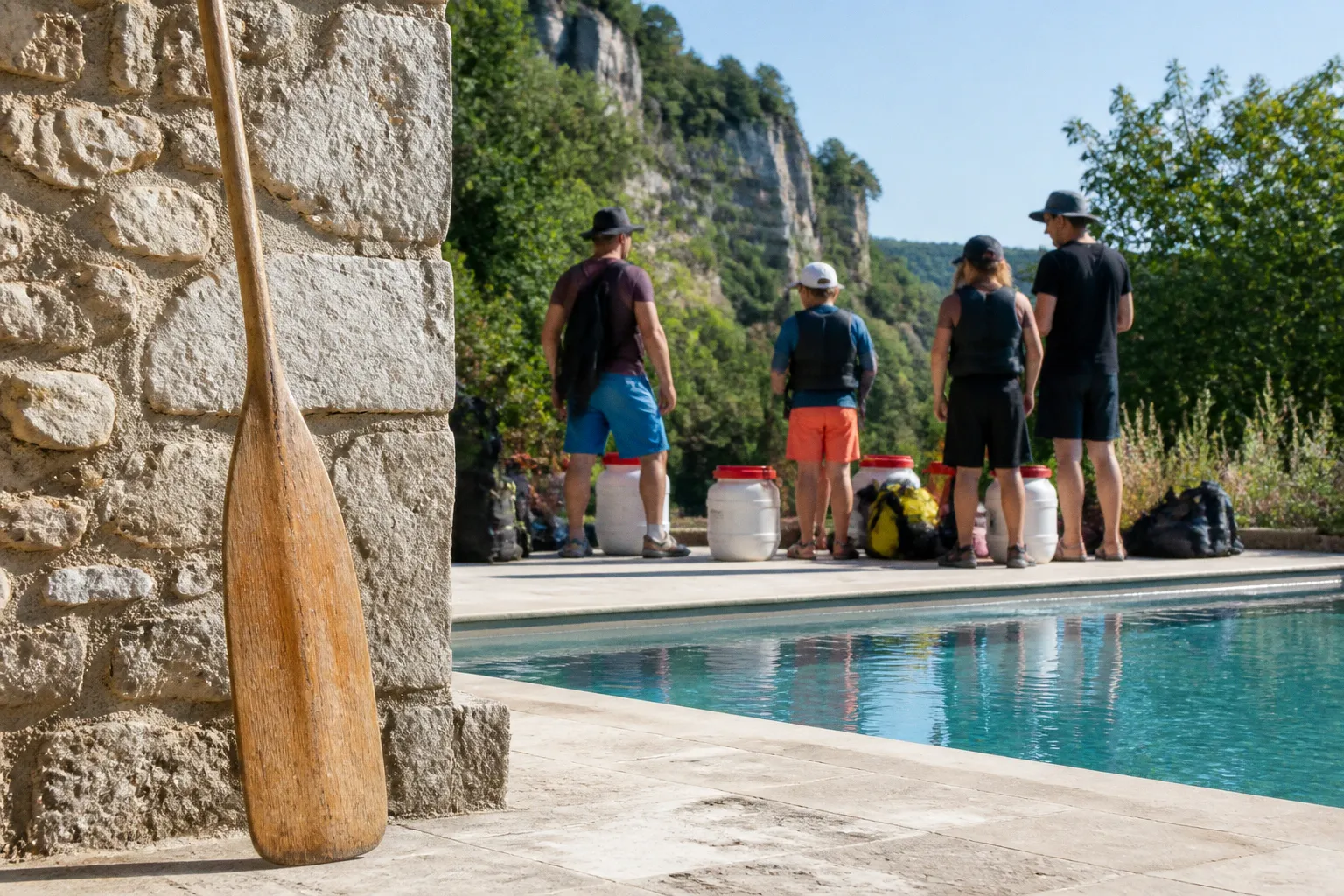
It is poor preparation: a participant who cannot swim 25 metres, unsecured electronics, unsuitable footwear, or a buoyancy aid left loose because the water looks calm.
Set the route, loadout, and safety standard before you reach the launch point. On the Dordogne, the legal requirements are clear, river traffic is active, and small errors become difficult to correct once you are committed to the current.
This is the operational brief for Dordogne river canoe trip preparation: eligibility, equipment, clothing, hydration, dry storage, traffic management, and the hazards around bridge pillars. Move through it in order. Do not treat the final checks as optional.
1. Clear the eligibility check before booking
Start with the people, not the equipment. A rental company can supply a canoe, paddles, barrels, and a shuttle service. It cannot remove a weak swimmer from a moving river after launch.
Every participant must be able to:
- Swim at least 25 metres without assistance.
- Submerge underwater comfortably.
- Follow instructions immediately if the canoe capsizes or separates from the group.
- Wear a buoyancy aid correctly for the entire time on the water.
The swimming requirement is not a formality. It is the baseline for dealing with an unexpected immersion, a fall during landing, or a canoe that moves away from the bank. A calm section of river is still open water. Current flow, boat traffic, uneven riverbanks, and cold shock can disrupt even a confident plan.
Children are subject to age restrictions. Canoeing and kayaking on the Dordogne are generally prohibited for children under five to six years old, unless a specific exception applies, such as participation with a state-certified instructor. The exact threshold and conditions can depend on the activity and operator, so resolve this with the rental company before arrival. Do not assume that a family booking automatically covers every age group.
Group commander check
Before committing to a day on the river, confirm four points:
1. Age: every child meets the operator’s minimum requirement or qualifies for a documented exception.
2. Swimming: every participant can swim 25 metres unaided and submerge.
3. Medical readiness: no one is being pushed onto the river while exhausted, unwell, or unable to manage the physical demands of paddling and landing.
4. Supervision: adults know which children are in which canoe and who is responsible for each section of the route.
The Dordogne is well suited to active family holidays, but suitability depends on the weakest member of the group. Plan the route around that person. A short, controlled section with clean logistics is stronger than an ambitious itinerary that leaves someone overloaded.
The river does not care whether the route looked easy on the map. Eligibility, flotation, and control are your first navigation tools.
2. Treat the buoyancy aid as a legal requirement
A buoyancy aid must be worn on the water at all times. Not stored in the canoe. Not clipped loosely around the waist. Not carried because the next section looks shallow. Worn.
Rental companies provide the required flotation equipment, but each person still needs to check the fit before departure. Tighten the straps so the aid stays in position when you enter the water. The wearer must be able to paddle, turn, and move without the aid riding up around the face or chest.
Water police checks can result in a fine when participants are not wearing their buoyancy aids. The precise amount is not the point. The operational rule is simpler: once the canoe leaves the bank, the buoyancy aid stays on.
Run this fitting sequence at the launch point:
- Put the buoyancy aid on over the clothing you will actually wear.
- Close every fastening.
- Tighten the adjustment straps.
- Lift the shoulders of the aid gently to confirm it does not slide high over the head.
- Check that paddling movement is not restricted.
- Repeat the fit check for children after they sit in the canoe.
Do not place heavy bags or loose equipment where they can interfere with the wearer’s movement. If a capsize occurs, the flotation device must work immediately. It must not be trapped beneath a dry barrel, a picnic bag, or a badly positioned paddle.
The pre-launch brief
Every group should receive the same short briefing before pushing off:
- What to do if the canoe tips.
- Where to regroup.
- Who carries the phone.
- Which canoe leads and which canoe follows.
- How to approach bridges and passing boats.
- What signal means stop or pull toward the bank.
Keep the instruction direct. Long explanations disappear under pressure. The useful commands are short: stop paddling, hold the canoe, stay with the boat, move to the bank, regroup.
3. Build the clothing and footwear loadout for wet landings
The question is not whether you will get wet. It is where, when, and how much. Paddle splash, river spray, a low landing, and an accidental step into shallow water are all normal parts of the route.
For what to wear canoeing on the Dordogne, choose clothing that dries reasonably quickly and does not restrict movement. Avoid heavy garments that become cumbersome when wet. Avoid loose layers that catch on equipment or make it harder to adjust the buoyancy aid.
Your launch-day clothing should cover these functions:
- A quick-drying base layer.
- Lightweight shorts or trousers suited to sitting and paddling.
- Sun protection for exposed sections.
- A warm layer stored dry for the return journey or a change in weather.
- A waterproof layer if the forecast requires it.
- Closed-toe footwear with a secure fit.
Footwear is a hard requirement. Wear closed-toe shoes, water shoes, or suitable sports sandals with secure retention. Do not use flip-flops. Do not rely on loose open sandals that can fall off when stepping into shallow water. Riverbanks contain stones, uneven surfaces, and hidden edges. You need protection and grip when boarding, landing, or walking the canoe through a shallow section.
Footwear decision
| Footwear option | Operational value | Main risk |
|---|---|---|
| Closed-toe water shoes | Strong protection, secure fit, suitable for wet landings | Can retain water if poorly ventilated |
| Sports sandals with secure retention | Good drainage and useful grip | Toes may have less protection than in closed footwear |
| Lightweight sports shoes | Familiar support and closed toe | May stay wet and become heavy |
| Flip-flops | Easy to pack | Poor retention, weak protection, unsafe for river entries |
| Bare feet | No equipment required | No protection from stones or uneven banks |
Pack the shoes in a way that keeps them accessible. You should not have to open the main dry barrel in the middle of a landing. If the operator expects participants to enter shallow water during launch or recovery, wear the correct footwear from the start.
4. Secure the gear before the first current change
A canoe trip packing list fails when the equipment is technically present but impossible to access or badly sealed. You need two separate systems:
1. Immediate-access equipment for items used during the paddle.
2. Dry storage for valuables, spare clothing, and anything damaged by immersion.
Rental companies commonly provide standardised waterproof barrels. For multi-day trips, these are often around 55 litres per person, while day trips may use smaller containers. Capacity is useful, but capacity does not guarantee waterproofing. Close every lid correctly and test the seal before loading personal equipment.
For a reliable Dordogne river kayaking packing list, divide items by mission:
Keep available during the route
- Drinking water.
- Sun protection.
- Essential medication.
- A phone in a waterproof case.
- A small amount of food if permitted by the operator.
- Identification or booking details protected from water.
- Any item needed by a child during the day.
Keep sealed in dry storage
- Spare clothing.
- Wallet and keys.
- Camera equipment.
- Towels.
- Overnight clothing.
- Chargers and batteries.
- Documents.
- Food that must remain dry.
Use personal dry bags inside the rental barrel for a second layer of protection. A waterproof phone case is also recommended. Do not treat a sealed phone case as indestructible: test the closure, keep the phone attached to the canoe or on your person as appropriate, and avoid opening it over the water.
Keys require special attention. A vehicle key lost during a landing can compromise the entire return plan. Keep it in a dedicated waterproof container, not loose inside a family bag. Establish one responsible carrier before launch. The same rule applies to medication and booking information.
Pack for recovery, not convenience
The canoe becomes less stable when equipment shifts. Place heavy items low and central. Secure barrels so they cannot roll forward, slide sideways, or obstruct a person during a capsize. Keep the total load within the rental company’s instructions.
Do not create a maze inside the canoe. In an emergency, every occupant needs to move without fighting through bags. Your storage layout should allow you to:
- Reach drinking water.
- Release or move a loose item.
- Exit the canoe.
- Hold the canoe after a capsize.
- Regroup with other paddlers.
This is where a little discipline creates a large margin. Label the barrels. Give each person one clear storage zone. Keep essential items in known positions. If the group has to stop at a bank, nobody should empty the entire loadout to find one towel or phone.
5. Carry enough water and control the heat load
Bring at least 1.5 litres of drinking water per person for a standard day trip. Increase your planning margin when the group includes children, when the route is long, or when the weather is hot. The canoe may be surrounded by water, but the river is not a drinking-water source.
Water management is straightforward:
- Fill bottles before arriving at the launch point.
- Keep one bottle immediately accessible.
- Store reserve water securely.
- Mark bottles so children do not empty the group supply early.
- Drink before strong thirst develops.
- Keep food and water separate from wet footwear and swimming gear.
Do not rely on finding a convenient refill point during the route. Access to the bank is not the same as access to potable water, and a planned stop can be delayed by traffic or landing conditions.
Heat adds friction to every task. Sun exposure affects concentration, paddling rhythm, and decision-making. Use a hat or other sun protection, apply sunscreen before launch, and take it with you if the route extends through exposed sections. Sunglasses should be secured with a retainer rather than left loose on the seat.
For families, assign an adult to manage the water reserve. Children should know where their own bottle is, but the adult controls the total supply. This prevents the predictable failure: strong consumption in the first hour, followed by a dry final section.
6. Navigate the main branch and manage river traffic
The Dordogne is not an isolated training channel. Sightseeing boats, including traditional gabares, use the river. Your canoe has limited height, manoeuvrability, and visibility compared with larger traffic. Make your position predictable.
The primary navigation rule is to stay in the middle of the main branch of the river when travelling. Avoid drifting into secondary flow unless the route or operator’s instructions require it. The main branch generally provides the clearest navigation line, but it still demands active scanning.
When a sightseeing boat approaches, create space. Keep at least 5 metres away from passing gabares. Do not cut across their path to reach the opposite bank at the last second. Do not assume the boat crew can alter course rapidly for a small canoe.
Use this traffic sequence:
1. Scan ahead and behind before changing direction.
2. Identify large boats early.
3. Hold a steady line where possible.
4. Move away from the boat’s path without creating a new conflict.
5. Keep at least 5 metres of separation.
6. Avoid stopping directly in a navigational corridor.
7. Regroup only in a safe position away from active traffic.
Make the lead canoe responsible for early calls. The following canoe mirrors the decision rather than improvising a separate crossing. This prevents a scattered group from occupying multiple lines at the same time.
Do not trust visual calm
A river can look slow while still producing awkward water around bends, bridge structures, and traffic. Keep paddles ready. Maintain a clear view ahead. If a member of the group is tired, move the plan toward a controlled landing rather than allowing the canoe to drift while the crew debates.
A rental operator’s route briefing takes priority for the specific section you are paddling. Local launch points, landing areas, seasonal flow conditions, and temporary restrictions can change. Ask where the approved start and finish points are, how the shuttle works, and which sections demand extra care.
7. Cross bridge pillars with a clean line
Bridge pillars create one of the most important fixed hazards on the route. Water accelerates and swirls around structures. The wrong approach can push a canoe sideways, destabilise the crew, or trap the boat in a rear swirl.
The safe line is to pass between the bridge pillars, not around the outside edge. Scan the openings before you commit. Pick the correct passage early. Align the canoe with the gap and maintain forward momentum through it.
Use a disciplined bridge approach:
- Stop unnecessary conversation.
- Put both paddlers on the same plan.
- Reduce sudden steering movements.
- Point the bow through the selected gap.
- Keep paddling smoothly.
- Pass between the pillars.
- Clear the structure before regrouping or turning.
Do not attempt to cross diagonally at the last moment. Do not stop with the canoe half-committed to an opening. Do not allow a following canoe to enter until the first craft has cleared the hazard and the line is open.
The key issue is not speed. It is alignment. A steady canoe with a clear bow line is easier to control than a faster canoe making abrupt corrections.
Around bridge pillars, momentum without alignment is not control. Choose the opening, point the bow, and clear the structure before you reset.
8. Plan the launch, landing, and return logistics
Dordogne canoe trip planning is incomplete until the land journey is fixed. Confirm how you reach the launch point, where the canoe returns, and how you get back to your accommodation or vehicle. Rental companies often manage transfers, but the timing and meeting point must be understood before departure.
Ask the operator:
- Where exactly is the launch area?
- Which landing point is assigned to your booking?
- How long is the route under normal conditions?
- What happens if the group finishes early or late?
- Where are the approved stopping and landing areas?
- How are the canoes and paddles returned?
- What is the procedure if someone cannot continue?
Do not assume that every attractive bank is a legal or practical landing point. Private land, steep edges, vegetation, boat traffic, and unstable footing can turn an apparent rest stop into a poor recovery zone.
If you are staying in a Dordogne gîte with a pool, use the accommodation as the recovery base rather than an excuse to overpack the river day. Prepare a dry return kit before leaving: clean clothes, towels, water, and a secure place for wet footwear. Store these items away from the river loadout so they remain dry.
Poolside recovery has its own place in an active holiday. Do not launch tired after a long cycling or hiking day, and do not schedule a demanding paddle immediately after poor sleep or a heavy travel day. The river route may be moderate, but repeated physical tasks—carrying the canoe, boarding, paddling, landing, and managing children—accumulate quickly.
9. Final gear check before deployment
Run this check at the launch point. Every item must have an owner and a position.
Personal readiness
- Every participant meets the minimum age requirement.
- Every participant can swim 25 metres unaided.
- Every participant is comfortable submerging underwater.
- Everyone understands the capsize and regrouping procedure.
- No one is launching while ill, dangerously fatigued, or physically unprepared.
Clothing and footwear
- Closed-toe water shoes, sports sandals with secure retention, or suitable sports shoes.
- Quick-drying clothing.
- Sun protection.
- A warm or dry change of clothing sealed in waterproof storage.
- No flip-flops or loose footwear.
Safety equipment
- Buoyancy aid fitted and worn by every participant.
- Straps tightened and checked after sitting in the canoe.
- Paddles assigned.
- Canoe load secured and balanced.
- No loose equipment blocking movement.
Water and personal items
- At least 1.5 litres of drinking water per person for a standard day trip.
- Water accessible without opening the main barrel.
- Phone protected in a waterproof case.
- Keys, medication, and documents sealed separately.
- Spare clothing and valuables stored in dry barrels or dry bags.
- Food packed so it cannot contaminate or damage essential equipment.
Navigation brief
- Main branch and route direction understood.
- Minimum 5-metre separation from passing gabares understood.
- Bridge openings identified as priority hazards.
- Group order established.
- Lead canoe and regrouping procedure confirmed.
- Launch, landing, shuttle, and return arrangements clear.
Final position
A successful canoe trip on the Dordogne is built before launch. Confirm swimmer eligibility. Fit the buoyancy aids. Wear footwear that survives a rocky landing. Keep water accessible. Seal the phone and keys. Hold the main branch, give sightseeing boats five metres, and pass cleanly between bridge pillars.
That is the route discipline. Complete the checks, then paddle. Relaxation comes after the system is secure—not before.