Europe’s 10 most beautiful hotels—from an Irish castle to Icelandic hideaway
Time Out has published an editorial ranking of Europe's most beautiful hotels, with an 800-year-old Irish castle, Ashford Castle in County Mayo, taking the top position globally.
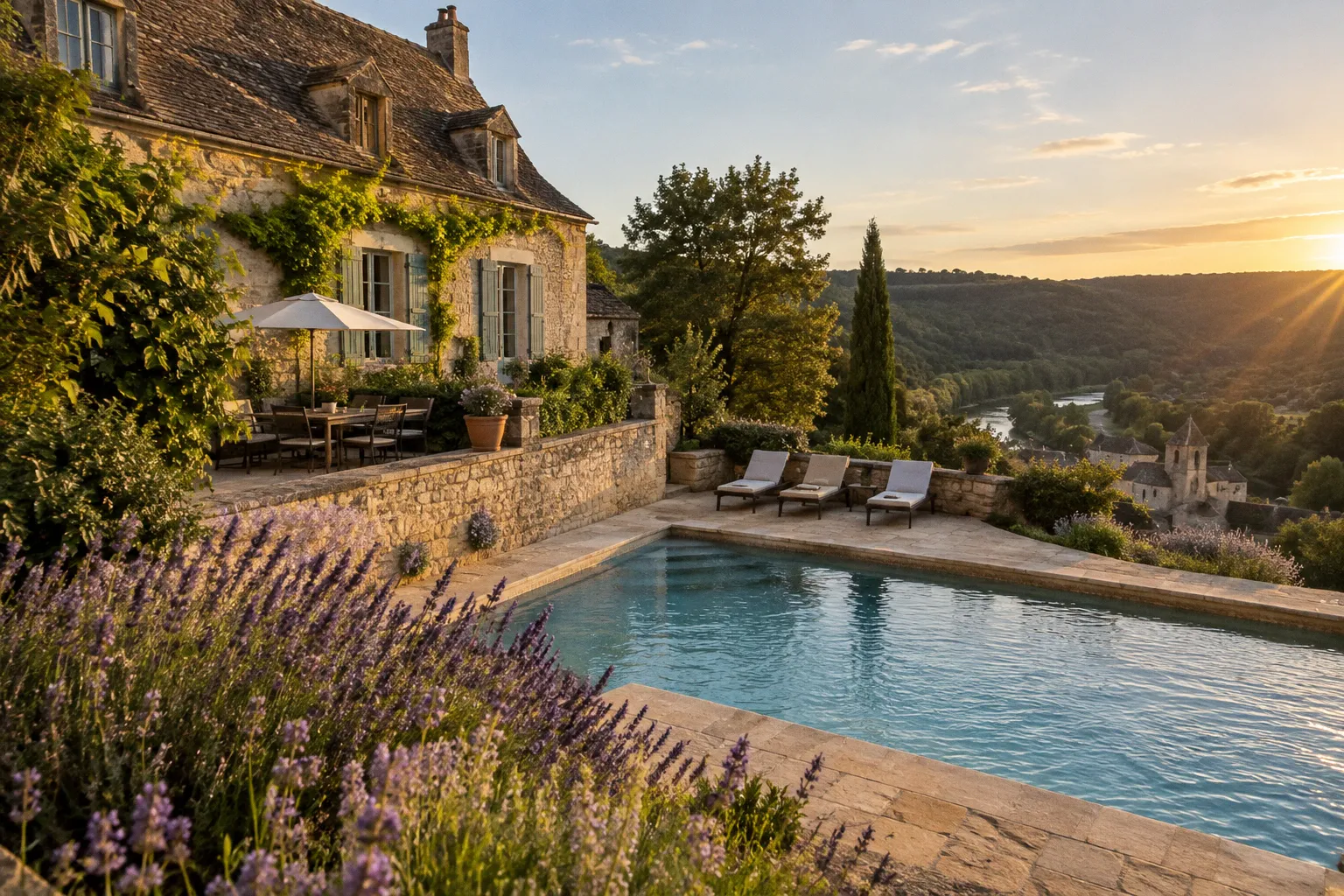
A Global Hotel Ranking Lands — and the Metrics Don't Transfer
The list covers 10 properties across the continent, selected by the publication's hotel experts after on-site visits — not by guest scores, occupancy data, or any standardised benchmark. For anyone weighing a Dordogne gite against a continental hotel stay, the ranking is a useful case study in how "beauty" is measured differently depending on who's holding the clipboard.
What the List Actually Tests
The selection criteria, as reported, centre on architecture, setting, interiors, and surrounding landscape. Four Seasons Firenze ranks third globally, its case built on Renaissance palaces, private gardens, and seventeenth-century frescoes in the Royal Suite. The Ritz-Carlton Abama on Tenerife earns its place through Moorish-inspired forms against volcanic terrain. Iceland's Ion Adventure Hotel leans on angular concrete and Northern Lights visibility. The Phoenicia in Malta cites its Bastion infinity pool against historic fortifications.
These are, across the board, high-footfall, service-intensive properties with staff-to-guest ratios that a self-catering gite cannot — and should not — attempt to replicate. The thermal mass of an 800-year-old Irish castle and the load-bearing walls of a Dordogne farmhouse may share a century, but the operational model behind them is entirely different. A hotel ranking that prizes "grand interiors" and "sense of occasion" is measuring spectacle. A gite audit measures functionality: water pressure, proximity metrics to the nearest market, BTU capacity of the heating system, whether the pool pump meets current noise regulations.
Why This Matters for the Dordogne Renter
Editorial hotel lists generate search traffic. Over the coming weeks, expect increased queries around "Europe's most beautiful stays" and related terms. For the Dordogne self-catering segment, the risk is a spillover of inflated expectations — travellers arriving with brochure-scale assumptions about what a converted stone longère should deliver.
The reality check: none of the properties on this ranking offer self-catering independence. None require the guest to source their own produce from a Saturday morning market in Périgueux or negotiate a rural lane to reach the nearest boulangerie. That is not a deficiency of the gite model — it is its specification. The value proposition of a Dordogne rental is proximity to a working landscape, not proximity to a concierge desk.
Time Out's methodology — editorial visits, subjective assessment, no disclosed scoring rubric — is transparent about its limits. The publication acknowledges the ranking is "not a universal measure of beauty." That caveat should travel with every headline that repackages it.
What to Watch
If you're currently shortlisting gites in the Dordogne, hotel rankings like this one are noise, not signal. The questions that matter remain unchanged: construction date and material of the main walls, pool dimensions and heating method, distance to the nearest épicerie with extended hours, mobile coverage strength at the property, and whether the listing agent has physically visited the site in the last twelve months. No editorial visit required — just a tape measure and a willingness to ask before booking.