Farm to table dining: a culinary route through the Dordogne
A successful farm-to-table dining itinerary in the Dordogne begins with a simple correction: this is not one single food region with one fixed menu.
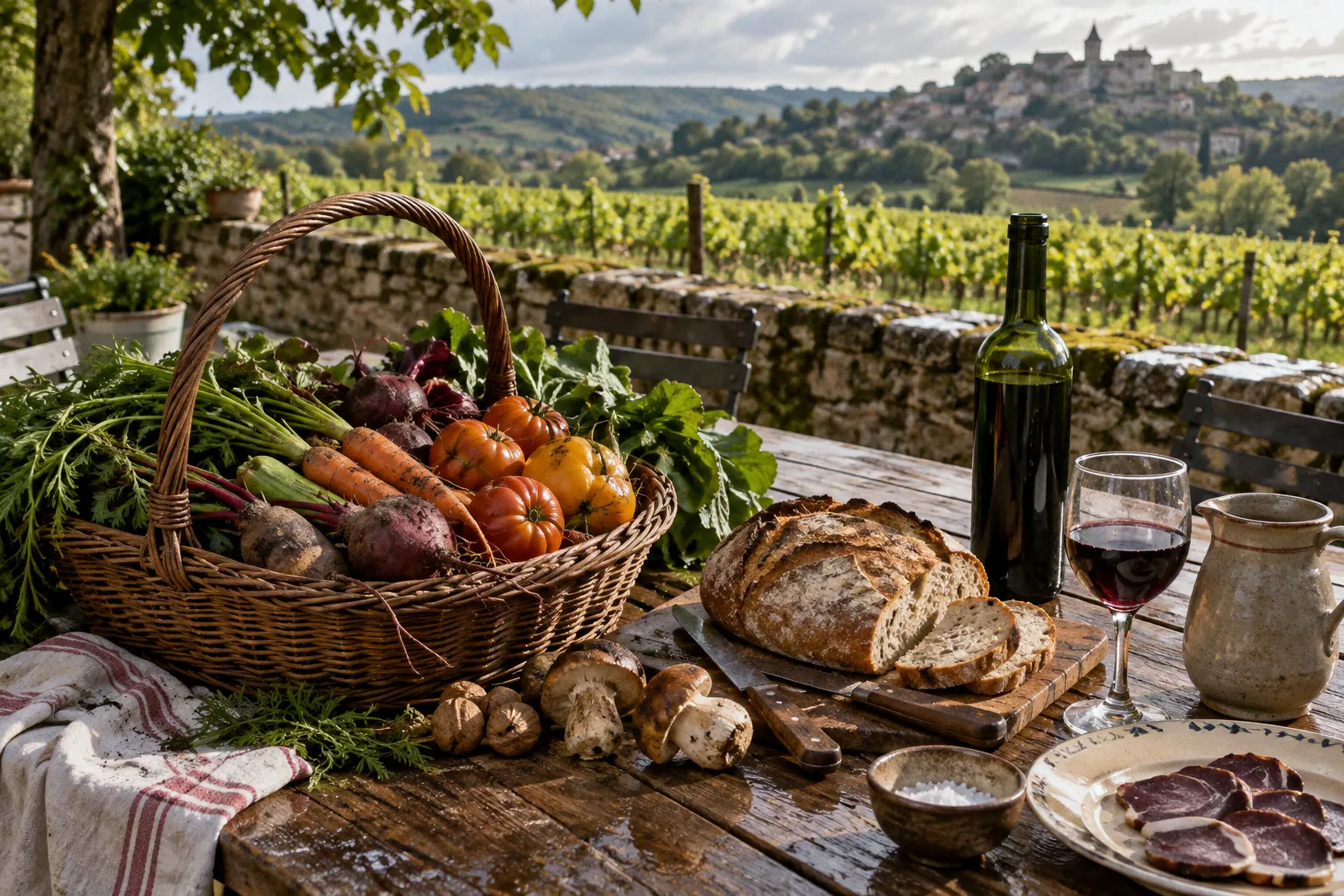
Périgord is divided into four culinary landscapes — Périgord Noir, Pourpre, Blanc, and Vert — and each has its own harvest windows, market rhythm, produce, and relationship with the table.
That distinction matters when planning a Dordogne culinary road trip. A morning spent looking for truffles around Sarlat belongs to a different food landscape from a wine tasting near Bergerac, just as a walnut-rich dish from the limestone country will feel different from a farmhouse meal shaped by chestnut forests and small-scale livestock farming. The best route is not the one that collects the most restaurants. It is the one that follows the food back to its source.
For visitors staying in a self-catering gîte, this approach also makes practical sense. You can buy produce when it is at its best, store it properly, cook a simple lunch at home, and reserve restaurant meals for the dishes that require a butcher’s cut, a farm kitchen, or a cellar. The result is more varied, less rushed, and much closer to how food is actually enjoyed in southwest France.
Navigating the four culinary colours of Périgord
The four colours of Périgord are not simply a tourism label. They are a useful map for understanding why the local food changes as you travel.
| Périgord region | Main base | Culinary character | Best suited to |
|---|---|---|---|
| Périgord Noir | Sarlat-la-Canéda | Black truffles, walnuts, duck, cèpes, traditional market cooking | Truffle experiences, rich farmhouse dishes, historic villages |
| Périgord Pourpre | Bergerac | Wine estates, sweet whites, vineyard landscapes, château visits | Wine tasting, cellar visits, long lunches with local bottles |
| Périgord Blanc | Périgueux | Limestone country, major producer markets, traditional regional cooking | Market shopping, practical food discovery, cooking at a gîte |
| Périgord Vert | Northern Dordogne | Chestnut forests, small farms, woodland produce | Rural detours, farm visits, quieter country meals |
Périgord Noir: the deep flavours of duck, walnut, and truffle
Périgord Noir is the most familiar culinary face of the Dordogne, particularly around Sarlat-la-Canéda. Its food is generous without needing to be elaborate. Duck appears in several forms, from confit de canard, preserved slowly in its own fat, to magret de canard, the prized breast cooked with care so the meat remains tender beneath its rendered skin.
Walnuts are equally characteristic, appearing in salads, cakes, oils, and country cooking. In the right season, cèpes bring a woodland depth to omelettes and sauces. Black truffles are the region’s most celebrated ingredient, but they are also the one most likely to be misunderstood by visitors. They are not an everyday garnish scattered over every plate. Their availability follows the winter harvest, and their price reflects a short season, uncertain yield, and the skill involved in finding them.
If truffles are central to your plans, use Sarlat as a base and build the day around the market or a dedicated seasonal event rather than expecting every restaurant to offer the same experience. Sarlat hosts an annual truffle festival in mid-January, with tastings, cooking workshops, and demonstrations involving trained truffle-hunting dogs. The timing is important: this is a winter food event, not a summer attraction that happens to involve truffles.
Périgord Pourpre: where the meal begins in the vineyard
Around Bergerac, the landscape turns toward wine. Bergerac country includes 13 wine appellations, which gives the region more range than the phrase “local wine” might suggest. The route includes dry and sweet styles, and the right tasting depends on what you want to eat alongside the wine, not simply on whether the bottle is red or white.
Château de Monbazillac is one of the most recognisable stops in this area. The 16th-century historic monument is known for its sweet white Monbazillac wine, and it provides the kind of visit that combines landscape, architecture, and cellar culture rather than treating tasting as a stand-alone activity.
For a more useful wine day, avoid stacking too many appointments together. One château visit with enough time to understand the wine, followed by lunch and a second tasting, will tell you more than racing through several cellars. Note the storage temperature and serving style when you buy a bottle for the gîte. Sweet white wine should not be treated as an afterthought: it can work beautifully with regional cheeses, fruit-based desserts, or a meal where the sauce has enough richness to meet it.
A good Dordogne food route follows the harvest window first and the sightseeing map second.
Périgord Blanc: the market as a working kitchen
Périgord Blanc, centred on Périgueux, is an excellent region for travellers who want to cook during their stay. The central market in Périgueux brings together more than 100 local producers on Wednesday and Saturday mornings. That scale changes the experience: you are not only looking for a particular speciality, but comparing the yield, ripeness, cut, and intended use of what is available that day.
This is where a self-catering kitchen becomes an advantage. A market purchase is not always designed for a long journey in a hot car or for storage over several days. Buy according to your immediate plan:
- Choose delicate leaves, soft fruit, and ripe tomatoes for the first meal or picnic.
- Buy firmer vegetables, eggs, walnuts, and preserved products if you need ingredients to hold for a few days.
- Ask for the right butcher’s cut rather than choosing by appearance alone; a piece suited to slow cooking will not behave like one intended for quick grilling.
- Keep dairy products and fresh meat at a stable storage temperature as soon as you return to your accommodation.
- Treat duck fat, preserves, and sealed regional products as pantry ingredients that can extend the life of a market shop.
The market is also a place to learn local etiquette. It is perfectly reasonable to look carefully, but handling every piece of produce is not always necessary. A nod or a simple question is often enough to invite guidance. Producers know which peaches need eating tonight, which walnuts are intended for keeping, and which mushrooms are best cooked immediately.
The best local food markets in the Dordogne
Sarlat and Périgueux are the obvious market anchors, but they serve different purposes in a culinary itinerary.
Sarlat’s market is particularly useful for discovering the flavours associated with Périgord Noir: duck products, walnuts, seasonal mushrooms, preserved foods, and ingredients suited to the region’s rich country cooking. Its main market days are Wednesday and Saturday. Go early if you want the widest choice and a calmer opportunity to speak with producers, especially during busy periods.
Périgueux is the stronger choice when you want breadth. Its central market, held on Wednesday and Saturday mornings, gathers over 100 local producers and offers a practical introduction to the wider region. It is a good place to assemble provisions for a few meals rather than simply buying one souvenir product.
A market visit becomes far more rewarding when you arrive with a loose menu rather than an empty basket and no plan. You do not need a rigid shopping list. Instead, decide whether you are looking for:
1. A cold lunch: bread, cheese, fruit, walnuts, and a preserved speciality that can travel well.
2. A gîte supper: potatoes, garlic, parsley, a suitable butcher’s cut, and a bottle from Bergerac country.
3. A slow-cooked meal: ingredients with enough structure to withstand time, along with the fat or stock needed to build flavour.
4. A seasonal plate: the best produce available that morning, with the cooking kept deliberately simple.
This approach avoids one of the common mistakes of food tourism: buying every attractive product, then discovering that the kitchen has no room, the fridge is full, and the most delicate ingredients have passed their best before you can use them.
Authentic fermes auberges: eating at the source
A ferme auberge is not merely a restaurant decorated with farm tools. Traditionally, it is a farm-based dining experience where the meal is connected to the agricultural work of the property. That connection may appear in the ingredients, the cooking method, the setting, or the fact that the visit includes an opportunity to understand how the farm operates.
The distinction matters because visitors sometimes expect a polished restaurant menu from a farm inn, or assume that any rural dining room qualifies as farm-to-table. In practice, the experience is usually more direct. Menus can follow the farm’s supply, the season, and the capacity of the kitchen. That means the meal may be more limited than a city restaurant’s menu, but the reason for the limitation is often the strength of the experience.
La Ferme du Brusquand in Marquay, in Périgord Noir, is a long-established example. The family-operated farm inn was established in 1905 and offers daily farm visits alongside traditional farm-to-table dining. It is the kind of stop that makes sense earlier in a route, before you have filled the day with sightseeing, because the farm visit gives context to the meal that follows.
When planning a ferme auberge visit, check the practical details before setting out. Ask about opening days, whether advance booking is needed, and whether the meal is served at a fixed time. Rural kitchens do not always operate on the same rhythm as restaurants in larger towns. A late arrival can disrupt the service, and a long drive without a reservation may lead to disappointment during a busy harvest period.
You should also allow time for the meal itself. Farmhouse cooking is not built around a rapid turnover of tables. Duck confit, slow-cooked dishes, soup, potatoes, and seasonal vegetables each depend on preparation that began well before guests arrived. The point is not to hurry through a plate of food in order to reach the next monument.
Essential Périgord flavours and how to read a menu
The most useful way to approach Périgord food is to understand the cooking behind the dish. Names become much easier to interpret once you know whether you are looking at preservation, slow cooking, or a direct expression of a seasonal ingredient.
Confit de canard
Confit is a preservation method as much as a finished dish. Duck is salted and cooked slowly in its own fat, producing meat with a concentrated flavour and a texture that benefits from careful reheating. It is rich, but it should not be confused with an indiscriminately heavy meal. The crisping of the skin, the balance of the side dishes, and the portion all matter.
Magret de canard
Magret is duck breast, usually treated as a substantial main course rather than a small garnish. The cooking is closest in spirit to preparing a good butcher’s cut: the skin and fat need time to render, while the interior should not be driven dry. If you are cooking at a gîte, begin with a cool pan or moderate heat so the fat has a chance to render gradually, then use the duck fat for potatoes.
Pommes Sarladaises
Pommes Sarladaises are potatoes cooked in duck fat with garlic and parsley. They are a clear example of how a few ingredients can become a regional signature when the cooking method is right. The potatoes need enough space and steady heat to develop a browned exterior without turning greasy. Garlic and parsley are added to finish the dish rather than masking poor texture.
Tourin à l’ail
Garlic tourin is a traditional soup, warming and practical rather than decorative. It belongs to the family of dishes that make good use of a modest pantry and turn a small number of ingredients into something satisfying. It is particularly welcome after a cool market morning or a day spent outdoors.
Cèpe omelette
A cèpe omelette is at its best when the mushrooms remain recognisable. The aim is not to bury them under excessive cream or seasoning. Clean them carefully, cook away excess moisture, and let the earthy flavour work with the eggs. This is a dish where freshness and timing matter more than complexity.
The most authentic Périgord food experiences are often built around restraint: good produce, the right fat, a suitable cooking time, and no unnecessary interference.
A seasonal itinerary from Sarlat to Bergerac
A practical farm-to-table route through the Dordogne works best over several days, with each day given a clear culinary purpose.
Day one: Sarlat and the Périgord Noir pantry
Begin in Sarlat with the market, choosing ingredients that can form the basis of a simple meal at your gîte. Look for duck products, walnuts, seasonal vegetables, cheese, and anything that will survive the journey back to your kitchen. If you are visiting on Wednesday or Saturday, plan the market before other activities.
Keep lunch uncomplicated. A market plate of bread, cheese, fruit, and regional produce gives you a first reading of the ingredients without turning the day into a succession of large meals. In the evening, cook potatoes in duck fat or prepare a simple omelette if fresh mushrooms are available.
If your visit falls in mid-January, the Sarlat Truffle Festival can become the centre of the day. The festival includes cooking workshops, tastings, and demonstrations with trained truffle-hunting dogs. Book or confirm details in advance, because winter events have a defined programme and do not operate like an open-ended summer market.
Day two: a farm inn near Marquay
Use the second day for a slower rural experience. A visit to La Ferme du Brusquand in Marquay combines a daily farm visit with traditional farm-to-table dining and gives more meaning to the dishes than a menu description alone can provide.
Do not schedule this kind of stop between several unrelated attractions. Allow the farm and meal to take the time they require. If you are travelling with children or with anyone interested in agriculture, the visit can be particularly useful because it explains the relationship between the working property and the food on the plate.
Day three: Périgueux market and a gîte kitchen
Travel toward Périgueux for the Wednesday or Saturday morning central market. With more than 100 local producers, it is the place to plan a broader shop. Buy according to the next 24 to 48 hours, paying attention to ripeness and storage rather than choosing purely by appearance.
This is the ideal day to cook. A gîte with a proper kitchen allows you to work with the market’s yield instead of relying on restaurant opening hours. Prepare a meal that uses the ingredients in their natural order: delicate produce first, sturdier vegetables later, and preserved products when you need a reliable pantry component.
A swimming pool and rural setting may be part of the appeal of your accommodation, but the kitchen is just as valuable for a food-focused stay. After a hot afternoon, a simple supper prepared with market ingredients can be more enjoyable than another formal meal, particularly when you have already eaten generously at a farm inn.
Day four: Bergerac wine country
Move into Périgord Pourpre for a vineyard day. Choose a château visit in Bergerac country and include Château de Monbazillac if sweet white wine and historic architecture appeal to you. The region’s 13 appellations make it worth asking what you are tasting and how the wine is intended to be served.
Build lunch around the tasting rather than treating wine as an isolated stop. A regional meal, local cheese, or dessert can help you understand the wine’s balance more clearly. If you purchase bottles, protect them from heat during the drive and store them correctly when you return to your accommodation. Wine is a food ingredient in the broadest sense: it belongs to the meal, and its handling affects what you taste.
Day five: the quieter edge of Périgord Vert
If time allows, continue north into Périgord Vert, where chestnut forests and small farms shape a quieter rural landscape. This is not the region to visit with a checklist of famous dishes. It is better suited to a slower drive, a farm visit where available, and an appreciation of the way woodland and smallholdings influence local food.
Chestnuts are particularly useful for understanding the region’s identity. They are not merely a seasonal decoration but part of a landscape where forest resources and farm production have long sat close together. Keep the day open enough to stop when a village shop, farm gate, or country lunch presents a genuine opportunity.
Planning the route around the harvest window
Seasonality in the Dordogne is not a slogan. It determines what is available, how much it costs, and whether an experience is genuinely connected to local production.
Truffles are associated with the winter season, which is why the mid-January festival in Sarlat has a very different character from summer food events. Goose traditions come into focus around Fest’Oie in early March. Wine visits can be planned throughout much of the year, but the atmosphere of the vineyards changes with the agricultural calendar. Market produce shifts continuously, and a dish described as local may still depend on whether the ingredient is at its natural harvest point.
Before travelling, match your expectations to the season:
- Winter: plan around truffles, preserved duck, soups, hearty potatoes, and dedicated festivals.
- Early spring: look for goose-focused events such as Fest’Oie and the first changes in market produce.
- Summer: enjoy markets, vineyard landscapes, and seasonal outdoor food events, remembering that summer night markets are seasonal rather than year-round.
- Autumn: follow woodland produce, walnuts, and the deeper cooking that suits cooler evenings.
The practical lesson is simple: do not promise yourself an ingredient before checking its harvest window. Build a route around the food that is actually present, then allow the landscape and villages to fill the spaces between meals.
The route is better than the checklist
A Dordogne culinary road trip is most rewarding when it moves between three kinds of experience: the market where ingredients are bought, the farm or restaurant where they are transformed, and the gîte kitchen where you can make them part of your own day. Each setting shows a different piece of the same food culture.
Choose Sarlat for truffles, walnuts, duck, and the richest Périgord Noir traditions. Choose Périgueux when you want the broadest market shop and a practical introduction to local producers. Follow the vineyards around Bergerac for château visits and Monbazillac. Add a ferme auberge when you want to understand how food, land, and timing meet on the plate.
The actionable tip is to plan only one major food experience per day, then leave room for the market. Buy less than you think you need, store it carefully, and let the next meal be guided by the best ingredient you found that morning. That is how farm-to-table dining in the Dordogne becomes more than a series of tastings: it becomes a usable way of travelling.