Dordogne wine tasting: which tour route suits your style?
The main difficulty with Dordogne wine tasting routes is not finding a vineyard. It is deciding what kind of wine day you actually want before the first glass is poured.
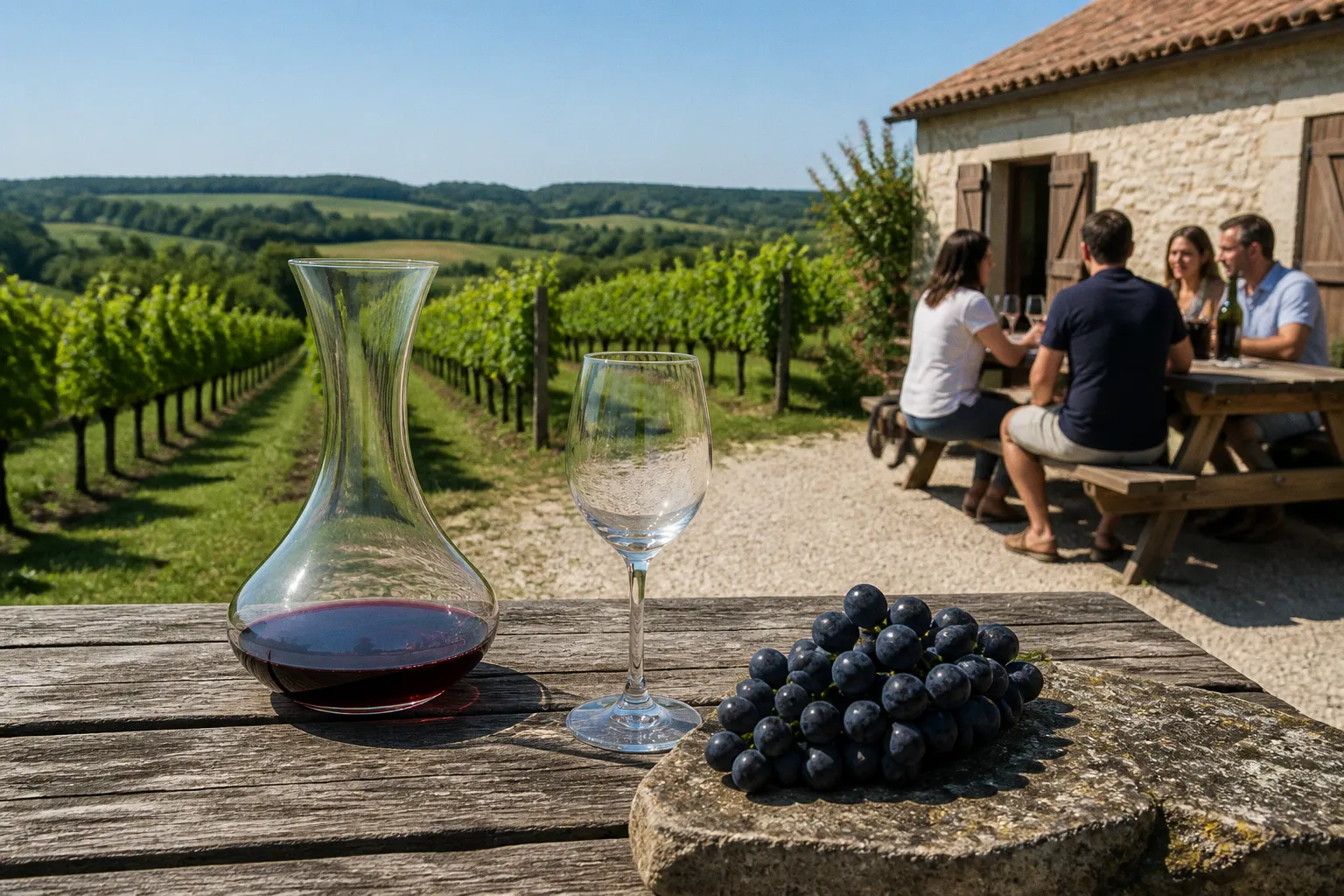
The Bergerac and Duras wine region covers roughly 12,000 hectares, with 13 AOC appellations spread across five broad styles: dry white, sweet white, liqueur-like white, rosé and red. That variety is generous, but it also makes a poorly planned itinerary feel scattered. A morning built around deep, structured reds will not naturally lead into the same kind of afternoon as a route focused on golden Monbazillac or crisp dry whites from Montravel.
The good news is that the geography is manageable. The vineyards are not an endless succession of distant addresses, and the drive between the northern Pécharmant estates and the southern slopes of Monbazillac takes approximately 20 minutes. With a little thought about palate, pace and storage temperature, you can create a wine route that feels like a proper Dordogne day rather than a sequence of disconnected tastings.
Begin with the map, not the tasting room
The Bergerac wine country is best understood as a collection of neighbouring identities rather than one single wine style. The appellations share a regional setting, but their soils, exposures, grape blends and traditions give each area a different place at the table.
For a first dordogne wine tasting itinerary, these are the most useful distinctions:
| Appellation or area | Style to expect | Best suited to | Practical route character |
|---|---|---|---|
| Pécharmant | Full-bodied red wines | A long lunch, grilled meats, duck and robust country cooking | A focused northern route from Bergerac |
| Monbazillac | Sweet white and liqueur-like white wines | Foie gras, blue cheese, fruit desserts or a slow afternoon tasting | Hilltop château and vineyard landscapes south of Bergerac |
| Saussignac | Sweet and liqueur-like white wines | Visitors who want a quieter alternative to the better-known sweet-wine route | A more specialised southern detour |
| Rosette | Refined white wines | Aperitif drinking, fish, fresh goat’s cheese and lighter lunches | Close to Bergerac and easy to combine with other stops |
| Montravel | Dry whites and reds | Travellers who prefer food-friendly wines rather than one dominant style | A route for contrast and broader exploration |
This is why Bergerac should not be treated simply as an extension of Bordeaux. The two regions may share some grape varieties and sit within the wider southwest French wine landscape, but Bergerac has its own appellations and its own logic of place. The useful question is not whether one is better. It is whether the wine in your glass suits the meal, season and appetite you brought with you.
A warm September lunch, for example, may call for a chilled dry white before a red is even considered. A market basket containing duck confit, mushrooms and a firm local cheese points in another direction. If you are travelling with a mixed group, the most successful route is usually the one that allows variation without turning the day into a tasting marathon.
The best Bergerac wine route is not the one with the most stops; it is the one that leaves enough space for the wines to make sense.
Quai Cyrano is the practical place to begin
For visitors staying in or near Bergerac, Quai Cyrano offers a useful starting point. It is located in the 17th-century Cloître des Récollets in the historic town and functions as the main reception hub and Maison des Vins for the Route des Vins de Bergerac et Duras. There are tasting rooms and riverfront terraces, making it a natural place to orient yourself before heading into the vineyards.
That first stop has a practical purpose. You can establish which style interests you, understand the shape of the route and avoid driving blindly towards an estate simply because it appeared first on a map. It is especially useful when your time is limited to half a day.
A short route might look like this:
1. Start in Bergerac at Quai Cyrano. Use the town as your reference point and decide whether you are leaning towards red, sweet white, dry white or a mixture.
2. Choose one main vineyard area rather than attempting the whole region. Pécharmant works well for a red-focused day, while Monbazillac suits sweet-wine exploration.
3. Add a second style only if the driving remains simple. The distance between Pécharmant and Monbazillac is short by regional standards, but tasting fatigue arrives faster than driving fatigue.
4. Keep a meal or substantial picnic between tastings. Wine is easier to understand when it is anchored to food, and much easier to enjoy responsibly.
5. Return to Bergerac with room for a final purchase or riverside pause. Buying at the end avoids carrying bottles around through the warmest part of the afternoon.
The hub also helps correct a common misunderstanding about French wine visits: a tasting is not necessarily an informal drop-in conversation at a family kitchen table. Some estates welcome visitors casually, while private or guided tastings generally benefit from advance arrangements. There is no universal rule that every estate requires a booking, but a reservation is sensible when you want a particular grower, a longer explanation or a visit in a quieter season when staffing may be limited.
The most useful information to have ready is simple: how many people are coming, whether you speak French comfortably, whether you want a tasting only or a fuller visit, and whether you are interested in organic or heritage production. This gives the grower a chance to prepare the right selection rather than opening bottles at random.
Pécharmant or Monbazillac: choose the day’s centre of gravity
The clearest comparison among the Bergerac wine tour options is between Pécharmant and Monbazillac. They sit within a relatively compact region, yet they create completely different tasting days.
Pécharmant for structure, savoury food and red-wine depth
Pécharmant is the natural choice for visitors who want full-bodied red wines with enough presence to accompany the substantial dishes of the Périgord. Think of the butcher’s cut you might buy at a local market, roast duck, game when in season, earthy mushrooms or a dish with a properly reduced sauce. These are not delicate pairings, and a light, hurried tasting does not show the wines at their best.
A Pécharmant route suits you if:
- you prefer red wine to sweet wine;
- the main pleasure of the day is matching wine with lunch;
- you enjoy comparing vintages, tannin and finish rather than moving rapidly between styles;
- your group would rather visit fewer estates and ask more questions at each one;
- you want the wine to remain part of a wider country-cooking experience.
The practical mistake here is to plan too many red tastings before lunch. Tannins build across the palate, particularly when visitors taste without enough food, water or time between glasses. A smaller number of carefully chosen visits will give you a clearer sense of how the wines differ.
Pécharmant is also the better route when your bottle purchases are intended for a holiday kitchen. A full-bodied red needs somewhere cool and stable to rest; a hot car boot or sunny kitchen shelf is not a suitable storage temperature. If you are staying in a gîte, put the bottles away from direct light and heat as soon as you return, then serve them according to the producer’s guidance rather than treating every red as interchangeable.
Monbazillac for sweetness, contrast and a slower finish
Monbazillac offers a different rhythm. Its sweet and liqueur-like white wines are particularly suited to visitors who enjoy contrast: richness against salt, sweetness against blue cheese, or a concentrated wine with a dessert that is not itself overly sugary.
The classic food associations are familiar for good reason. Foie gras, blue cheese, fruit-based desserts and certain gently spiced dishes can all make sense beside a sweet white. The point is not to pour it only at the very end of a meal. A bottle with sufficient acidity and concentration can be part of the meal’s structure, especially when the food has its own salt, fat or fruit character.
A Monbazillac route is a good fit if:
- you want a scenic vineyard day with a slower, more spacious pace;
- your group is curious about sweet wines but does not usually buy them at home;
- you are planning foie gras, cheese or fruit desserts during your stay;
- you want to compare different levels of sweetness and concentration;
- you prefer a tasting that can finish with one memorable bottle rather than several similar reds.
The common misconception is that sweet wine is automatically heavy or suitable only for dessert. In practice, the pairing depends on balance. Salt, acidity, texture and serving temperature all influence the result. A sweet white served too warm can seem dense and tiring; served properly chilled, it may feel much more precise.
This is where the holiday kitchen becomes part of the itinerary. If you buy Monbazillac at the estate, keep it cool on the way back and give it time in the refrigerator before serving. The right storage temperature is not a minor technical detail when the wine’s sweetness is central to its character.
The route for mixed groups: contrast rather than compromise
Not every traveller arrives with a single wine preference. One person wants a serious red, another has planned a market lunch around cheese, and someone else has heard about Bergerac’s sweet whites and wants to understand what makes them distinctive. In that situation, trying to satisfy everybody with a little of everything can produce a day with no clear shape.
A better approach is to build contrast around one central meal.
For example, begin with a dry white from Rosette or Montravel, move towards a red-focused tasting in Pécharmant, and finish another day with Monbazillac rather than forcing all three styles into one afternoon. Montravel is particularly useful when the group wants both dry whites and reds, since its recognised style range creates variety without requiring a dramatic change of direction.
This approach also works well for families or groups with different levels of wine knowledge. The experienced drinker can focus on the details of the appellation, while the less confident guest has a clear question to answer: which wine would I actually serve with tonight’s meal?
Avoid turning the visit into an examination of technical vocabulary. You do not need to identify every grape variety or describe every finish with specialist language. It is more useful to notice:
- whether the wine feels fresh, rounded, tannic or sweet;
- how it changes after food;
- whether the aroma remains clear after the first sip;
- how long the flavour stays on the palate;
- whether you would want a second glass with the meal.
These observations are practical and transferable. They help you buy wine for a holiday supper without pretending that every bottle must be decoded like a technical document.
Organic and heritage estates: ask about the work behind the bottle
More than 140 winemakers participate along the Bergerac wine route, and roughly 45% hold organic or High Environmental Value certifications. That makes environmental practice a meaningful part of the region’s visitor experience, but it should not become a slogan replacing conversation.
If organic or lower-impact farming matters to you, ask what the certification covers and how it changes the work in the vineyard. A grower may speak about soil management, pest pressure, harvest timing, cover crops, water use or the practical limits of a particular site. These details tell you far more than a broad claim that a wine is simply more natural or more authentic.
The harvest window is especially revealing. It affects not only the calendar but also the character of the finished wine. Sweet-wine production, for instance, depends on the timing and condition of the grapes, while red-wine structure is shaped by decisions made from vineyard to cellar. A good visit explains the why behind those decisions without turning the tasting into a lecture.
For visitors who enjoy rural living, the most rewarding estate conversations often include storage, labour and yield. How is the wine kept before bottling? Which parcels are harvested first? Does a lower yield change concentration, or does the producer prioritise freshness? What happens in a difficult season? These are the questions that connect a bottle to the landscape while keeping the discussion grounded in daily practice.
Do not assume that every small or heritage estate will offer the same visitor format. Some may have a polished reception space; others may be more appointment-led and work around cellar or vineyard duties. Neither is automatically better. Match the setting to your expectations, and allow enough time for the visit you have actually requested.
Three itineraries for a self-guided wine tour in Bergerac
A self guided wine tour Bergerac visitors can manage comfortably should be designed around driving time, palate and lunch rather than a numerical target for bottles tasted. The region’s compact geography makes combinations possible, but the order still matters.
The half-day introduction
This is the right choice when wine is one part of a broader Dordogne day.
- Begin at Quai Cyrano in Bergerac.
- Choose either a nearby dry-white orientation or a focused red tasting.
- Have lunch in Bergerac or take a prepared picnic to a suitable stopping place.
- Buy one or two bottles for the evening rather than trying to cover all 13 AOC appellations.
This format is efficient and leaves room for the historic town, riverfront or another cultural stop. It is also the safest option for visitors travelling with children or a group that does not want a full day of tasting.
The red-wine day
Start with the map rather than a full breakfast of samples. Head towards Pécharmant, arrange one or two substantive estate visits, and leave enough time for lunch built around local produce. A red-focused day should feel like an exploration of structure and food, not a contest between bottles.
If you want a little contrast, include a dry red from Montravel on a separate day or as a carefully chosen final comparison. Do not add Monbazillac merely because it is nearby. Proximity is useful, but it does not automatically create a coherent tasting sequence.
The sweet-wine and southern route
Begin with Monbazillac or Saussignac, particularly if the day’s meal includes foie gras, cheese or fruit. Taste the wines well chilled, take notes on sweetness and acidity, and pay attention to how the wine changes beside food.
This route is well suited to a slower lunch and an afternoon at the gîte. Open one bottle with a savoury course and return to it later with cheese or dessert. That small experiment often teaches more than a rapid succession of tasting pours because it shows how the wine behaves across a real meal.
The broad comparison day
For a group that wants to understand the region rather than collect a particular style, combine a dry white area such as Rosette or Montravel with a red tasting, then reserve sweet wines for another visit. If you have only one full day, use the short drive between northern Pécharmant and southern Monbazillac to create a deliberate contrast, but keep the number of estates modest.
A broad route should have a clear question at its centre: which style belongs in your holiday kitchen? That question keeps the day practical and prevents the itinerary from becoming a list of names that are difficult to remember by evening.
A few habits that make the day better
The best wine tours in Dordogne are rarely the most hurried. They allow for the small practicalities that determine whether the experience remains enjoyable.
Take water and something simple to eat, even if lunch is booked. Keep a note on each bottle, particularly if you are tasting several appellations with similar regional terminology. Write down the wine’s style, the food you would pair with it and whether you liked it immediately or only after a few minutes. That last detail matters: some wines open gradually, while others make their appeal clear at once.
Plan transport before tasting. A designated driver, organised transfer or guided option is not an afterthought when the route includes several estates. If you are driving yourself, keep the tasting schedule restrained and do not treat a spit cup as an invitation to continue indefinitely.
When purchasing, ask how the bottles should travel and be stored. This is especially relevant in warm weather, when a wine can be damaged before you have even returned to the gîte. Bring a small insulated bag if you expect to carry bottles for part of the day, and move them into a cool, dark place when you arrive.
Finally, do not judge an appellation from one hurried glass. A wine may be more expressive with food, at a different temperature or after a little time in the glass. The purpose of the route is not to produce a verdict on an entire region before dinner. It is to learn which landscapes, styles and meals you want to meet again.
The most useful starting point is therefore simple: decide whether your day is about red-wine depth, sweet-wine contrast, dry-white freshness or a balanced introduction. From Quai Cyrano, the Bergerac routes give you enough range to build any of these without unnecessary driving. Choose the style first, leave room for lunch, and let the vineyard visit support the meal rather than compete with it.