France tourism proves resilient despite heat and wildfires - but the holiday map is changing
Alliance France Tourisme confirmed French holiday travel held steady this summer despite record heat and wildfire coverage. The sector performed above expectation. July national hotel occupancy hit 79.1%, up 1.3 points on 2025.
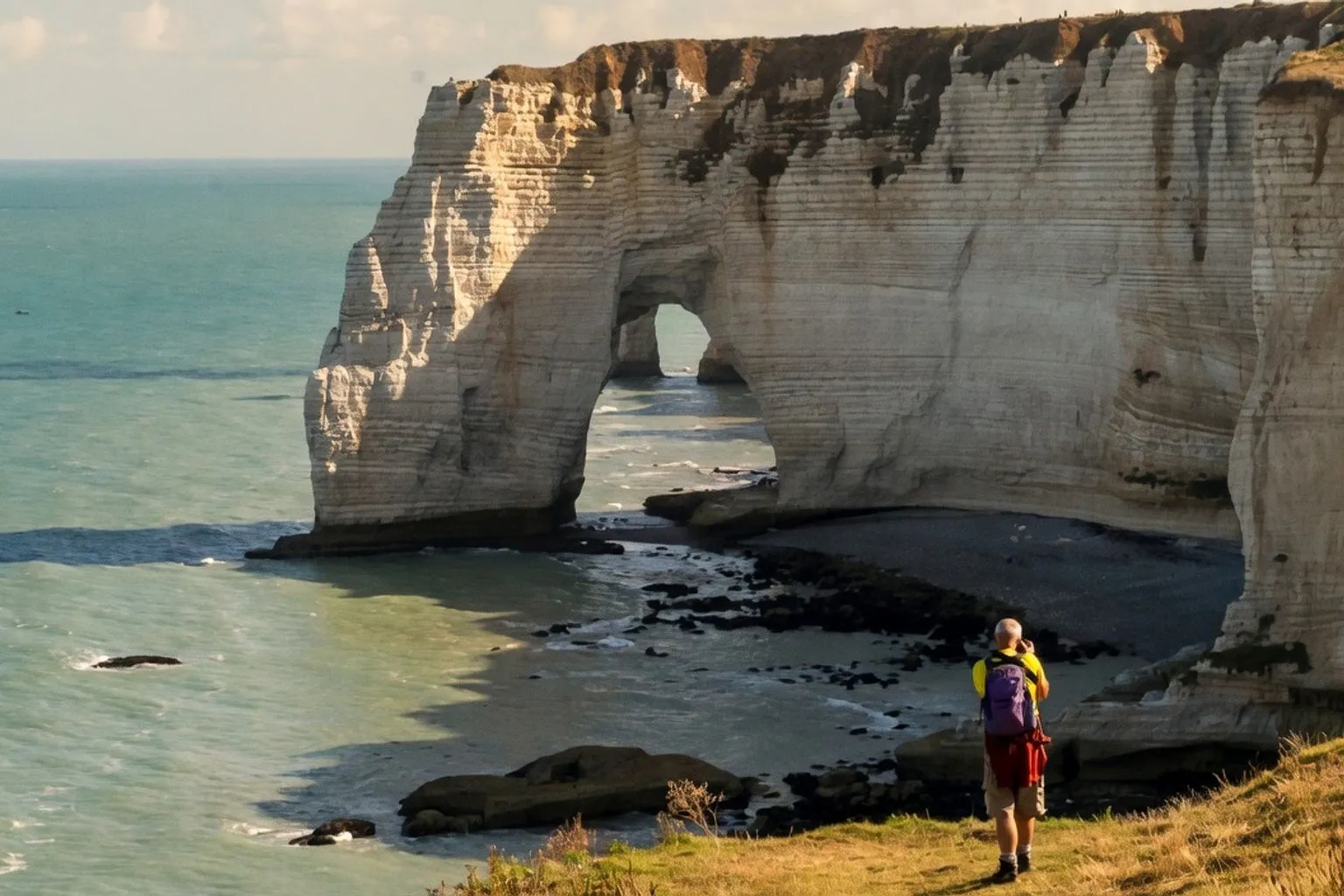
July Hotel Rooms at 79.1% Occupancy — But the Map Has Redrawn Itself
What changed was not volume but destination. Demand did not shrink — it shifted north and inland.
The Channel coast gained 4.5 occupancy points in July alone, breaching 90% in August. Normandy posted 2.6-point occupancy growth and a 5.9% rise in revenue per available room through June and July. Dunkirk cleared 90% occupancy mid-August, eight points above the prior year. Brittany and the Northern Alps also reported double-digit revenue increases per available room. The association noted the Channel coast's run marks its second consecutive summer of growth, the Alps their third — suggesting a structural pattern, not an anomaly.
For Dordogne bookings, the signal is directional. The valley sits outside the reported boom zones but inside the broader behavioural shift toward rural, cooler, non-metropolitan stays. That creates two immediate variables for any self-catering reservation: thermal performance of the property and pool availability as a heat hedge.
Air Conditioning Now the Primary Filter — and That Changes the Gite Calculus
Laurent Barthélémy, president of UMIH Saisonniers, stated that air conditioning had become the single biggest factor for holidaymakers choosing accommodation. The observation is consistent with July's 24.9°C national average — the hottest month ever recorded in France. For a stone-built Périgord property, the claim demands verification on site. Many gites marketed as "cool" rely on thermal mass and shuttered orientations, which function below 35°C ambient but degrade rapidly once overnight lows stay above 20°C. Ask the owner or agent for measured interior peak temperatures during the July heatwave, not architectural assumptions.
Pool access becomes less a luxury feature and more a functional cooling asset. The question is no longer whether a pool exists but whether its dimensions and filtration cycle permit sustained daily use across a week — a common shortcoming in smaller rural setups where a 6×3m basin on shared timer looks adequate in brochure photography but fails under continuous 40°C footfall.
Northern France's Gain Is Not Necessarily the Southwest's Loss — But Bookings Require More Due Diligence
The data from Alliance France Tourisme confirmed that the Côte d'Azur and Paris continued to attract large numbers despite the redistribution. Over-tourism in traditional zones did not collapse. What the report does not contain is granular data for Nouvelle-Aquitaine or the Dordogne valley specifically. That absence is itself a data point: the region sits in a statistical middle tier, neither spiking like Normandy nor declining like some Mediterranean hotspots.
For a traveller weighing a Dordogne gite against a Normandy cottage this autumn, the value-for-money equation has narrowed. Northern properties now command higher nightly rates reflecting their peak-season surge. The Périgord, by contrast, may offer relative price stability — but only if the property in question has been audited for summer comfort rather than sold on autumnal atmosphere. Stone walls and east-facing terraces lose their charm above 38°C without mechanical cooling or deep shade geometry.
Verify before depositing.