Pécharmant vs Monbazillac: two Bergerac wine routes
Choosing between Pécharmant and Monbazillac is not simply a matter of deciding whether you prefer red or white wine.
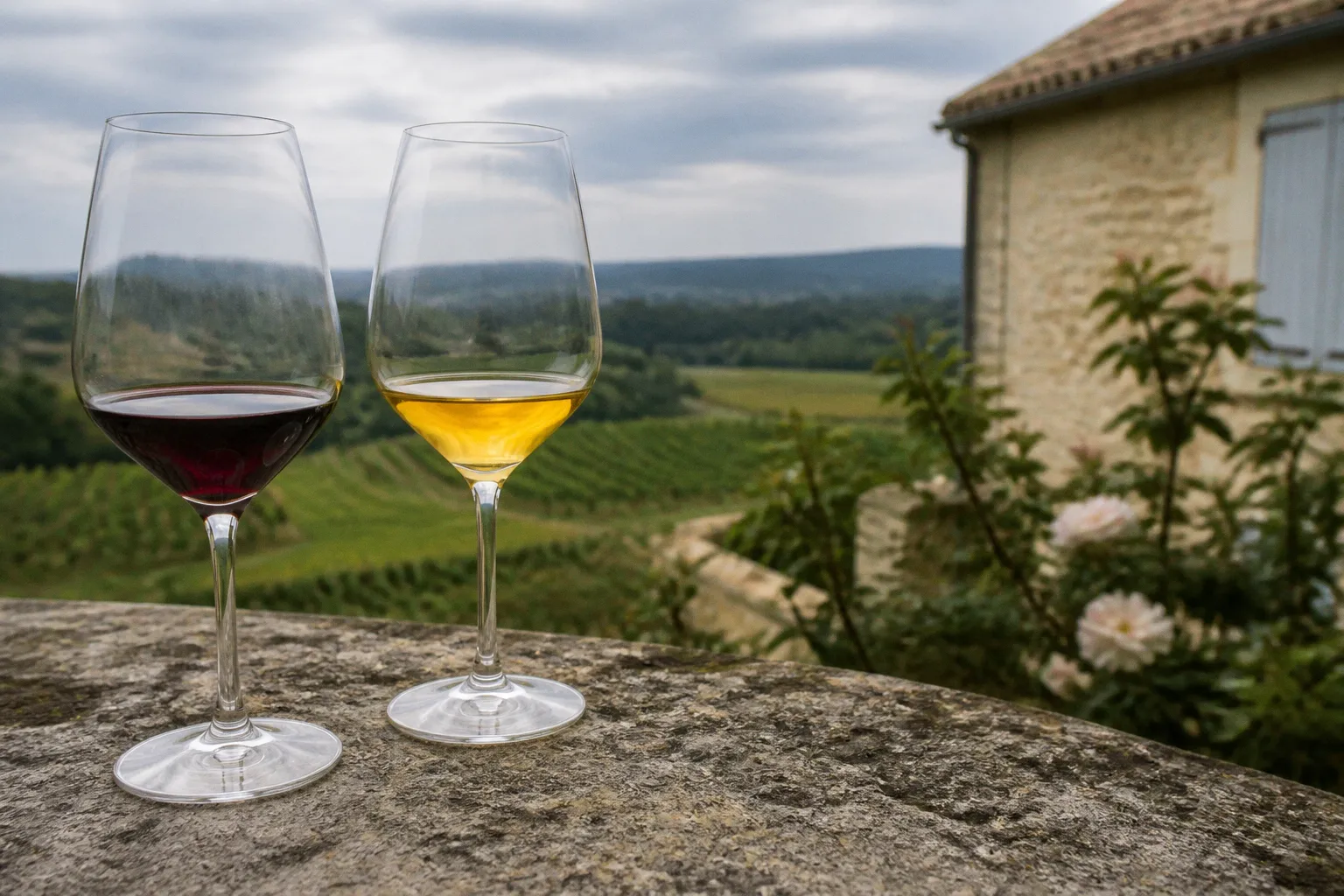
These are two very different expressions of the Bergerac region, shaped by separate soils, grape varieties, cellar traditions, and moments at the table. One route leads north from Bergerac towards structured reds grown on gravel, blue clay and flint; the other crosses the river plain south of town towards golden sweet whites, traditionally served with foie gras, blue cheese or the first course of an aperitif.
That distinction makes the choice easier once you understand what kind of day you want. Pécharmant suits a traveller who enjoys a slower red-wine tasting, a walk between vineyard viewpoints and bottles with enough structure to accompany a substantial meal. Monbazillac is the more immediately distinctive day trip: sweet white wines, honeyed aromas, château visits and a style of tasting that works beautifully when lunch, cheese and dessert are part of the plan.
For a practical Pécharmant vs Monbazillac wine tasting route, start in Bergerac at Quai Cyrano, then choose the landscape and drinking style that fit your pantry plans and appetite.
The gateway to both routes: Quai Cyrano in Bergerac
The most useful starting point is the Quai Cyrano, the Maison des Vins et de Tourisme housed in the 17th-century Cloître des Récollets beside the Dordogne river in historic Bergerac. It represents all seven Bergerac wine terroirs, so it is more than a place to collect a leaflet. It gives you a way to understand the regional map before you commit to a direction.
This matters because the two appellations are close enough to combine geographically, but different enough to feel like separate wine journeys. Pécharmant lies north of Bergerac, around places including Lembras and Saint-Sauveur. Monbazillac sits south of the town across five communes: Monbazillac, Colombier, Pomport, Rouffignac-de-Sigoulès and Saint-Laurent-des-Vignes.
The driving distances are manageable for a day based in Bergerac or in a Dordogne gîte nearby. You do not need to treat the routes as a multi-day expedition. The more realistic question is how much tasting you want to do, whether you plan to eat along the way, and who will be driving afterwards.
At Quai Cyrano, use the visit to settle three practical details:
- Which estates are receiving visitors on the day you want to travel, since opening hours and tour formats can change with the season.
- Whether you want a guided cellar or château visit rather than a simple tasting at a wine tourism counter.
- How you will manage transport if several tastings are part of the itinerary.
Exact admission and tasting fees vary by château, season and tour type, so confirm them directly before setting out. In wine country, the harvest window and the holiday calendar can alter the rhythm of a visit just as much as the vintage does.
The best Bergerac wine route is not the one with the most stops; it is the one that leaves enough time to understand what is in the glass.
Pécharmant: structured reds on gravel, clay and flint
Pécharmant is the choice for red-wine drinkers who want texture, shape and a sense of place without travelling into the better-known Bordeaux appellations. The vineyards lie north of Bergerac, where sandy-gravelly soils, blue clay and flint contribute to the character of the wines.
The important point is not to reduce terroir to a decorative word. Soil affects drainage, heat retention and the way vines experience a growing season. Gravelly ground can influence how quickly a site warms and sheds water, while clay holds moisture differently. Flint adds another layer to the local geology. The resulting wines are recognised for being high quality and structured, which means they are usually more successful beside food than as a casual glass poured without anything to eat.
That makes Pécharmant particularly suitable for a long lunch in the Dordogne. Think of the kind of dishes that benefit from a red with enough backbone to meet them: duck, confit, grilled beef, a deeply flavoured mushroom dish or a slow-cooked preparation where the sauce is doing as much work as the meat. The precise pairing will depend on the bottle, vintage and preparation, but the principle is consistent: structure needs a plate with some substance.
What a Pécharmant wine tour feels like
A Pécharmant wine tour is best approached as a sequence of contrasts rather than a race between tasting rooms. The landscape north of Bergerac is close enough to remain convenient, but the route quickly gives you a more rural rhythm. Vineyards, small roads and viewpoints become part of the tasting experience, especially if you build in time outside the cellar.
The Boucle de Pécharmant near Lembras is a useful addition for visitors who want to put the wine into its physical landscape. It is an easy walking loop of 8.8 kilometres, with 110 metres of elevation gain and an approximate walking time of three hours. The route includes views towards Château de Monbazillac and Bergerac, making it especially rewarding for a traveller who is comparing the two appellations rather than visiting only one.
Allow more time than the walking duration alone suggests. Rural trails have their own storage temperature, in a sense: the pace of the day needs to be kept cool. Add time for parking, photographs, a pause at a viewpoint and the simple practicalities of walking in warm weather. Comfortable footwear and water will serve you better than trying to fit the loop between hurried tastings.
For a day built around Pécharmant, the following rhythm works well:
1. Begin at Quai Cyrano to orient yourself among the Bergerac terroirs and confirm the day’s visitor arrangements.
2. Drive north towards the Pécharmant vineyards, allowing the route to unfold rather than stacking several appointments too closely.
3. Make one substantial château or estate visit, where you can hear how the producers work with the local soils and red-wine style.
4. Walk the Boucle de Pécharmant near Lembras if conditions and energy allow.
5. Finish with a meal that gives the wine a proper role, rather than treating it as an isolated souvenir tasting.
Bergerac received controlled designation of origin status in 1936, placing the region among the earlier French wine areas to gain official appellation recognition. The date is useful context, but the more important point for a visitor is that the appellation system reflects real local distinctions. Pécharmant is not simply a red-wine label to place beside Monbazillac on a shelf; it belongs to a different landscape and a different table.
Monbazillac: golden sweet whites and a gentler tasting pace
South of Bergerac, the Monbazillac route offers a very different kind of wine day. AOC Monbazillac covers five communes and is known for golden sweet white wines made from Sémillon, Sauvignon and Muscadelle.
Those three varieties bring different elements to the blend, but the finished wine is understood through its balance rather than sweetness alone. The traditional aromatic profile includes acacia honey and spices, with a rounded richness that makes the wine memorable even for people who do not usually seek out dessert wines.
This is where many visitors make a small but consequential mistake: they plan Monbazillac as though it were only a final drink after lunch. It can certainly be served that way, but its role is broader. A well-chosen bottle may accompany foie gras, blue cheeses or an aperitif, and it can sit comfortably within a meal when the food has enough salt, richness or savoury depth to meet its sweetness.
The route is also well suited to a traveller who wants a château-centred day. The landscape south of Bergerac gives the visit a clear destination and an easy narrative: leave the town, cross into the Monbazillac communes, visit a producer or estate, taste the wines, and build the rest of the day around lunch and the local countryside.
Planning a Monbazillac wine tasting day trip
A Monbazillac wine tasting day trip is often less physically demanding than a Pécharmant itinerary with the walking loop, but it still benefits from a little planning. Sweet wine tastings can become tiring if every glass is approached in the same way, so the order of the day matters.
Begin with the practical questions:
- Are you visiting for a formal château tour, a tasting, or both?
- Will the estate be open at the time you arrive?
- Is lunch nearby, and does the menu include regional dishes that will work with a sweet white?
- Do you need to reserve a table, particularly during the busier travel months?
- How many bottles can you safely carry and store once you return to your gîte?
The last question is less glamorous but genuinely useful. Sweet white wines are sensitive to serving conditions in the same way any wine is. If you buy a bottle for the evening, avoid leaving it in a hot car while you continue sightseeing. Back at your accommodation, use the refrigerator sensibly and follow the producer’s serving guidance. Storage temperature is not a technical footnote when the wine’s freshness and aromatic lift are central to the experience.
Monbazillac also works well for visitors who prefer to taste without turning the day into a driving circuit. Choose one principal estate, leave space for lunch and allow the wine to remain the focus. There is no prize for adding a second appointment if it makes the first one feel rushed.
Pécharmant and Monbazillac compared
The clearest way to choose between the routes is to match the appellation to the shape of your day. Both belong to the Bergerac wine region, both are accessible from town, and both offer an opportunity to connect wine with landscape. Their practical differences are more useful than a general ranking.
| Parameter | Pécharmant | Monbazillac |
|---|---|---|
| Main wine style | Structured, high-quality red wines | Golden sweet white wines |
| Position relative to Bergerac | North of the town | South of the town |
| Local geography | Around communes including Lembras and Saint-Sauveur | Across Monbazillac, Colombier, Pomport, Rouffignac-de-Sigoulès and Saint-Laurent-des-Vignes |
| Soil character highlighted in the region | Sandy-gravelly soils, blue clay and flint | The route is best understood through the appellation’s sweet-white tradition and château landscape |
| Grape information available for the appellation | Red-wine style is the defining feature | Sémillon, Sauvignon and Muscadelle |
| Best table companions | Duck, red meats, earthy dishes and robust sauces | Foie gras, blue cheese, aperitif dishes and selected desserts |
| Strongest additional activity | The 8.8-kilometre Boucle de Pécharmant near Lembras | A château and tasting-focused day |
| Ideal visitor | Someone who enjoys red wine, walking and a substantial meal | Someone who enjoys sweet whites, regional pairings and a slower tasting itinerary |
| Planning caution | Do not compress the vineyard walk between appointments | Do not assume every estate offers the same tour or tasting format |
The comparison should not be read as a competition. Pécharmant has the stronger case when you want a red to carry a meal and a route with an active landscape component. Monbazillac is more distinctive when you want a sweet-white tasting with a clear local identity and food pairings that are easy to build into the day.
Pairing the wines with a Dordogne meal
Wine routes become more satisfying when the bottle has somewhere to go after the tasting. A cellar visit can explain the wine’s origin, but the table explains its use.
Pécharmant’s structured reds naturally point towards the richer side of Dordogne cooking. A dish with a proper butcher’s cut, a slow-cooked sauce or the deep savouriness of duck gives the wine room to show why structure matters. The aim is not to overpower the food with tannin or weight. It is to create enough balance that the wine does not disappear beside the dish.
Monbazillac offers a different form of flexibility. Its sweetness is traditionally associated with foie gras and blue cheeses, where salt and richness provide counterweight. It can also be offered as an aperitif, particularly when the rest of the plate is modest and savoury. With dessert, the pairing needs more care: a dessert that is much sweeter than the wine can make the bottle seem thin, while a restrained fruit or cream-based preparation may leave space for the wine’s honeyed and spiced notes.
If you are cooking at a gîte, make the shopping trip part of the route rather than an afterthought. Local markets are useful not simply because they sell regional ingredients, but because they reveal the harvest windows of the season. The best plan is often to buy the main ingredient first, then choose the bottle that supports it. That reverses the habit of purchasing wine in isolation and hoping dinner will adjust around it.
For a Pécharmant evening, look for a meal with:
- A substantial protein or a deeply savoury vegetable centre.
- A sauce or cooking method with enough concentration to meet a structured red.
- A serving temperature that keeps the wine fresh rather than warm and heavy.
- Time for the bottle to open in the glass, rather than being poured and judged immediately.
For Monbazillac, plan around:
- Foie gras or another rich, savoury starter.
- Blue cheese served in a measured portion.
- An aperitif where the sweetness is balanced by salty or gently spiced foods.
- A dessert whose sweetness does not overwhelm the wine.
There is no need to force a regional pairing if it does not suit your meal. Local tradition is a guide to balance, not a set of rules that turns dinner into an examination.
Monbazillac belongs at the table long before dessert, while Pécharmant often reveals its purpose only once the main course arrives.
Building a one-day Bergerac wine itinerary
For most visitors staying in the Dordogne, the decision comes down to energy, weather and the sort of meal you want at the end of the day.
Choose Pécharmant if the day should include movement
Pécharmant is the stronger itinerary for a morning or early afternoon walk. The Boucle de Pécharmant gives the route a physical centre, with 8.8 kilometres of easy walking and 110 metres of elevation gain. Its approximate duration is three hours, so it is not a token stroll to fill ten spare minutes. Plan it as a genuine part of the day.
A sensible arrangement is to walk before the main tasting, particularly in warm weather. You will be more comfortable, and the wine can then be approached with a clear head and a proper meal afterwards. Alternatively, visit the estate first and walk later, but leave enough time to return safely and avoid turning the final tasting into a rushed appointment.
Pécharmant suits:
- Couples or friends who enjoy combining wine with a country walk.
- Travellers planning a substantial lunch or dinner.
- Red-wine drinkers looking for structured local bottles.
- Visitors who want views towards both Bergerac and Château de Monbazillac.
Choose Monbazillac if the day should revolve around food and a château
Monbazillac is the more straightforward option when you want a concentrated tasting day without a long activity between appointments. The south-of-Bergerac route is well suited to a château visit, a leisurely lunch and time to buy a bottle for the gîte.
It also works for mixed groups. Someone who rarely drinks red wine may find the sweet white style more approachable, while experienced wine drinkers can focus on how Sémillon, Sauvignon and Muscadelle combine in the blend and how the wine changes with food.
Monbazillac suits:
- Travellers who enjoy sweet white wines or want to understand them better.
- Visitors planning foie gras, blue cheese or an aperitif.
- A slower itinerary with one principal estate visit.
- Anyone who prefers not to build the day around a three-hour rural walk.
Combine both only when the schedule remains generous
Since the appellations are within short driving distance of Bergerac, combining them is possible. It is also easy to over-plan. Two routes, several tastings, lunch, a walk and a final bottle shop can turn a promising day into a sequence of car parks and closing times.
If you combine the appellations, give each one a clear role. You might visit Pécharmant for a morning tasting and landscape walk, then take Monbazillac as the food-led stop later in the day. Or reverse the order, provided the timing of the estates and meal supports it.
Do not treat every tasting room as interchangeable. One visit should teach you about the structured red identity of Pécharmant; the other should make the sweet-white tradition of Monbazillac intelligible through grape varieties, aromas and pairings. The point of combining routes is contrast, not volume.
The practical details that shape the experience
A Dordogne wine itinerary is governed by small daily decisions: footwear, lunch timing, driving distances, bottle storage and the amount of heat you are willing to tolerate between visits. These details affect the quality of the tasting more than an ambitious route on paper.
Start early enough to avoid compressing the first visit. If you are travelling during a busy season, check opening arrangements in advance rather than assuming that every château operates as a drop-in destination. Some estates may offer different options for a simple tasting and a longer guided tour, and the current price depends on that format.
If you plan to buy wine, bring a simple way to keep bottles stable during the drive. Do not leave them baking in the boot while you continue sightseeing. Once back at the gîte, use a cool, dark place for unopened bottles and refrigerate sweet white wine according to the producer’s guidance. A bottle bought with care deserves better than an afternoon in direct sun.
For walkers, the Pécharmant loop deserves the same preparation as any countryside route:
- Wear shoes with reliable grip, even if the trail is described as easy.
- Carry water and allow time for a slower pace in hot weather.
- Keep the walk separate from alcohol-heavy tasting plans.
- Check the return route before setting out, particularly if you have an evening reservation.
- Leave room in the day for a proper meal rather than relying on snacks between stops.
For food planning, reserve the meal before the route becomes complicated. A wine itinerary without a realistic lunch window is usually a driving plan with glasses attached. If the restaurant or market is part of the experience, let it determine the day’s pace.
Which Bergerac wine route should you take?
Choose Pécharmant when you want a red-wine route with geological character, a structured style and the option of a substantial walk near Lembras. Its wines make sense beside the hearty, savoury cooking of the region, and the vineyard loop adds a useful physical dimension to the visit.
Choose Monbazillac when you want golden sweet whites, honey and spice in the glass, and pairings built around foie gras, blue cheese or an aperitif. It is the better fit for a château-centred day that moves gently from tasting to lunch without requiring a long outdoor activity.
If you have time for both, let them remain different. Do not try to decide which appellation is superior when their strengths lie in opposite directions. Pécharmant gives you structure and red-fruit depth; Monbazillac gives you sweetness, perfume and a natural relationship with salt and richness. Together, they make Bergerac’s wine country more legible.
The most useful final tip is simple: plan the meal before choosing the bottle, then plan the route around the opening times and the driver. A good Dordogne wine day is not measured by the number of tastings completed. It is measured by whether the landscape, the food and the wine still make sense when you sit down at the end of it.