How a Historic French Village Was Reimagined as a Luxury Boutique Hotel
A 43-room Provençal property in Vaucluse has added nine guest rooms this season by converting three more village houses, according to Travel + Leisure's reporting on Hôtel Crillon le Brave.
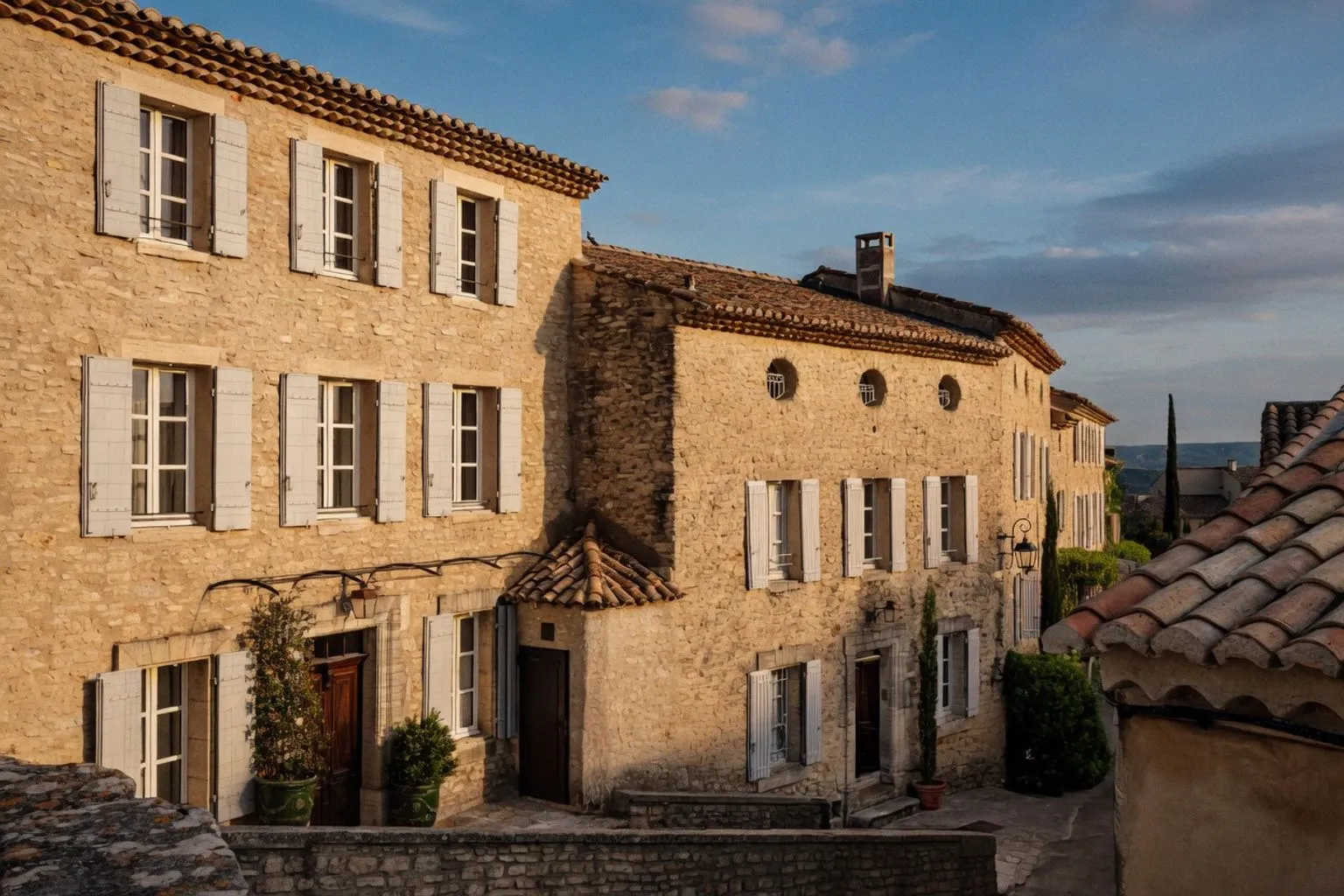
The Maisons Pariente family took over what had been an 11-room cyclist stopover at the foot of Mont Ventoux and reopened the full hotel in 2019; the latest expansion lifts room inventory across 17th- and 18th-century stone structures. For readers tracking how heritage stone is monetised as luxury accommodation, the project offers a measurable case study in footprint density, thermal-mass performance, and conversion logistics — with direct implications for anyone weighing a stone-property purchase in the southwest.
The footprint and what was built
The property occupies the perched hamlet of Crillon-le-Brave, where cobbled lanes link the converted buildings. Total inventory now stands at 43 rooms and suites, with this season's nine new rooms spread across three separate village houses. Architect Charles Zana led the 2019 restoration; this round was handled by Margaux Perrin, formerly a project lead in Zana's studio, working to the same pared-back brief. Reported materials include antique terracotta tiles, custom rugs by Paris-based Édition 1.6.9, and antiques sourced from Les Puces de Paris Saint-Ouen. Some vintage armoires were retained from the original hotel.
Logistics that determine whether the numbers work
Two outdoor heated pools operate year-round — a meaningful energy load at the property's elevation below the 6,273-foot Mont Ventoux limestone summit. The expanded spa occupies 18th-century stone stables; the fitness centre sits in the former village chapel, where private yoga sessions are offered. Reviewed unit sizes range from a 431-square-foot Prestige Ventoux Room overlooking the pool terrace to a Two-Bedroom Deluxe Suite spanning two floors. Junior suites accommodate families. Kimberley Cohen, of the Maisons Pariente ownership group, framed the original acquisition in terms that matter for any heritage conversion: "We were amazed by the place, by the view, by the originality of the hotel — that it's not really a hotel but a village." The collection operator, Maisons Pariente, was launched by Patrick Pariente with his daughters Kimberley Cohen and Leslie Kouhana.
Verdict for the southwest self-catering reader
Useful as a reference point; limited as a direct model. Provençal positioning, Vaucluse foot traffic, and the year-round heated-pool infrastructure sit outside the typical owner-operator gite economics in Dordogne and the Aquitaine. What the project does demonstrate is what fully capitalised heritage redevelopment looks like when scope, capital, and a coherent design brief align — and it sets a ceiling on finish quality that self-catering operators in competing regions now have to measure against. Value-for-money on the conversion model: yes. Direct applicability to small-operator self-catering inventory: no.