Why Luxury Dordogne Gites Must Target the Growing US Traveler Market
2 million between April and June, according to INSEE data reported by TravelMole.
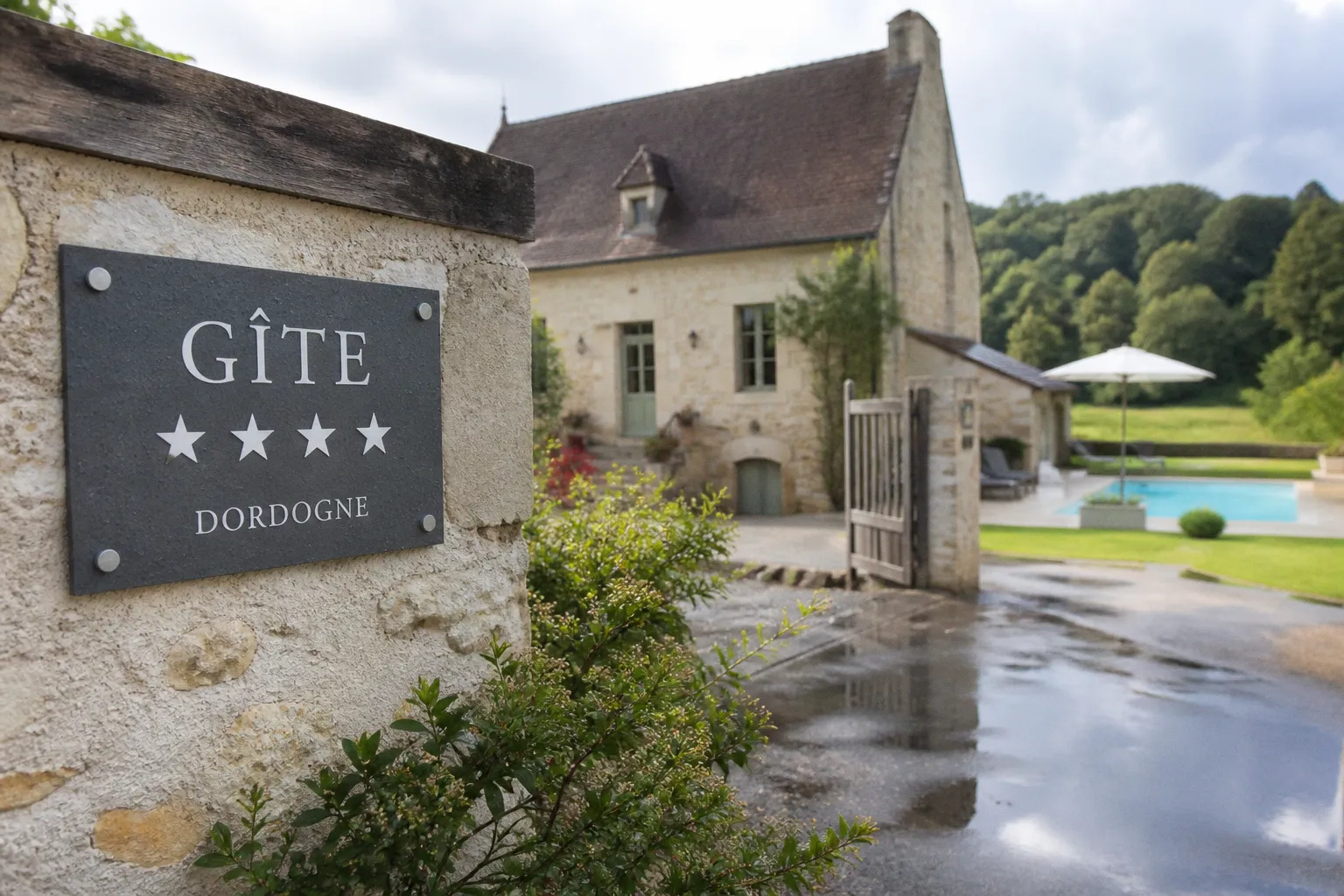
US guest nights at French tourist accommodations rose 1% year-on-year in Q2 2026, reaching 84.2 million between April and June, according to INSEE data reported by TravelMole. The headline figure masks a split that matters for anyone marketing a luxury Dordogne gite: hotels carrying the 4- and 5-star segment gained 4.2% in overnight stays, while "other collective accommodations" — the bucket that includes vacation residences and holiday villages — slipped 0.5%, shedding roughly 100,000 nights.
The premium tilt
The upper tier absorbed the demand. Three-star properties added 3.7% to overnight stays; four- and five-star hotels added 4.2%. At the opposite end, one- and two-star properties lost 2.1%, and unclassified stock dropped 12%. Travellers paid more per night and concentrated in fewer, higher-spec properties.
For a self-catering gite with pool in the Périgord, the read-across is direct. INSEE's "vacation residences" line covers professionally managed complexes more than individual farmhouses, but it sets the floor. Independent owners competing on fixtures, bedding and pool specs are not benchmarked against a budget motel — they are benchmarked against a hotel suite with a private terrace.
Where the guests came from
International hotel nights rose 1.1% (+250,000 nights); domestic nights rose 1.9% (+700,000). The national market remains the larger base. Within the international pool, the US delivered the standout figure at +8% in hotel overnight stays. Belgium followed at +4.6%, the Netherlands at +4.4%, Germany at +2.7%. Britain dropped 2.7%. Asia and Oceania fell 12%, attributed to Gulf-war disruption of transfer traffic.
US growth at 8% is the number worth modelling. The INSEE data confirms a premium-tier hotel market absorbing higher nightly rates; a four-bedroom gite with private pool in the Dordogne competes in that same per-night bracket, with the addition of square metreage, privacy and pool access the hotel tier cannot match.
Geography: rural stable, coastal up
Rural communes were "broadly stable" in INSEE's hotel counts — neutral for Dordogne gites, which sit outside the hotel universe entirely. Coastal France recorded hotel growth of 4%; mountain destinations dipped 0.2%. Urban areas split sharply: intermediate-density municipalities gained 9.2%, densely populated cities fell 2%.
The Dordogne does not compete with the Côte d'Azur on coastal footfall, nor with Chamonix on ski capacity. It competes on rural stability and shoulder-season occupancy — both left intact by Q2.
What to verify before the 2027 peak
Three checks for the next booking cycle:
- US-source conversion against a 2024–2025 baseline. INSEE confirms the direction; the question is depth. Track direct bookings versus OTAs for Q3 and Q4 2026.
- British decline (-2.7%) and Asia/Oceania drop (-12%). Sterling volatility and Gulf airspace disruption may persist. Diversify listing language and currency display accordingly.
- Business travel recovery. INSEE recorded the first year-on-year rise in business stays since COVID (+6%). Urban leads, but rural mid-week occupancy should still be tracked — it has been the weakest segment since 2020.
A 1% headline with a 4.2% premium-tier lift is not a flat market. It is a market sorting itself by spec. For owners of well-specified Dordogne gites, Q2 2026 is a tailwind. For those trading on charm alone, it is a headwind.