Wine tasting tours: Dordogne versus Bordeaux for your stay
So you've picked your gîte, you've stocked the kitchen with yesterday's market haul, and now the harder question arrives: do you spend your wine days wandering the small family domaines twenty…
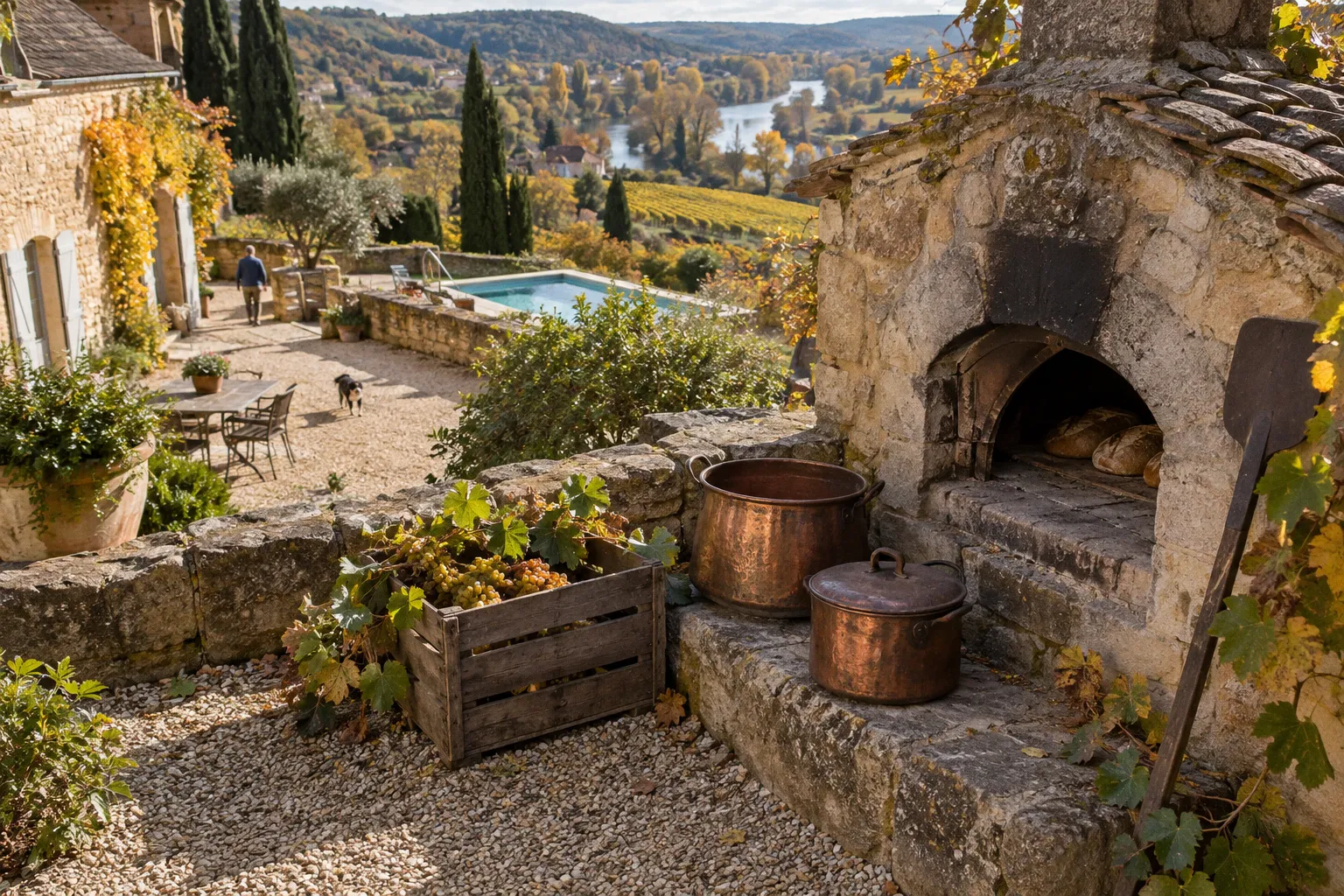
So you've picked your gîte, you've stocked the kitchen with yesterday's market haul, and now the harder question arrives: do you spend your wine days wandering the small family domaines twenty minutes down the valley road, or do you commit a full day — and a chunk of your holiday budget — to the pilgrimage north into the Bordeaux appellation? Most guests I know ask me this on their second morning, coffee in hand, looking out over the walnut trees and the mist still lifting off the Dordogne.
Let me save you the suspense. The honest answer is that the two regions reward completely different kinds of attention, and the choice depends less on which wines are "better" than on how you want a tasting day to actually feel — whether you want a long, conversational lunch with a winemaker pouring from a barrel in his back room, or a structured, almost museum-grade visit to a classé estate with limestone cellars that have been ageing wine since your great-grandparents were children.
This guide is built around that fork in the road. We'll look at what the Bergerac-Dordogne side actually offers in terms of appellations, tasting room culture, and price points, then turn the compass north to Bordeaux and break down what a serious visit there requires in terms of booking lead time, transport, and budget. Along the way I'll flag where the two regions overlap in grape varieties and where they diverge in soil and style, and I'll close with a practical itinerary rhythm for guests who want to weave both into a single two-week stay.
A tasting trip is a question of posture: are you leaning in to listen, or stepping back to admire? Bergerac invites you to lean in; Bordeaux asks you to step back.
The Bergerac Experience: 13 AOCs Built for Walking In
If you've never tasted seriously in the Dordogne before, the first thing that surprises most guests is how accessible the cellar door is here. The Bergerac wine-growing region covers roughly 12,000 hectares of cultivated vineyard — a substantial landmass — but it's fragmented across around 1,200 individual wine-growers, which means the average domaine is small, family-run, and very accustomed to dropping everything to pour for whoever turned up on the lane.
There are 13 Appellations d'origine contrôlée in Bergerac, and they cluster into recognisable groups. The reds come principally under Pécharmant (a firmer, more structured style from the higher slopes north-east of the town), Montravel (a softer, earlier-drinking red), and the umbrella Bergerac Rouge. The whites span Bergerac Blanc (often a Sémillon-Sauvignon blend), Monbazillac — the famous sweet wine just across the river — Saussignac (a smaller, often more concentrated sweet appellation), Rosette (a lightly sweet white), and Côtes de Duras, which technically sits in Lot-et-Garonne but functions as part of your local orbit. For a red-leaning palate, Pécharmant is the appellation I'd send you to first; for sweet wines, Monbazillac is the obvious pilgrimage.
The practical point is that almost none of these tasting rooms operate on a "book three weeks ahead, minimum spend €45" basis. You drive up, you ring the bell, and if anyone is home you taste. Many domaines don't charge at all; some ask €5 to €10 per person, usually refunded against a bottle purchase. The person pouring is often the winemaker, the tractor driver, and the one who pruned the rows you're looking at — and conversation tends to wander across the cuves while they explain what went into the vintage, from rainfall in May to mildew pressure in July, the parcel they're thinking about pulling out, the year they finally got the rosé right.
The one major piece of tasting infrastructure in the area is Quai Cyrano, which opened in 2019 inside the restored 17th-century Cloître des Récollets in Bergerac itself. It acts as a single point of introduction to all seven of the main Bergerac wine terroirs — Bergerac, Monbazillac, Saussignac, Montravel, Rosette, Pécharmant, and Côtes de Duras — which makes it a useful first stop if your group contains a spread of preferences. The staff walk you through structured flights so nobody has to commit to a single style before they understand the lay of the land. Allow ninety minutes for a proper visit, longer if you're going to sit on the terrace afterwards.
Roughly 85% of Bergerac AOC wine never leaves France, which means almost everything you'll taste here is functionally a regional secret. Visit while you can taste it at the source.
Bordeaux Grand Crus: Navigating the World of Prestige Estates
Two hours north of Bergerac sits the city of Bordeaux, and the wine region that wraps around it. The contrast in scale is immediate. You're moving from a patchwork of 1,200 small growers to a constellation of sometimes vast estates, some of them running back to the 17th and 18th centuries, some with cellars that could swallow a small barn. The Médoc, Saint-Émilion, Pomerol, Pessac-Léognan, Sauternes — each is a recognised name on bottle labels worldwide, and the most prestigious châteaux sit within an hour's drive of the city centre.
Booking here is a different animal. For the first and second growths in the Médoc — Margaux, Pauillac, Saint-Julien, Saint-Estèphe — you generally need to email weeks or months in advance, name the guests, and confirm a slot. Visits are usually around 45 to 90 minutes, often bilingual, and sit alongside a tasting of two to four wines drawn from current and recent vintages. The classics are paired with quiet formality: a guided walk through the chai, an explanation of the gravelly terroir, a pour in the tasting salon. Some of the smaller classed estates are surprisingly warm and conversational; the larger houses can feel almost choreographed.
For a first visit, I'd frame the day around three tiers rather than trying to do everything. The larger picture lives in the first and second growths and a few of the most famous right-bank names, but those visits need real lead time. The middle tier — classed growths and family-run bourgeois crus — gives you the polished, recognisable Bordeaux style without the booking headache. The boutique tier is where the region opens up; smaller right-bank châteaux often welcome drop-ins, and those tend to be the most conversational visits you'll have on the whole trip.
| Tier | What you're tasting | Typical visit length | Booking lead time |
|---|---|---|---|
| First & Second Growths (Médoc, Saint-Émilion) | Iconic, ageworthy reds; structural wines | 60–90 min tours, often private | 2–6 weeks minimum |
| Classed Growths & Bourgeois Crus | Polished, recognisable Bordeaux style | 45–75 min, small groups | 1–3 weeks |
| Boutique & Right-Bank Châteaux | More intimate pours, winemaker-present | 30–60 min, often drop-in | Days, or just turn up |
The price ladder runs from roughly the price of a decent lunch to the price of a serious one. The CIVB's Bordeaux Wine School — the École du Vin, the official introduction workshops run from the CIVB in the city — starts around €12 to €29 per person for a structured flight led by a sommelier, which is an efficient way to absorb the basics if you've never tasted a structured Bordeaux flight before. From there, pricing climbs: private tours and curated pairings with food can run up to €90 per head, and certain first growths simply don't open their doors to walk-ins.
A practical note on geography. The Bordeaux appellations are large and the region is spread out — the Médoc is up to an hour north of the city, Saint-Émilion about 45 minutes east. Driving yourself works but requires a designated driver for anything more than a sip at each stop; the alternative is to hire a driver for the day, which removes the cognitive load and is the way most locals do it when they want to taste properly. Several operators run small-group day tours from Bergerac or Sarlat with pickup at your gîte, which folds the logistics into the cost and lets you taste rather than navigate.
Grapes, Soil and Style: Shared Roots, Different Expressions
This is where the conversation usually wins converts, because the grapes themselves are deeply intertwined. The reds on both sides of the divide lean on the same Bordeaux triad — Cabernet Sauvignon, Merlot, and Cabernet Franc — and the whites share Sauvignon Blanc, Sémillon, and Muscadelle. If you've tasted a Left-Bank Bordeaux red, you already know the rough shape of a Pécharmant; if you've tasted a Sémillon-Sauvignon white from Pessac, you'll recognise the bones of a dry Bergerac Blanc.
What changes is the soil and the climate, and what those differences allow in the cellar. The Dordogne side sits on a mixture of clay-limestone and sandy-gravelly slopes, with a slightly more continental climate than Bordeaux's maritime blanket. The wines tend to come in a touch softer in tannin, a touch earlier to approach, and the reds often show a little more plum and black cherry against the cassis-and-graphite line you'd expect from a Médoc classed growth. It's not better or worse; it's a recognisable inflection of the same grapes, the way the same song sits in a different key.
The Bergerac AOC rules also permit a few grapes Bordeaux doesn't, which has practical consequences you'll actually taste. Chenin Blanc and Ugni Blanc both show up on permitted lists, and you'll find them in dry whites, demi-sec styles, and especially in the sweet wines from Monbazillac and Saussignac, where botrytis does most of the structural work. If your group contains a lover of Loire Chenin — that honeyed, quince-and-chamomile register — a Saussignac pass through is genuinely worthwhile, and you'll find bottles at prices that would barely buy you a classed-growth second label across the border.
The whites are where the two regions feel most distinct on the palate. A standard Bergerac Blanc tends to be more fruit-forward, often with a softer Sémillon influence and a brighter Sauvignon cut; an entry-level Bordeaux blanc, by contrast, is usually more austere and mineral-driven, with the oak and grass notes dialled up. If you're choosing where to spend your white-wine day, this difference is your deciding factor. The reds, by the same logic, are the area where the two regions sit closest together on the spectrum.
Logistics and Timing: Day Trips vs Slow Days
The geography shapes everything else, and this is where the choice starts to harden. From most gîtes between Bergerac and Sarlat, the local vineyards are within a 20 to 45-minute drive, often down country lanes that pass through the very appellation you're heading toward. You're not committing the day; you're committing the morning. Most domaines are open by appointment or simply by turning up between 10am and 6pm, and the rhythm allows for two or three stops before lunch, a long lunch in a market town, and an afternoon cellar walk or vineyard stroll.
A Bordeaux day is a longer equation. You're looking at roughly 1.5 to 2 hours each way depending on your departure point and your destination within the region, which leaves five to seven hours of usable tasting time if you leave by 8am and return by 7pm — workable for a single targeted property or a cluster of three or four right-bank châteaux, but tight if you want to do both banks in one go. Most guests who commit to Bordeaux properly stay overnight in the city at least once during their stay, which spreads the cost, lets you taste at dusk, and turns the visit into its own short break rather than a marathon.
Two timing angles are worth a mention before you book. First, harvest. The harvest window in both regions falls roughly from mid-September to mid-October, and while you're rarely allowed into active fermentation, several domaines run special "vendanges" days where you walk the parcel, watch the sorting table, and eat lunch with the team — a sensory experience worth planning around if your stay dates have any give. Second, the en primeur period in late March and April can restrict some classed estates' visitor capacity, so a Bordeaux trip in spring sometimes means fewer open doors than the same trip in May or September.
A practical pitfall I see often: trying to do Bergerac and Bordeaux on the same day. The drive north is far enough that you'll arrive frazzled and you'll want to taste at the first reasonable place you find, which usually isn't the one you actually wanted to visit. Pick one or the other per day. The roads are better than they look on the map, but they reward a little daylight budgeting and a clear sense of which bank you're aiming for.
Curating Your Itinerary: A Practical Balance
For a two-week stay in the Dordogne, the rhythm I'd suggest is to make Bergerac-Dordogne your daily bread and Bordeaux a special ingredient. That usually shakes out as three or four local tasting days — a Quai Cyrano introduction, a Pécharmant half-day, a Monbazillac or Saussignac sweet-wine afternoon, and a wandering drive through the unmarked domaines you spot with their gates open — plus one overnight in Bordeaux, ideally with one classed estate booked in advance and the École du Vin workshop as a closer if you have a half-day to spare in the city before driving home.
If your group is mixed — some palates prefer reds, others sweet whites, someone who's never tasted seriously before — the Quai Cyrano day is genuinely the best opening move. The staff build flights that cover the full range and you leave with a much clearer sense of what each appellation is doing, which then makes your two or three follow-up visits to smaller growers more meaningful, because you know which questions to ask and you recognise the styles as you taste them.
For guests who already know Bordeaux wines well and want to use the holiday to deepen that side specifically, a pre-booked driver day into the Médoc or a Saint-Émilion cluster, returning via a stop at the CIVB's introductory flight in town, is the most efficient use of the time. Everything else — the meals, the market visits, the river canoeing — can fill in around it. And for anyone whose main love is Rhône- or Loire-style whites, the dossier is also worth a mention: the Dordogne's Chenin and Ugni Blanc examples won't replace a Vouvray or a Saint-Joseph in your cellar, but they will satisfy the same craving without a long drive.
Don't try to taste everything in one trip. Pick two or three places you'll remember talking to, and let the rest be a glass on the terrace.
A final practical note on cost, since guests ask about this more than almost anything else. Across both regions, plan a tasting budget of roughly €15 to €35 per person per visit for most experiences, with the upper outliers only at classed Bordeaux estates and curated private tours. If you keep most of your visits local and reserve one or two premium pours for Bordeaux, you'll come out ahead financially and probably tastings-wise too — because the quiet advantage of being a guest in the Bergerac valley is precisely that the everyday tastings here are also some of the best you'll ever do, in rooms small enough that the winemaker remembers your name by the third visit.