Bergerac Wine Tours: A Pre-Tasting Planning Checklist
A locked iron gate at a family-run Pécharmant estate, the owners away for the afternoon, the chai shuttered and the tasting room dark.
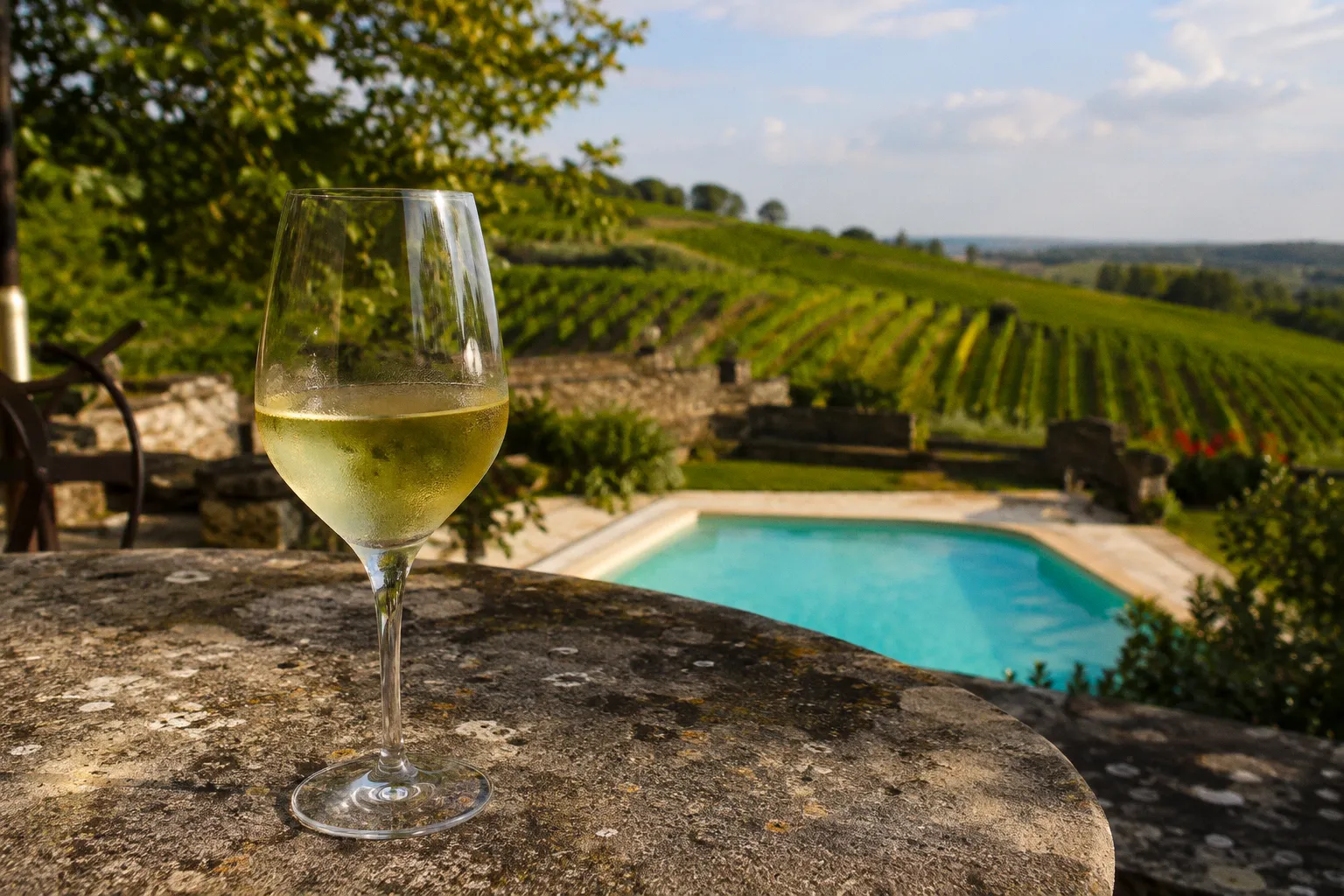
That is a familiar failure point on the Bergerac wine route: arriving at a vineyard door without a confirmed slot.
The region stretches across 12,800 hectares of vines on both banks of the Dordogne River, but its tasting culture is not built around stopping at every attractive signpost. Many of the most interesting estates are small, family-run properties where the person who welcomes visitors may also be managing the cellar, the vines or the day’s deliveries. Treat the trip like an approach march: secure your waypoints before you move, and the route opens up cleanly.
Treat every château visit as a confirmed waypoint. Walk-ups are gambling, not touring.
A good Bergerac wine tour preparation checklist therefore starts before you leave your gîte. Decide which appellations you want to understand, how much time you are willing to spend in the car, whether anyone in the group will be driving after tasting, and which visits genuinely need to be booked ahead. The wines are only part of the planning. Access, timing and transport determine how much of the region you will actually experience.
The Role of Quai Cyrano as Your Regional Gateway
Waypoint zero for any Dordogne wine operation is the Cloître des Récollets in old Bergerac. Inside the 17th-century cloister at 1 rue des Récollets sits Quai Cyrano, the main wine tourism hub for the region. The on-site wine bar stocks 140 regional references, giving visitors a practical sweep of the Bergerac AOC spectrum in a single room.
That matters because Bergerac is not one uniform wine style. The local appellations cover very different expressions, from red wines associated with Pécharmant to the sweet wines of Monbazillac and the wider Bergerac and Saussignac areas. A tasting at Quai Cyrano gives you a chance to work out what you actually want to pursue before spending half a day driving between estates.
The useful distinction is between a tasting room that merely presents bottles and a regional hub that helps you make decisions. Quai Cyrano belongs to the second category. The staff can book château visits on the spot, which is particularly valuable if you have arrived without pre-existing contacts or if your original itinerary has been disrupted by a closure.
It is an accessible, useful first stop rather than simply another tasting venue. Arrive early enough to use it as reconnaissance, not as an end-of-day consolation. Taste several wines across the appellation range, note the producers and styles that interest you, then ask what is open and accepting visitors that day. The team can help map the afternoon around actual availability rather than the optimistic opening hours listed on an old page or roadside sign.
This is one of the more practical Bergerac winery visit tips: use local knowledge to test your route before committing to it. A château may appear close on a map but take longer to reach than expected on rural roads. Another may be technically open but unable to receive visitors at the time you need. A conversation in Bergerac can prevent a great deal of unproductive driving.
Quai Cyrano is also a sensible first move for guests staying in a luxury self-catering gîte. You can gather local information in town, buy provisions and build a realistic vineyard route before committing to a full day on rural roads. The stop is particularly helpful when the group has mixed interests: one person can explore the regional range while another gets oriented to the geography, lunch options or the afternoon’s practicalities.
Quai Cyrano is your intelligence hub. Use the bar to scan the AOC range, then set the afternoon around what is genuinely open.
There is another advantage to beginning here. You are not yet committed to a long tasting, a formal vineyard walk or a cellar conversation. That flexibility is useful on the first day, when travel fatigue and late arrivals can make a carefully timed estate schedule unrealistic. A regional introduction in Bergerac allows you to keep the day light while still making informed choices about later visits.
Do not treat the town hub as a substitute for every estate experience. It gives breadth, orientation and useful contacts, but it cannot reproduce the atmosphere of a working chai or the detail of a vineyard walk. Its value lies in helping you choose those deeper experiences more intelligently.
Navigating Appointment Policies at Independent Châteaux
The region’s family-owned estates operate on tight schedules. Several regional wine centres close for parts of January, their annual maintenance window, and individual properties may also reduce their hours outside the main visitor season. Even when an estate is technically open for sales, that does not necessarily mean someone is available to walk you through the chai or pour a structured tasting.
This is the point at which many otherwise sensible planning attempts fail. Visitors search for an estate, see an opening time and assume that the door will be ready for them. At a large commercial attraction, that may be a reasonable assumption. At a small Bergerac château, the person listed as the contact may be pruning, bottling, receiving a delivery or hosting another group.
Independent châteaux typically require advance booking. Depending on the estate and the season, that may mean 48 hours or a full week. During quieter periods, a phone call the night before may still be too late. A written request is more reliable because it gives both sides a record of the agreed time, the number of guests and the type of experience expected.
The exceptions exist. Certain properties maintain year-round walk-in hours. Château de la Jaubertie, for example, offers wine tastings throughout the year during regular opening hours, with no appointment needed for its standard tasting. That is useful, but it should be treated as an exception rather than as evidence that the whole appellation works on a drop-in basis.
What to include in a booking request
A booking email does not need to be elaborate. It does need to answer the practical questions that determine whether an estate can receive you:
- The date and approximate arrival time, with a second possible time if your route is flexible.
- The number of people in the group, including anyone who will not be tasting.
- Whether you want a basic tasting, a vineyard walk, a food pairing or a longer guided visit.
- The language you would prefer for the visit.
- Whether you have mobility considerations or need particularly easy parking access.
- A request for the full address and any final directions if the estate is reached by small rural lanes.
For the itinerary itself, identify three to five target estates before arrival. Contact each one, then lock in at least two confirmed tastings per touring day. Leave a third slot flexible for a property that emerges from local information at Quai Cyrano or from a recommendation at your accommodation.
That structure gives the day shape without making it brittle. A confirmed primary visit protects the day; a second booking creates enough substance to justify the drive; the flexible slot allows for a spontaneous recommendation, a longer conversation or a delayed lunch. It also gives you somewhere to go if one appointment is cancelled.
Do not book every hour. Wine visits routinely take longer than their formal duration when the host is explaining a vintage, showing a cellar or answering questions about farming. A schedule that looks efficient on paper can become tiring in practice, especially when lunch and rural driving are added to it.
A short note on language: many estate owners can manage a visit in English, but smaller family operations may prefer French for booking calls. If your French is uncertain, send an email in English and add a courteous French line. The aim is clarity, not performance. A concise message with the date, group size and requested experience is more useful than an ambitious translation that leaves the important details unclear.
Do not arrive early and assume that an estate can absorb the extra time. Vineyard appointments are often built around the owner’s other work, and a ten-minute delay can have consequences if the property is some distance from the next one. Give yourself a realistic road margin, particularly when the route runs through narrow lanes or when the address is given as a hamlet rather than a clearly marked visitor entrance.
It is also worth confirming the appointment shortly before the visit. This is not distrust; it is sensible rural logistics. Opening arrangements can change because of harvest work, deliveries, illness, weather or an unexpected group. A brief confirmation protects both the visitor and the host.
Logistics and Transport: From Train Stations to Vineyard Gates
Transport is where many amateur itineraries collapse. Renting a car is the standard move because the estates are scattered across rural lanes and public transport reaches only a handful of properties. A car gives you flexibility, but it also creates two responsibilities: someone must navigate, and someone must remain a responsible driver after the tasting.
For visitors travelling by train, Gardonne station is a useful tactical insertion point. Direct rail connections run from Bordeaux St Jean, Saint-Émilion, Bergerac and Sarlat. Château Feely, based in Saussignac, offers collection from the Gardonne platform, making it possible to arrange a half-day tasting experience without using a rental counter.
That rail-and-pickup option changes the calculation for a short stay. You do not need to build an entire holiday around car hire if one carefully planned wine day can be organised from the station. Confirm the collection details in advance, including the meeting point and the return timing. A station pickup is helpful only when the appointment and the train schedule have been treated as one connected plan.
For self-drivers, the roads require more attention than the distances on a map suggest. Vineyard lanes are narrow, GPS can be unreliable on smaller approaches, and mobile coverage may drop out in river corridors between properties. Pre-load your route on offline maps before leaving Bergerac town. Save the address, the estate name and the telephone number rather than relying on a pin that may lead to a field entrance or a neighbouring hamlet.
Parking at many estates is informal: a gravel patch near the chai rather than a signed visitor car park. Drive slowly on the approach and do not block access for farm vehicles. If you miss a turning, the correction may involve reversing or finding a wider point several minutes down the lane. This is not the place to arrive with a schedule that allows no margin between tastings.
The driver question deserves a decision before the first glass is poured. Tasting is not the same as drinking a full serving, but a wine-focused day can involve repeated samples, lunch and several hours on the road. If nobody in the group wants to drive, use a guided tour, arrange estate transport where available or keep the day based in Bergerac. The least elegant part of a wine holiday is discovering halfway through the route that the transport plan depended on everyone being more disciplined than the itinerary allowed.
Car, rail or guided tour?
The right transport choice depends on the shape of the stay rather than on a general preference.
| Transport approach | Best for | Main advantage | Main limitation |
|---|---|---|---|
| Rental car | Groups staying several days in a Dordogne gîte | Flexible routing and access to scattered estates | A designated driver is essential, and rural navigation takes time |
| Train plus estate pickup | Visitors without a car targeting a specific property | Avoids car hire and connects the visit to the rail network | Works only when pickup and train times are confirmed in advance |
| Full-day guided tour | A single wine-focused day or a group that does not want to drive | Transport, lunch and route planning are handled for you | Less freedom to change the itinerary during the day |
| Town-based tasting at Quai Cyrano | Arrival day, uncertain weather or mixed-interest groups | No rural transport required and broad regional orientation | It does not replace the atmosphere or depth of an estate visit |
If you are not driving at all, the full-day guided tour is the cleanest solution. Operators such as Bergerac Wine Tours run small-group itineraries from 10:00 to 17:00, including transport, lunch and a multi-estate route. You arrive at the meeting point, ride, taste, eat and return without having to solve the route between appointments.
That format is especially effective for anyone with one touring day and no car. It also removes the awkward arithmetic of tasting responsibly while moving between several properties. Guests staying in a rural gîte can reserve a separate day for the pool, local markets or a long lunch, then use the guided tour as a concentrated wine day rather than trying to improvise a vineyard circuit around the accommodation.
If you are driving, group estates geographically. A day that moves in one broad direction is more enjoyable than one that repeatedly crosses the same roads. The exact sequence will depend on appointment times, but the principle is stable: let confirmed visits shape the route, then fill the spaces around them. Do not choose estates solely because they look close together on a general map.
Comparing Tasting Experiences: From Casual Sips to Full-Day Tours
The intensity ladder runs from a short counter pour to a full-day terroir immersion. There is no single correct format. The mistake is choosing an experience that does not match the time, budget or curiosity of the group.
| Format | Duration | Approx. cost | What you get |
|---|---|---|---|
| Walk-in pour at Quai Cyrano | 30–60 minutes | Pay per glass | A broad AOC sweep, access to 140 regional references and no appointment requirement |
| Standard château tasting | 30–45 minutes | No tasting fee at selected estates | A focused lineup at properties such as Château de la Jaubertie during regular opening hours |
| Guided vineyard walk with charcuterie or cheese pairing | About 1.5 hours | €25 per person | A walk through the vines, an explanation of terroir and a paired local-food tasting |
| Organic discovery and pairing tour at Château Feely, Saussignac | About 3 hours | €69–€73 per adult | A half-day focus on organic viticulture and a food-pairing platter |
| Full-day small-group terroir tour, such as Bergerac Wine Tours | 10:00–17:00 | About €110 per person | Transport, lunch, a multi-estate route and a dedicated guide |
These prices are format-specific rather than one blanket tasting range. A standard tasting and a paid food-pairing experience are not comparable products, and the approximately €110 full-day tour belongs in its own budget category. Plan for the experience you are actually booking, not for an assumed regional average.
Choose your format according to the number of days available and the depth you want. For a one-day visitor without a car, the full-day guided tour is usually the most efficient option. It gives the day a proper route and removes the need to fit transport, lunch and several appointments together yourself.
For a group staying several nights in a Dordogne gîte, a mixed approach works better. Pair one structured half-day or full-day experience with one self-driven day built around two confirmed estates. That combination gives you both the ease of a guided route and the freedom to spend longer at a property that genuinely interests you. It also avoids turning every holiday morning into a departure drill.
The €25 guided walk at Château de la Jaubertie, when pre-booked, can fit neatly into a morning before lunch back at the property or in a nearby village. The shorter format suits visitors who want to understand the vines and the local landscape without committing to an entire day of tasting. By contrast, the Château Feely experience is a better match for guests who want food, organic viticulture and a longer explanation of how the estate works.
The €69–€73 organic food-pairing experience should not be treated as a cheeseboard added to an ordinary tasting. The pairing platter is the centre of the three-hour format, with local produce matched against specific vintages. If your interest is how terroir translates into food and wine rather than simply how one grape variety compares with another, this is the more substantial choice.
The key distinction is not luxury versus simplicity. It is context. A short tasting is useful when you want to compare several producers in one day. A vineyard walk is better when landscape and farming matter to you. A food pairing slows the experience down and makes the wine part of a meal. A guided tour solves the transport problem while giving the day a narrative that independent visits may not provide.
Visiting Monbazillac châteaux and Pécharmant estates
Do not compress every local wine visit into the same template. Monbazillac and Pécharmant offer different tasting priorities. The sweet wines of Monbazillac and the red-dominant wines of Pécharmant come from different soil profiles and use different grape ratios. Even within one appellation, a family estate’s blend and cellar decisions can produce a very different result from the next property.
If you have two full days, tasting both areas gives the trip useful contrast. If you have only one, choose according to the style of wine and visit you want rather than trying to claim that you have covered the region. A single château cannot stand in for an entire appellation. The point of visiting estates is precisely to see how the broad name on the label becomes a particular wine in a particular cellar.
Monbazillac is the natural choice for visitors drawn to sweet wines, food matching and château settings. It works well as part of a slower day, especially when the group is interested in how dessert wines function at the table rather than treating them as a final sample before moving on. Bring that intention into the booking request: ask whether the visit is a standard tasting or includes a more developed explanation of the estate and its wines.
Pécharmant is a stronger direction for visitors who want to focus on reds and on the character of a more concentrated estate visit. The small-scale nature of many properties makes appointments particularly important here. The lack of a public-facing visitor operation does not mean that the wine is unwelcoming; it means the visit must be arranged around the people who actually run the estate.
Allow time for conversation. A 30-minute tasting may be enough for a first orientation, but the longer visits are valuable because they connect the glass with the vineyard, the soils, the production choices and the food served alongside it. That connection is difficult to reproduce by rushing through a list of bottles.
Seasonal Timing and the Reality of Vineyard Access
Peak season, especially July and August, brings extended opening hours across many properties and higher staffing levels. It is the easiest period for visitors who want to build a route around regular public hours, but it is also when demand is strongest. Booking ahead remains sensible, particularly for small estates and experiences involving food, vineyard walks or collection from a station.
Outside the main visitor season, the region can feel more intimate, but access becomes less predictable. January is a particular planning point because several regional wine centres close for part of the month for annual maintenance. Individual châteaux may also reduce their hours, receive visitors only by appointment or focus almost entirely on vineyard and cellar work.
Spring and autumn can be excellent for a Dordogne wine tour if you are comfortable with a less scripted day. The landscape is often a stronger part of the experience because the work of the vineyard is more visible, but you should not confuse a beautiful season with guaranteed access. Confirm each visit and keep your route compact enough to absorb a change.
Harvest periods require special care. A working estate may be open in principle but unable to offer the leisurely visit you imagined. Staff may be in the chai, on the sorting line or moving between parcels. Ask what kind of experience is available on your date rather than assuming that every appointment includes the same tour. Sometimes the most honest answer will be a short tasting with limited access to the production areas.
Weather also changes the character of the day. Summer heat makes an early appointment attractive, while a wet afternoon may favour Quai Cyrano or a cellar-based visit. A rural gîte with a pool gives you an advantage here: the wine itinerary does not have to occupy every day or every available hour. Keep one day deliberately open so the group can respond to the weather instead of forcing a vineyard route into unsuitable conditions.
Build the day around access, not ambition
A useful planning sequence is straightforward:
1. Choose the wine styles and appellations that genuinely interest the group.
2. Decide whether the day will be self-driven, guided or based around town.
3. Contact estates with the date, group size and preferred experience.
4. Confirm the road route, parking arrangements and any collection details.
5. Leave space for lunch, delays and a conversation that runs longer than expected.
6. Recheck the appointments shortly before setting out.
This is not about turning a holiday into an operations manual. It is about protecting the parts of the day that cannot be improvised. The pool, market, riverside lunch or quiet afternoon at the gîte can remain flexible. A small château with one host and one tasting room usually cannot.
The same principle applies to buying wine. Do not assume that every estate can process a large purchase quickly or package bottles for immediate transport. If you intend to take wine home, mention it when booking or allow time after the tasting. A conversation about vintages can easily become the most useful part of the visit, but only if the schedule is not already collapsing around it.
The practical shape of a successful Bergerac wine day
The best Bergerac itineraries are not the ones with the greatest number of château gates crossed. They are the ones where each visit has a reason to be there.
Start in Bergerac if you need orientation, a broad regional tasting or help finding an estate that can receive you. Book independent properties rather than relying on posted opening hours. Use a train-and-pickup arrangement when one estate is the clear priority and a car would be unnecessary. Choose a guided tour when transport, lunch and responsible tasting would otherwise become a problem.
For a self-drive day, two confirmed visits are usually a sound foundation. Add a flexible stop only if the geography and timing support it. Keep Monbazillac and Pécharmant as distinct experiences rather than treating them as interchangeable labels. And remember that the most valuable part of a château visit may be the explanation of how the wine came to be, not the speed with which you move to the next glass.
A well-planned Bergerac wine tour still leaves room for discovery. It simply makes sure that discovery happens at a vineyard gate that is open, expecting you and ready to pour.