Bergerac wine route: a weekend itinerary for vineyard explorers
The main difficulty with a Bergerac wine tasting route for weekend visitors is not finding vineyards.
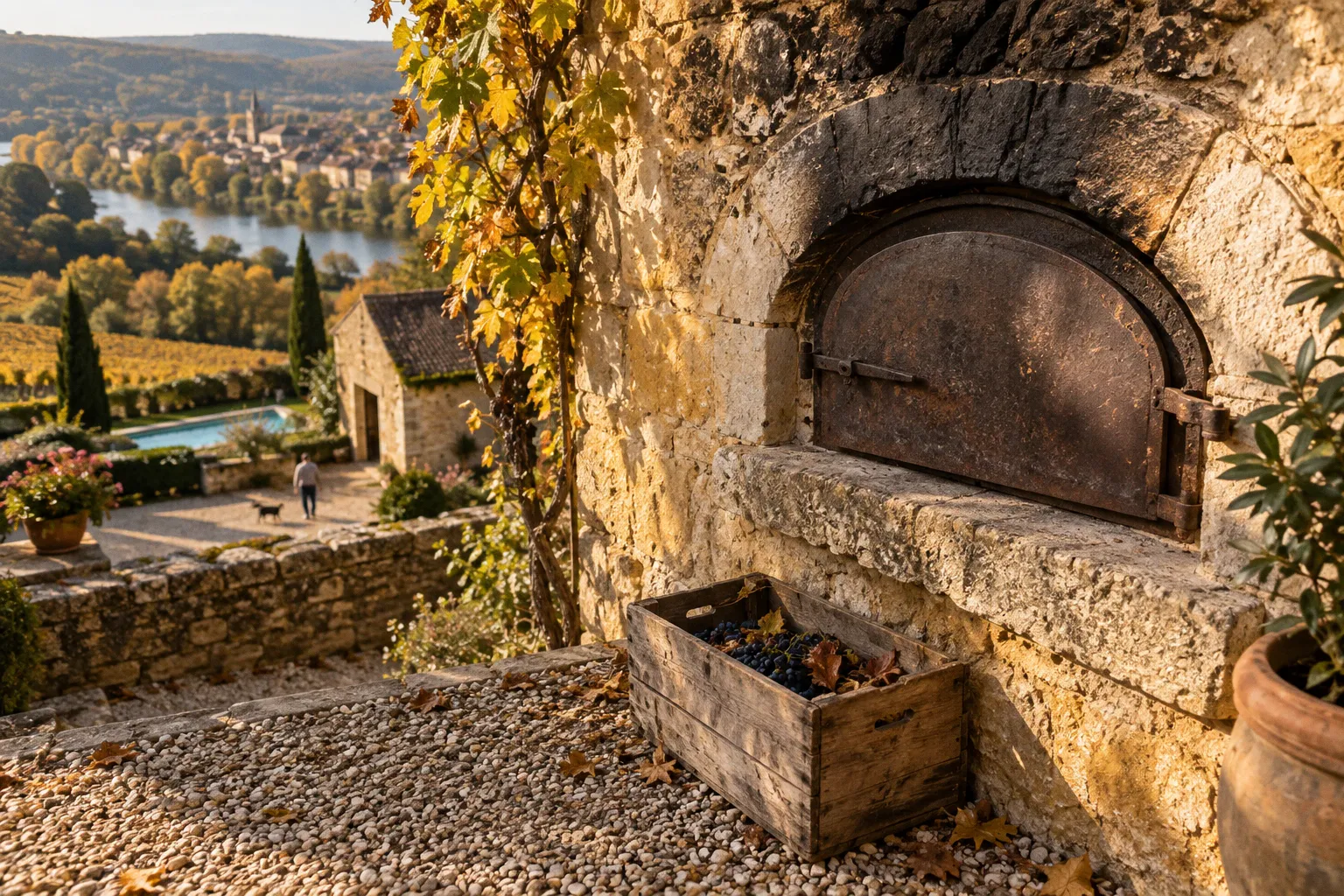
The Dordogne wine country covers more than 12,800 hectares on both sides of the river, with seven recognised appellations and terroirs, so the real challenge is choosing a route that gives each wine enough attention.
A rushed itinerary usually means one of two things: a succession of cellar doors where every tasting begins to blur into the next, or an overambitious loop that leaves no room for a market, a long lunch, or the practical pause required after tasting several wines. A better weekend begins in Bergerac, uses Quai Cyrano as its orientation point, and then gives the surrounding appellations distinct places in the day.
The region rewards a little planning. Monbazillac is not simply a place to find sweet wine, Pécharmant is not just a red-wine stop, and the lesser-known Rosette appellation deserves more than a passing mention. Each has its own harvest windows, cellar traditions and relationship with the Dordogne landscape.
Starting at Quai Cyrano: the gateway to Bergerac terroirs
For a first visit, Bergerac itself is the sensible place to begin. Quai Cyrano, at 1 Rue des Récollets, brings wine tourism into the historic centre, inside the 17th-century Cloître des Récollets. It is a practical starting point because it gives you a map of the region before you commit to a full day of driving between estates.
The point of beginning here is not to replace visits to independent producers. It is to establish the shape of the wine country. From Bergerac, the route opens in several directions, with the Dordogne River acting less as a boundary than as a thread connecting different soils and styles.
The seven main appellations are:
- Bergerac, the broad regional appellation, covering red, rosé and white wines.
- Monbazillac, known internationally for rich sweet wines, including botrytized styles.
- Pécharmant, associated with structured red wines and often described locally as Bergerac’s answer to Saint-Émilion.
- Rosette, a small appellation recognised since 1946 and focused on refined semi-sweet white wines.
- Saussignac, another sweet-wine appellation with a more intimate, small-estate character.
- Montravel, on the western side of the Bergerac wine area, producing red and white wines across several styles.
- Côtes de Duras, extending beyond the immediate Bergerac circuit and better treated as an additional excursion rather than a compulsory weekend stop.
This is why a wine tasting itinerary in the Bergerac region should not be planned as a single straight line. The appellations are close enough to combine, but different enough that each stop needs a reason.
The best weekend route is not the one with the most tastings. It is the one where you can still describe the last wine properly over dinner.
A sensible first afternoon in Bergerac
If you arrive on Friday afternoon, use the first few hours to settle into the town rather than immediately chasing a distant château. Begin at Quai Cyrano, then walk through the old centre and take stock of the wines you actually want to explore.
This small pause has a practical benefit. Sweet wines, aromatic whites and structured reds do not all make sense in the same sequence, particularly if you are tasting after a long journey. You can use the information gathered in Bergerac to decide whether Saturday should focus on Monbazillac and Saussignac, or whether your palate is calling for the darker, firmer style of Pécharmant.
It also leaves space for a proper meal. The Dordogne is not a region where wine should be separated from food as if the two belong to different itineraries. A Bergerac white may sit naturally beside fish, goat’s cheese or a market lunch; a sweet wine can work with foie gras, blue cheese or a dessert that is not excessively sugary. The right pairing depends on the producer and the balance of the bottle, so ask what the estate itself would serve rather than relying on the broad label of sweet, dry or red.
The sweet legacy of Monbazillac and Rosette
Visiting Monbazillac wine estates is often the first priority for travellers who know Bergerac mainly through its sweet wines. Monbazillac is globally renowned as one of the largest sweet-wine vineyard areas in the world, and its identity is tied to concentrated, aromatic wines made in conditions that depend heavily on the season.
Here, the harvest window matters. Noble rot, or botrytis, develops under particular combinations of morning moisture and later drying conditions. It is not an automatic feature of every vintage or every parcel. The concentration in the grape comes with a cost: selective harvesting, lower yields and a longer, more patient passage through the vineyard.
That is the useful question to ask at a tasting. Do not stop at whether the wine is sweet. Ask how the producer manages the balance between sugar, acidity and alcohol, and whether the grapes were harvested in several passes. A sweet wine that feels heavy at the table is a very different proposition from one with enough acidity to remain fresh beside savoury food.
The estate’s storage temperature will matter once you buy a bottle. Sweet wines are often served too warm, which makes their weight more obvious and their aromatic detail less clear. If you are taking a bottle back to a gîte, ask how long it can be kept once opened and whether the producer recommends refrigeration. These are small domestic details, but they are part of the pleasure of buying directly from the region.
Why Rosette deserves a separate stop
Rosette is easy to overlook because its production is smaller and its name is less familiar to international visitors. Yet it offers a useful contrast with Monbazillac. The appellation, officially recognised in 1946, specialises in refined semi-sweet white wines, often described as moelleux.
The distinction is not merely a matter of sweetness. Rosette can be the better choice when you want a wine that will accompany a meal without becoming the entire conversation. It may suit a plate of local charcuterie, a mild cheese or a dish with fruit-based elements, where an intensely concentrated dessert wine would dominate.
When comparing the two, pay attention to finish rather than first impression:
| Point of comparison | Monbazillac | Rosette |
|---|---|---|
| General style | Rich sweet wines, including botrytized examples | Refined semi-sweet white wines |
| Role at the table | Often suited to foie gras, blue cheese or dessert | More flexible with savoury dishes and lighter pairings |
| Main question at tasting | How concentration is balanced by acidity | How sweetness remains restrained and fresh |
| Planning value | Worth a dedicated visit if sweet wine is a priority | A useful contrast for travellers building a varied selection |
| Buying consideration | Check serving temperature and opening life | Ask how the wine is intended to be served with food |
The mistake is to treat both appellations as interchangeable sweet-wine stops. They are better understood as two different answers to the same practical question: how much sweetness do you want at the table, and what will you be eating with it?
Building Saturday around the eastern side of the route
A calm Saturday can begin with Monbazillac, followed by lunch and a second estate or cellar visit in the afternoon. If you add Rosette, keep the number of formal tastings modest. A 45-minute visit can easily become two hours once the conversation turns to soil, harvest selection, barrel use and the producer’s preferred food pairings.
Individual cellar visits and tastings in Bergerac commonly fall between €10 and €30 per person, with sessions lasting around 45 minutes to two hours. The price usually reflects the depth of the visit, not simply the number of glasses poured. A short tasting at a cellar shop and a guided estate appointment are different experiences, even when both are described as a dégustation.
Allow time to eat before the afternoon appointment. Tasting on an empty stomach makes every wine seem more dramatic than it may be at the table, while a heavy lunch can flatten the palate. Bread, water and an unhurried meal are not interruptions to the itinerary; they are part of the method.
Pécharmant: uncovering the structured reds of the Dordogne
Pécharmant is the natural counterpoint to Monbazillac. The appellation is celebrated for high-quality, structured red wines and is often regarded locally as the Saint-Émilion equivalent of the Bergerac region. That comparison is useful only up to a point. Pécharmant is a distinct Bergerac-area appellation, not part of the official Bordeaux AOC classification, and it should be approached on its own terms.
The style is typically firmer and more substantial than the lightest regional reds. That makes the tasting order important. If Pécharmant is on your Saturday route, it is often better placed after lighter whites or before dinner, rather than squeezed between several sweet wines. Give the red wines time in the glass. Texture and structure may become clearer after a few minutes, especially when the wine is served at a sensible temperature rather than too warm.
This is also where the idea of yield becomes useful. Ask the producer how they think about crop levels, selection and maturation, not because a lower yield automatically guarantees a better bottle, but because the answers reveal the estate’s priorities. One château may be aiming for a dense, age-worthy red; another may be looking for earlier drinkability and a more generous style.
A good Pécharmant tasting should leave you with practical information:
1. What is the intended drinking window? Some wines are made for a meal in the near term, while others need more time in bottle.
2. What is the producer’s preferred serving temperature? Cooler than room temperature is often more comfortable, especially in a heated holiday rental.
3. Which butcher’s cut suits the wine? Ask for a specific recommendation rather than a vague reference to red meat. A steak, duck breast, slow-cooked shoulder and grilled sausage bring different textures and levels of fat.
4. How should the bottle be stored? A dark cupboard is not the same as a cellar, and a summer kitchen can be surprisingly warm.
5. Is the wine intended to be decanted? Not every structured red benefits from a long exposure to air, particularly if its appeal lies in freshness.
The purpose of these questions is not to turn a holiday tasting into a technical examination. It is to make sure the bottle you buy has a useful place in your own kitchen.
A bottle is a successful souvenir only when you know when to open it, what to serve beside it and where it can rest until then.
Navigating the seven appellations without overloading the weekend
The Bergerac wine route is broad enough to support several different weekends. Trying to cover all seven appellations in two days is not a sign of enthusiasm; it is usually a recipe for too much driving and too little understanding.
For most visitors staying in or near Bergerac, a two-day structure works better:
Friday afternoon: orientate in Bergerac
- Arrive and settle into your accommodation.
- Visit Quai Cyrano in the historic Cloître des Récollets.
- Walk through central Bergerac before choosing dinner.
- Decide whether the weekend’s emphasis will be sweet wines, structured reds or a balanced mixture.
Saturday: focus on Monbazillac and nearby sweet-wine styles
- Book a morning appointment at a Monbazillac estate.
- Leave enough time for lunch rather than stacking tastings back to back.
- Add a second visit only if it offers a clear contrast, such as Rosette or Saussignac.
- Return to Bergerac for dinner, where you can judge which bottles belong on your table rather than in the back of a cupboard.
Sunday: explore Pécharmant or extend west
- Choose Pécharmant if you want a red-wine-focused morning.
- Consider Montravel if you are interested in a broader western excursion and have confirmed opening arrangements.
- Treat Côtes de Duras as an optional extension, not something to force into the same loop.
- Keep the final tasting early enough for a relaxed departure and a proper meal.
This arrangement also respects the uncertainty that comes with small, family-run estates. There is no universal opening pattern that applies to every château, particularly outside the busiest travel periods. Off-season visitors may find that one producer welcomes appointments on a day when another is closed, or that a cellar visit is available only at a set time.
That is why the best Bergerac vineyards for day trips are not necessarily the most famous names on a map. They are the estates whose opening hours, tasting format and location fit your actual weekend.
A simple route-planning table
| Weekend priority | Best starting point | Strongest second focus | Main planning issue |
|---|---|---|---|
| Sweet wines and food pairing | Quai Cyrano, then Monbazillac | Rosette or Saussignac | Do not schedule too many similar tastings |
| Red wines and local cooking | Quai Cyrano, then Pécharmant | A Bergerac red tasting or western excursion | Leave time for structured wines to open in the glass |
| Broad introduction to the region | Quai Cyrano | One sweet-wine estate and one red-wine estate | The route needs restraint; seven appellations cannot be covered meaningfully in a weekend |
| Market-led food weekend | Bergerac town and local market planning | Estate selected around the meal | Confirm appointments before building the menu |
| Longer stay in a Dordogne gîte | One central tasting day | A second day in Montravel or Côtes de Duras | Avoid assuming every château accepts walk-ins |
If you are driving, appoint a non-drinking driver or use a local transfer arrangement. Tasting rooms often offer small pours, but several visits add up, and country roads are not the place to calculate your limit after the final glass. Buying wine for later is part of the route; drinking every sample on the day is not.
Booking your tastings at boutique estates
A Bergerac wine tour planning guide is incomplete without discussing the appointment itself. Many small producers work with limited staff, and a tasting may depend on someone leaving vineyard work, cellar work or administration to receive visitors. An advance booking is therefore more than a courtesy. It is what makes the visit possible.
When contacting an estate, include:
- The date and approximate arrival time.
- The number of people in your party.
- Whether you prefer red, white, sweet or mixed wines.
- Whether you need the visit in English.
- Whether you are interested in buying bottles for transport or drinking during your stay.
- Any food-related interest, such as foie gras, local cheeses or a market lunch.
Do not assume that a walk-in visit will be available simply because a château appears on a wine route map. Some estates may be open for sales but not for a full cellar tour. Others may offer tastings only by reservation, particularly outside the main season.
It is also worth asking whether the tasting fee is included in a purchase or charged separately. Policies vary, and the answer may affect how you compare a short visit with a longer guided session. A €10 tasting and a €30 tasting are not necessarily competing offers if one is a brief introduction and the other lasts two hours.
What to notice once you are in the cellar
A good tasting is not just an exercise in identifying fruit aromas. Listen for the practical story of the estate:
- Which grapes are harvested first, and what determines the decision?
- Is the harvest carried out in one pass or several selective passes?
- How does the producer manage storage temperature before bottling?
- Which wines are intended for early drinking, and which need bottle age?
- What does the estate serve at home with the wine?
- Are there restrictions on shipping or transporting bottles in hot weather?
Harvest windows are especially revealing. A producer who works with sweet wines may speak about patience, concentration and repeated passes through the vineyard. A producer focused on reds may talk more about ripeness, tannin, extraction and maturation. These differences tell you more than a generic tasting note.
For travellers staying in a self-catering gîte, the final question should be domestic: what can you realistically store and cook? A bottle that needs a cool, stable environment may not be the right purchase if your accommodation has limited refrigeration. Likewise, a delicate white bought for a picnic should not spend the afternoon in a hot car.
Use an insulated wine bag or ask the estate about suitable transport. Once back at the gîte, keep white and sweet wines properly chilled, while reds should be protected from heat and direct light rather than placed automatically in the refrigerator. If you are travelling onward, buy fewer bottles and choose them with purpose. A mixed case built around the meals you intend to cook is more useful than a random collection of labels.
Matching the route to the Dordogne table
Wine tourism works best in the Dordogne when it is attached to food rather than treated as a separate excursion. The region’s markets and country kitchens give the bottles a context that tasting rooms alone cannot provide.
Plan the weekend’s meals before the final purchases. If you expect to cook, think in terms of weight and texture:
- A fresh regional white can provide a flexible starting point for fish, vegetables, poultry or a market lunch.
- A Monbazillac-style sweet wine may find its place with foie gras, blue cheese or a dessert that leaves room for acidity.
- A Rosette wine can work when you want a softly sweet white that does not dominate a savoury plate.
- A Pécharmant red calls for a dish with enough substance to meet its structure, whether that means a suitable butcher’s cut, duck or slow cooking.
- A lighter Bergerac red may be easier with a relaxed supper where the wine needs to remain versatile.
These are starting points, not rules. Local etiquette around wine is generally more relaxed than visitors sometimes expect. You do not need to order the most prestigious bottle for every course, and you should not feel obliged to finish a wine that does not suit the meal. Producers, market sellers and restaurant staff are usually more helpful when you describe what you are cooking than when you ask for the best wine in the region.
The same applies to pricing. A higher tasting fee, a grander château or a more elaborate label does not automatically translate into a better choice for your holiday table. Ask what the wine is for: an aperitif, a long lunch, a special dinner, or a bottle to carry home for winter.
The route worth taking
A rewarding Bergerac wine tasting route for weekend visitors has a clear rhythm: begin with orientation in Bergerac, give Monbazillac and Rosette their own space, explore Pécharmant without rushing the reds, and leave the more distant appellations for a longer stay.
The region’s scale is its advantage, provided you resist the urge to collect every appellation in a single weekend. With more than 12,800 hectares of vines and seven distinct wine areas, Bergerac offers enough variety for repeated visits. One weekend can be built around sweet wines and market cooking; the next can follow the red-wine estates, western vineyards or a slower sequence of village meals.
Before you leave, write down three practical details for every bottle you buy: the best serving temperature, the meal it suits and how long it can wait before opening. That small note will turn a pleasant tasting into something more durable—the Dordogne still present at your own table long after the vineyard road has disappeared behind you.