Dordogne river canoeing: choosing the best month for your trip
The Dordogne does not behave the same way in May as it does in August. Water level, current strength, air temperature, and congestion on the river shift between May and September, and those variables…
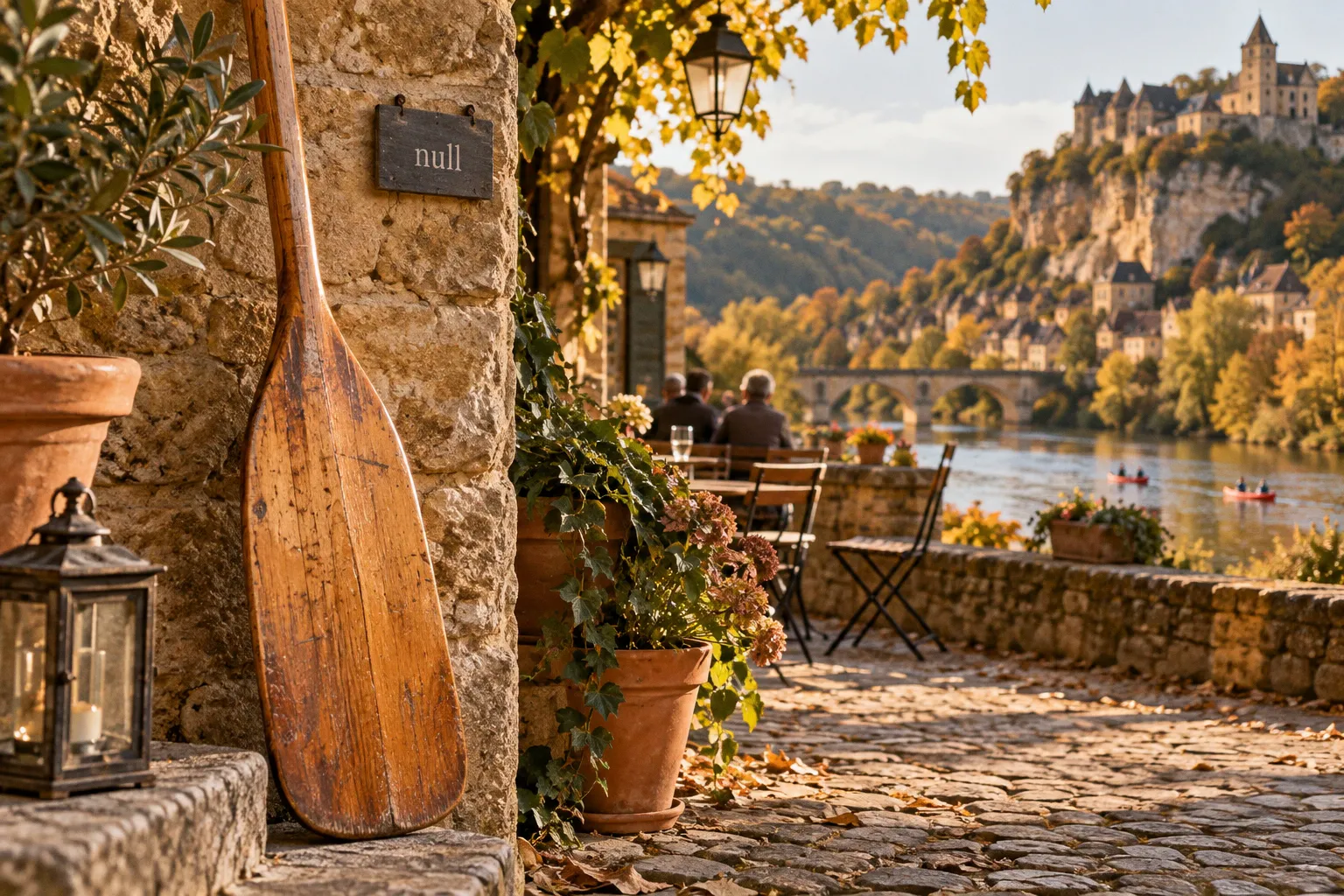
The Dordogne does not behave the same way in May as it does in August. Water level, current strength, air temperature, and congestion on the river shift between May and September, and those variables decide whether a paddler burns through energy in the first hour or glides downstream with minimal effort. Lock the wrong window and you fight the current in low summer flow, queue behind rental canoes at every gravel bank, or deal with midday heat that saps hydration faster than you can refill. Lock the right window — late spring or early autumn — and the river becomes what it actually is: a steady, manageable Class I-II waterway running through a UNESCO Biosphere Reserve, with cooler air, manageable traffic, and water high enough to keep your paddle strokes productive.
This is a tactical breakdown of the paddling season on the Dordogne. Month by month, condition by condition, route by route. Read it before you book the gite, before you reserve the canoe, before you pack the dry bags.
Pick the wrong month and the Dordogne punishes you with heat, queues, and sluggish water. Pick the right month and the river does most of the work for you.
The Seasonal Rhythm of the Dordogne: From Spring Flow to Autumn Calm
The paddling calendar on the Dordogne runs from May to September. That is the window when operators run their fleets, water levels stay navigable for recreational craft, and the weather cooperates with outdoor activity. Within that five-month span, conditions are not uniform. They split into three distinct operating zones: late spring (May to June), peak summer (July to August), and the early autumn shoulder (September, sometimes stretching into early October when conditions allow).
Late spring, May to June. River levels run higher here than at any other point in the paddling season. Recent rainfall across the upper watershed feeds the channel, and the result is a faster, fuller Dordogne — the current does more of the propulsion work, so a paddler expends less energy covering the same distance. Air temperatures sit comfortably below the midsummer peak. Crowds are moderate: enough other canoes on the water to confirm the route is active, but not the boat-train gridlock of high summer. This window suits beginners and experienced paddlers equally, and it is when the river feels most like the postcard version of itself.
Peak summer, July to August. The hottest stretch of the year. Daytime air temperatures push into the mid-20s°C and beyond. Tourist volume across the Dordogne valley — not just on the river, but in the villages, markets, and gites — reaches its annual maximum. On the water, rental fleets launch in volume every morning, and by midday the classic stretches carry continuous canoe traffic. Water levels drop slightly as the season progresses without the late-spring rainfall, so current slows in some sections and paddling effort increases to maintain downstream speed.
Early autumn, September into early October. Crowds thin first, then water, then temperature drops steadily. What you get is a quieter river, cooler air for longer paddling days, and water levels still adequate for navigation — though by late September the flow has receded from its May peak. For paddlers who prioritize solitude and cooler working conditions over maximum current speed, late September is the most underrated window on the calendar.
The Dordogne's paddling season splits clean into three zones: late spring for current strength and moderate crowds, peak summer for heat and density, early autumn for quiet and cool air. Choose your zone before you book anything else.
| Operating zone | Months | Water level | Air temperature | River traffic | Paddling effort |
|---|---|---|---|---|---|
| Late spring | May–June | High (rainfall-fed) | Warm, not hot | Moderate | Lower — current assists |
| Peak summer | July–August | Slightly lower | Hot (mid-20s°C+) | Heavy | Higher — slower sections |
| Early autumn | Sept–early Oct | Lower, still navigable | Cooler | Light | Lowest traffic, lower flow |
Navigating Peak Summer: Managing Heat and River Traffic
July and August draw the largest volume of visitors to the Dordogne valley. For a canoeist, that means two operational constraints: heat and congestion. Both are manageable with the right tactics. Both will wreck an unprepared paddler.
Heat management. Mid-20s°C daytime temperatures sound moderate on paper, but a paddler is exposed to direct sun for the entirety of a two-to-three-hour run, with little shade except brief stretches under tree cover along forested banks. Dehydration compounds quickly. Plan to carry at least two liters of water per person for a short route, more for longer runs, and drink steadily rather than waiting for thirst to register. Wide-brim hat, sunscreen applied to forearms and neck (areas a t-shirt does not cover), and a long-sleeve sun shirt are non-negotiable. Light colors reflect heat better than dark. A life jacket is mandatory regardless of season — this is not optional equipment, and operators will not launch you without one.
Congestion management. The high-traffic routes — Vitrac to Beynac-et-Cazenac is the textbook example — carry dense canoe traffic from late morning through mid-afternoon during July and August. The solution is a morning departure. Hit the put-in by 9:00 a.m. and you paddle through the busiest section before the rental fleets reach their peak density. By the time midday traffic builds, you are already off the river or approaching the take-out. Operators along the Dordogne structure their summer schedules to support this: early launch windows are standard. Book the morning slot, not the afternoon one, during peak summer.
Paddling effort in low flow. Water levels drop slightly across July and August without the late-spring rainfall topping up the channel. The river does not stop being navigable — it stays well within Class II difficulty at most, with plenty of flat-water sections — but current speed slows in the wider, shallower stretches. Expect to paddle more actively to maintain downstream pace. This is not a problem for an experienced paddler; for a beginner it means the difference between an effortless drift and a workout. Take it into account when selecting a route during peak summer: a shorter stretch (seven kilometers from Carsac-Aillac to Vitrac, for instance) is a better warm-weather introductory paddle than the longer classics.
Why Late Spring and Early Autumn Offer the Ideal Paddling Experience
The two shoulder windows on either side of peak summer consistently deliver better paddling conditions than the middle of the calendar. Here is why.
Late spring advantages, May through June. Higher water from spring rainfall means stronger current, which means less paddling effort per kilometer. Air temperature is warm but not punishing — daytime highs in the low-to-mid 20s°C typical for this stretch of southwestern France, with cooler mornings and evenings. River traffic is moderate: enough to confirm the infrastructure is working (rental operators open, take-out points staffed, shuttle buses running), without the bottlenecks of August. For a paddler who wants to combine the trip with hiking or cycling in the valley, May and June offer the same range of activities with smaller crowds on the trails and roads.
Early autumn advantages, September into early October. Crowd density drops faster than water level. By mid-September, the rental fleets have thinned, the take-out points operate on reduced schedules, and the river corridor returns to something closer to its natural state. Air temperature drops into a comfortable range for sustained paddling effort — long days on the water become feasible again, rather than a midday endurance test. Light is better for photography; the valley turns color across September and into October, though the practical advantage of those colors for the paddler is mostly visual rather than performance-related. If the goal is a quieter river with cooler working conditions, autumn is the window. Water levels are lower than May or June, but the Dordogne stays navigable for recreational paddling through this period — operators running reduced schedules confirm flow remains adequate.
The comparison that matters. Paddling effort is highest during the transition from mid-summer low flow into early autumn, but congestion is lowest then. Paddling effort is lowest in late spring with full current, but congestion runs higher than in autumn. The ideal window depends on what the paddler prioritizes: current assistance and minimum effort favor late spring; quiet and cooler air favor early autumn. Both beat peak summer for overall experience quality.
Understanding River Conditions: UNESCO Biosphere Reserve Dynamics
The entire Dordogne watershed was designated a UNESCO Biosphere Reserve on July 11, 2012. Practically, that designation shapes what a paddler encounters on the water: water quality, bank-side habitat protection, and restrictions on certain activities. It does not restrict recreational canoeing. The designation is a guarantee that the river you paddle on remains the river future paddlers will paddle on, and it influences where commercial operators can establish put-in and take-out points.
Current and difficulty profile. The Dordogne through the classic paddling stretches stays within Class I to Class II difficulty on the international whitewater scale. There are no high-category rapids on any recreational section. What exists is steady current, mild riffles, occasional Class I standing waves over shallow gravel beds, and the rare Class II feature where the channel narrows around a geological feature. For an adult paddler with basic instruction, this is straightforward water. For families with children (typically aged seven and up, depending on the operator's policy), the river is manageable in calm conditions with mandatory flotation and adult supervision.
Channel character through the paddling stretches. The river alternates between wider, slower flat-water sections and narrower, faster channel stretches as it winds through the valley. The classic Vitrac to Beynac-et-Cazenac run covers approximately 10 kilometers and takes 2 to 3 hours at an easy pace. The shorter Carsac-Aillac to Vitrac run covers about 7 kilometers and is typically completed in under 2 hours. Neither requires prior experience. Both use the river's natural current as the primary propulsion source — which is why late spring, with higher water and stronger flow, makes these stretches feel easier and faster than they do in mid-summer low flow.
Total scale of the resource. The classic canoeing stretch of the Dordogne River runs for 170 kilometers from Argentat downstream to Mauzac. The full river extends roughly 490 kilometers (305 miles) from its source in the Massif Central to its confluence with the Garonne. The paddling stretches covered by rental operators sit within the middle section of that corridor, where the valley deepens, the cliffs close in, and the river slows to recreational pace.
Planning Your Route: From 7km Family Stretches to Classic 170km Journeys
Route selection depends on three variables: skill level, time available, and current season. Lock those three first, and the route choice falls out cleanly.
1. First-time paddlers, families with children, anyone under two hours on the water. Take the Carsac-Aillac to Vitrac stretch. Seven kilometers, under two hours, easy current, multiple take-out options if anyone needs to exit early. Pairs best with late spring or early autumn conditions to minimize effort and heat.
2. Paddlers with basic experience and a half-day to commit. Take the Vitrac to Beynac-et-Cazenac run. Ten kilometers, two to three hours at an easy pace. This is the most popular stretch on the river for a reason: the scenery is the valley's signature combination of cliff faces, medieval villages, and tree-lined banks, and the route is short enough to complete before peak heat or peak traffic builds.
3. Experienced paddlers with a full day or longer, looking for distance. The classic descent covers 170 kilometers from Argentat to Mauzac. This is multi-day territory, with overnight stops in villages along the river. Operators along the upper sections coordinate logistics for longer trips. Water levels matter more here — late spring with rainfall-fed current is the practical window for this scale.
4. Paddlers prioritizing solitude over distance. Push into the early autumn window and select a stretch outside the Vitrac–Beynac corridor. The river is large enough that even during peak summer, the stretches away from the main rental hubs carry light traffic. In September the entire system empties out.
Pick the route that matches the month, not the other way around. A 170-km descent in mid-summer low flow is a different proposition than the same run in late spring.
Gear Loadout and Final Brief
The gear list is the same year-round, with seasonal adjustments for thermal layering and water.
- Mandatory. Life jacket (PFD) for every occupant — operators require this and will not launch without it. Whistle attached to the PFD for signaling.
- Water and hydration. Minimum two liters per person for short routes; more for multi-hour runs. A water-resistant dry bag protects a refill bottle or hydration bladder from splash.
- Sun protection. Wide-brim hat, sunglasses with retention strap, sunscreen rated for water exposure, long-sleeve sun shirt in light colors.
- Footwear. Closed-toe water shoes or old sneakers. Not flip-flops, not bare feet — gravel banks are unforgiving on launch and landing.
- Dry storage. Waterproof dry bag for phone, keys, wallet, and a change of clothes left at the take-out or carried in the canoe.
- Seasonal adjustment. Late spring can run cool in the morning; a light synthetic layer under the PFD makes the early launch comfortable. Peak summer requires only base sun protection. Early autumn runs cooler again, particularly in the late afternoon, so a light packable jacket earns its weight.
Position Before You Launch
The best month for canoeing the Dordogne river is whichever month matches your priorities, but late spring and early autumn consistently outperform peak summer on the metrics that matter: water level, air temperature, congestion, and paddling effort. May and June give you the strongest current, moderate crowds, and warm-but-not-punishing air. September gives you the quietest river, the coolest working temperatures, and enough flow to stay navigable. July and August remain fully viable — operators run their fleets, the river stays above minimum flow, and the route infrastructure operates at peak capacity — but expect heat management, heavy traffic, and higher paddling effort in slower sections.
Book late spring or early autumn for the cleanest experience. Book peak summer for the busiest one. Either way, the river delivers — it has been paddled for centuries, and the UNESCO designation on its watershed confirms it will be paddled for centuries more.
Pick your month. Lock your route. Launch in the morning. Paddle downstream.