Dordogne Villa Booking: Direct Owner vs Luxury Agency
The most expensive mistake in a Dordogne villa booking is not always choosing the wrong house. More often, it is choosing the wrong booking route for the kind of holiday you are actually planning.
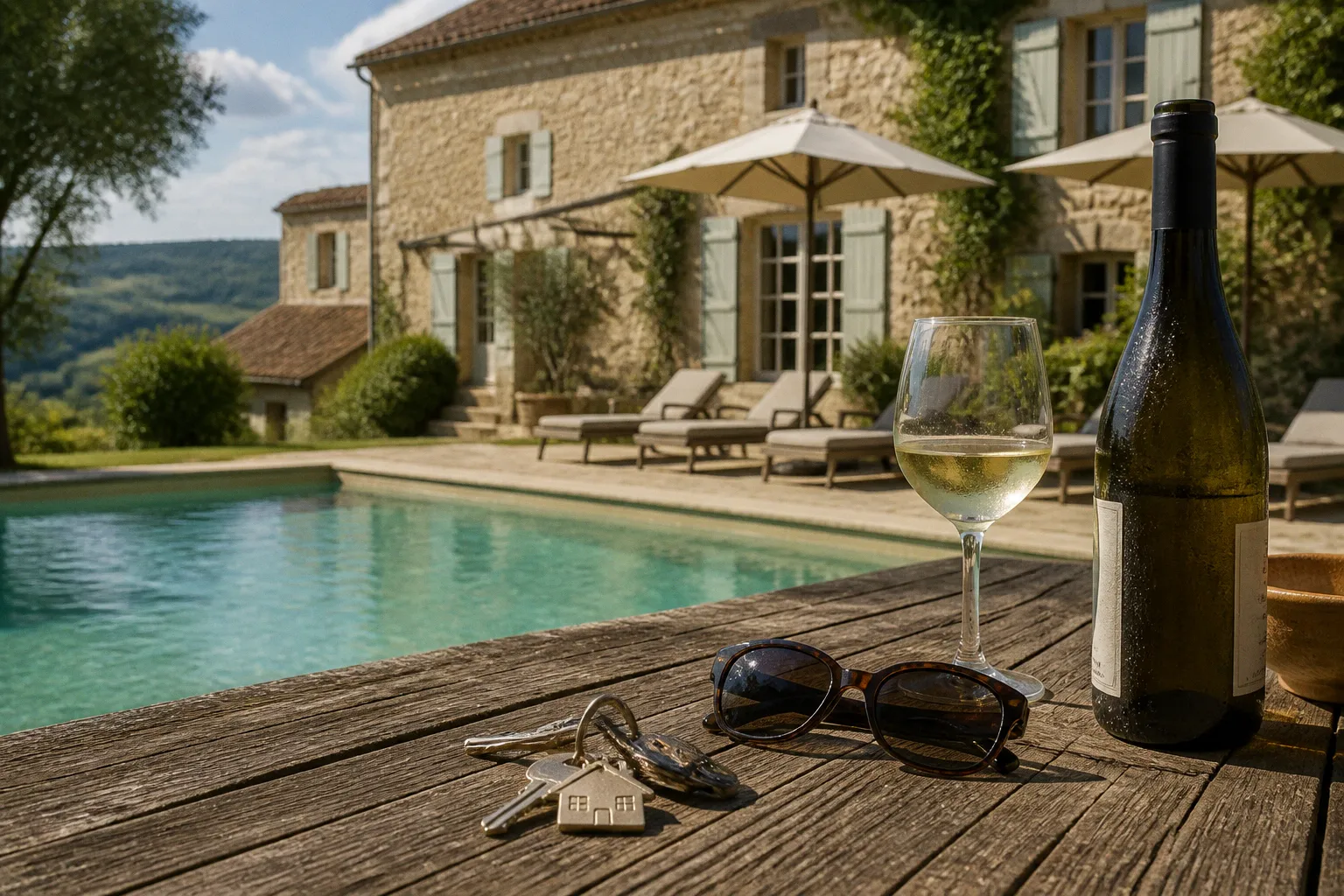
A direct owner booking may give you a warm exchange with the person who knows exactly which market opens on Wednesday morning, whether the old stone oven is usable, and how long the pool takes to warm after a cool spell. A luxury agency may offer something less personal at first glance, but give you verified property standards, a formal contract, local assistance, and someone to call when the dishwasher decides to stop cooperating on the first evening.
For a self-catering holiday in a restored barn, premium farmhouse or Dordogne villa with a private pool, the question is not simply whether to avoid a commission. The better question is: where do you need certainty, and where do you value flexibility?
The economics of booking: commission, rate parity and the cheaper-price myth
The common assumption is straightforward: book French gites directly and the owner saves the agency commission, so the guest should pay less. Sometimes that is true. It is also one of the least reliable assumptions to carry into a luxury rental search.
Direct owner bookings can remove a third-party platform fee and may leave room for a conversation about arrival days, extra services, house rules or particular amenities. An owner with an unfilled week between two reservations may prefer a direct agreement rather than leave the property empty. In that situation, a practical conversation can produce better value, although the saving may appear as flexibility rather than a lower headline rate.
But many luxury villa agencies in France work under rate-parity arrangements. The property is advertised at the same price the owner publishes, while the agency supplies the booking system, contract structure, payment handling and guest support without adding a separate visible charge. The agency is not necessarily making the holiday more expensive for you; its commission may already be built into the owner’s agreed rental rate.
That distinction matters when you compare a dordogne holiday home direct booking with renting a gite through an agency. A lower figure on a private website may reflect a genuinely different arrangement, but it may also leave out a cleaning charge, a breakage deposit, local taxes, linen, pool heating or a service that the agency has already included. The yield of a comparison comes from placing like with like.
What to compare beyond the weekly rate
When looking at two listings for apparently similar luxury self-catering accommodation, set out the full cost in the same order:
- Rental price: confirm whether the amount is for the whole property and whether the quoted dates fall inside the same seasonal window.
- Included services: linen, towels, final cleaning, pool maintenance, garden care and welcome arrangements can differ substantially.
- Security or breakage deposit: the amount, payment method and return timetable should be written down before you commit.
- Payment schedule: a direct owner may request different instalments from an agency, even for the same property.
- Cancellation terms: the wording matters more than the warmth of the email exchange.
- Optional extras: chef services, grocery delivery, additional cleaning, baby equipment and heating may be arranged differently depending on who holds the booking.
- Support during the stay: decide whether assistance comes from the owner, a local caretaker, an agency representative or no one outside office hours.
The lower booking price is only a saving if the same house, services, deposit terms and support are being compared on both sides.
The most useful direct question is not, “Can you do a better price?” It is, “What is included in this total, and what could I still be charged before departure?” That phrasing encourages a clear answer without turning the exchange into a negotiation over a number that may not mean the same thing in each listing.
Legal safeguards: the contract matters more than the channel
A direct booking is not automatically informal, and an agency booking is not automatically flawless. In France, a written holiday rental agreement is a central piece of protection in either arrangement. It should identify the property, dates, total price, payment stages, cancellation conditions, deposit arrangements and the responsibilities of both parties.
The same principle applies to the arrival and departure inventory inspection, known as the état des lieux. This records the condition of the property and its contents at the beginning and end of the stay. In a high-end farmhouse rental, that may include old beams, delicate furnishings, outdoor kitchens, pool equipment, appliances, shutters and garden furniture. It is not bureaucratic decoration. It is the evidence that prevents a vague argument about whether a mark, missing glass or damaged sun lounger appeared before or during your stay.
An agency will usually provide a structured contract and a recognised process for these records. That can be particularly useful when the property has several bedrooms, extensive grounds or valuable equipment that would be difficult to assess casually on arrival.
With a direct owner, the agreement can be just as formal. The point is to make sure it exists in writing and is detailed enough to be useful. A friendly message saying that the house is reserved for your family is not a substitute for a rental contract that describes the practical terms.
The arrival record deserves proper attention
When you arrive, the temptation is to unload the car, find the coldest bottle of water and get the children into the pool. That is entirely understandable, especially after a long drive through the valley. Still, take a short, calm pass through the property before settling in.
Look for:
- existing marks on walls, floors and furniture;
- the condition of kitchen equipment and glassware;
- outdoor cushions, pool furniture and umbrellas;
- the working state of appliances and heating or cooling systems;
- any damage around the pool terrace, steps or gates;
- the number and condition of keys, remotes and access devices.
Photographs with a visible date can help establish the condition of the property, particularly where the house is large or the check-in happens without the owner present. Send any significant discrepancy promptly through the agreed communication channel rather than keeping a private record that no one else sees.
At departure, follow the same method. A proper inventory process protects the owner from unsupported claims and protects you from being held responsible for a problem that was already present. The return of the security deposit is often expected within around two weeks after the stay, but the exact timing and any permitted deductions should be set out in your agreement.
Payment schedules and financial security for 2026 stays
The payment timetable is where the difference between booking routes becomes very tangible. Some luxury agencies in the region require a 30% non-refundable deposit when the booking is confirmed, with the remaining balance and breakage deposit due nine to twelve weeks before arrival. Direct owners may follow the same broad structure, but they are free to set their own dates and conditions.
For a 2026 stay, do not leave the payment schedule buried in an attachment you have not opened. Put the dates into the same calendar as your flights, ferry booking and restaurant reservations. The balance deadline is not merely an administrative date: missing it can place the reservation at risk under the terms of the contract.
A sensible payment record should show:
| Payment point | What to establish | Why it matters |
|---|---|---|
| At booking | Deposit amount, whether it is refundable, and what confirms the reservation | A verbal hold or provisional email may not secure the dates |
| Before arrival | Exact balance deadline and accepted payment method | Agency deadlines commonly fall 9–12 weeks before arrival |
| Before or at check-in | Breakage deposit amount and how it is held | Clarifies whether the deposit is transferred, authorised by card or paid separately |
| After departure | Inspection process and expected return period | Some arrangements allow around two weeks for the deposit to be returned |
| If plans change | Cancellation, rebooking and insurance provisions | Prevents an expensive misunderstanding close to arrival |
Direct owner booking can feel more flexible because the conversation is immediate and personal. You may be able to discuss a change of arrival day or a practical issue with the person making the decision. That flexibility is valuable, but it is not the same as a guaranteed contractual right. If an arrangement matters, have it written into the booking correspondence or formal agreement.
Agency payment systems can feel less personal, yet they create a useful paper trail. You receive standard confirmations, scheduled reminders and a defined route for queries. For a multigenerational holiday with several households contributing to the cost, that administrative clarity can be worth more than a small theoretical saving.
Keep the deposit separate from the holiday budget
A breakage deposit is not part of the rental price, but it affects the funds available during the trip. Find out:
- whether it is paid with the final balance or at arrival;
- whether it is a fixed amount or determined by the property;
- what types of damage may be deducted;
- whether ordinary wear, accidental breakage or lost keys are treated differently;
- how the owner or agency communicates deductions;
- when the balance is due back after the departure inspection.
There is no universal breakage-deposit amount across Dordogne villa rentals. Owners set their own thresholds according to the size, contents and facilities of the property. A house with a small kitchen and simple terrace has a different risk profile from a restored barn with an outdoor kitchen, wine glasses, electric shutters and a heated pool system.
Concierge support versus direct owner communication
A direct owner often provides the richest local knowledge. They can explain the quirks of the house, the best storage temperature for the local cheese you bought at the market, the butcher’s cut to ask for at the village shop, or which route is sensible when a Saturday market closes the main road. That knowledge is especially useful in a self-catering holiday, where the quality of the kitchen and the local supply chain shape the week as much as the bedrooms do.
The exchange can begin before arrival. You might ask whether the oven is large enough for a family gratin, whether the fridge has sufficient capacity for a full market shop, or whether the pool terrace catches the afternoon sun. These are not decorative questions. They affect how the property works for your group.
An agency, by contrast, can provide a layer of professional coordination. A specialist luxury villa rental agency in France may verify the property, standardise the booking process and connect guests with local support. Depending on the arrangement, that support can include arrival assistance, maintenance contacts, concierge recommendations and help when the owner is not nearby.
Neither side automatically wins. The right choice depends on the complexity of your stay.
Direct owner booking tends to suit you when:
1. You know exactly what you need from the house. If the essential details are a private pool, a secure garden, a large fridge and a quiet workspace, you may be comfortable asking the owner precise questions and assessing the answers.
2. You enjoy handling local arrangements yourself. Market shopping, restaurant bookings and small practical decisions can be part of the pleasure rather than an administrative burden.
3. Your dates or house rules need discussion. Owners may be more willing to talk through a late arrival, a particular sleeping arrangement or a small variation in the standard terms.
4. You have enough experience to read the listing critically. You can distinguish a genuinely useful description from a sequence of flattering adjectives.
5. You are comfortable confirming every term in writing. Direct communication works best when warmth and documentation sit together.
An agency tends to suit you when:
1. The property is a major financial commitment. Formal processes and a defined support route become more valuable as the cost and complexity rise.
2. Several families are travelling together. A central booking record reduces confusion over who has paid what and which conditions apply.
3. You are arriving from overseas. Clear payment instructions, arrival procedures and local assistance can remove friction after a long journey.
4. You want the property screened before you book. An agency’s role may include confirming standards that are difficult to judge from photographs.
5. You need help during the stay. A local concierge or representative can be useful if a pump, appliance, gate or pool system fails.
The owner knows the daily life of the property. The agency knows how to turn a property into a managed booking. For some travellers, the personal relationship is the central part of the experience; for others, the value lies in having a reliable person between them and the practical complications.
The quiet difference: how information is recorded
One of the less obvious benefits of an agency is not glamour but consistency. The property description, contract, arrival instructions and payment record are likely to pass through a system designed to keep those details together. That makes it easier to check whether the advertised pool is private, whether cleaning is included, and whether the final balance has been calculated correctly.
Direct bookings can be equally well organised, but the quality varies with the owner’s habits. A careful owner may send a thorough rental agreement, inventory, directions, emergency contact details and local recommendations. Another may assume that a series of messages is sufficient. The property itself may be excellent in both cases; the difference lies in how much of the surrounding information has been made visible.
Before paying, request one complete written summary containing:
- the property address or sufficiently precise location;
- arrival and departure dates and times;
- the full rental amount;
- every included and excluded service;
- deposit and balance deadlines;
- cancellation provisions;
- security-deposit terms;
- inventory and inspection arrangements;
- emergency and maintenance contacts;
- insurance requirements.
This is particularly helpful with restored barn rentals in France, where the charm of the building may come with practical features that are not obvious from the photographs: uneven stone floors, open staircases, deep rural quiet, older plumbing, a wood-burning appliance, a private lane or a pool that is set away from the main house. None of these is automatically a problem. They simply need to be described honestly so that the house suits the guests arriving.
Insurance and liability for international guests
Some French owners ask guests to provide proof of holiday-rental liability insurance, known as assurance villégiature. For French residents, this cover is commonly included in a domestic home-insurance policy. International visitors may need to confirm whether their travel insurance includes liability for damage to rented accommodation, or arrange separate cover.
Do not assume that travel insurance covering cancellation and medical expenses also covers accidental damage to a luxury holiday home. Those are different risks. A policy may include cancellation because of illness but exclude damage to rented property, or apply a limit that would not comfortably cover a serious incident.
Ask the owner or agency what evidence is required and by which date. If the booking terms request a certificate, obtain it before arrival rather than trying to resolve the matter at check-in. It is also worth asking whether the cover needs to name the property or simply show your personal liability protection for the rental period.
Insurance does not replace sensible care. A private pool, outdoor cooking area, shutters, bicycles, games equipment and old furnishings all create different points of responsibility. Clear house instructions are useful here, particularly around pool access, candles, fireplaces, barbecues and children’s safety. In a rural property, a small practical detail—where wet towels should be hung, how the shutters are secured before a storm, which gate must remain closed—can prevent a much larger problem.
So which route should you choose?
For the dordogne villa booking direct vs agency decision, start with the holiday rather than the sales channel.
If you want a conversational relationship with the owner, have straightforward requirements and are happy to manage the details yourself, direct booking can be rewarding. It may offer room for negotiation and a more immediate understanding of the house. But treat the owner’s website and messages as the beginning of due diligence, not the end of it. Ask for the contract, payment timetable, inventory procedure and insurance expectations before transferring money.
If you are booking an expensive property for a large family group, travelling internationally, or choosing a villa where the pool, grounds and equipment require active management, a specialist agency can provide a valuable framework. The agency may not produce a lower price, especially where rate parity applies, but it can provide verification, structured terms and support that are difficult to price until something goes wrong.
The practical test is simple: imagine needing help on the first evening. The oven will not heat, one bedroom key is missing, or the pool alarm is sounding. Do you know exactly who will answer, how quickly, and under which part of the agreement? If the answer is clear, the booking route is probably doing its job.
Choose the booking relationship that matches your appetite for responsibility: direct owners offer closeness and flexibility, while agencies offer structure and a managed path through the unexpected.
My advice for a 2026 stay is to make one document before paying the balance. Put the total cost, inclusions, deposit, insurance requirement, arrival process and emergency contact on a single page, then compare that page across your shortlisted properties. It is the holiday-rental equivalent of checking the pantry before market day: you see what you have, what is missing and whether the plan will yield the week you want.
In the Dordogne, the best luxury self-catering stay is not defined only by stone walls, a private pool or a beautifully restored barn. It is defined by whether the practical terms are as carefully prepared as the property itself.