Dordogne wine tasting: essential pre-visit booking checklist
There's a comfortable assumption many travellers make when they plan a Dordogne holiday: that the wine tastings will fit themselves around the trip. The vineyards are here, the cellars look inviting, the bottles are ready — what could go wrong?
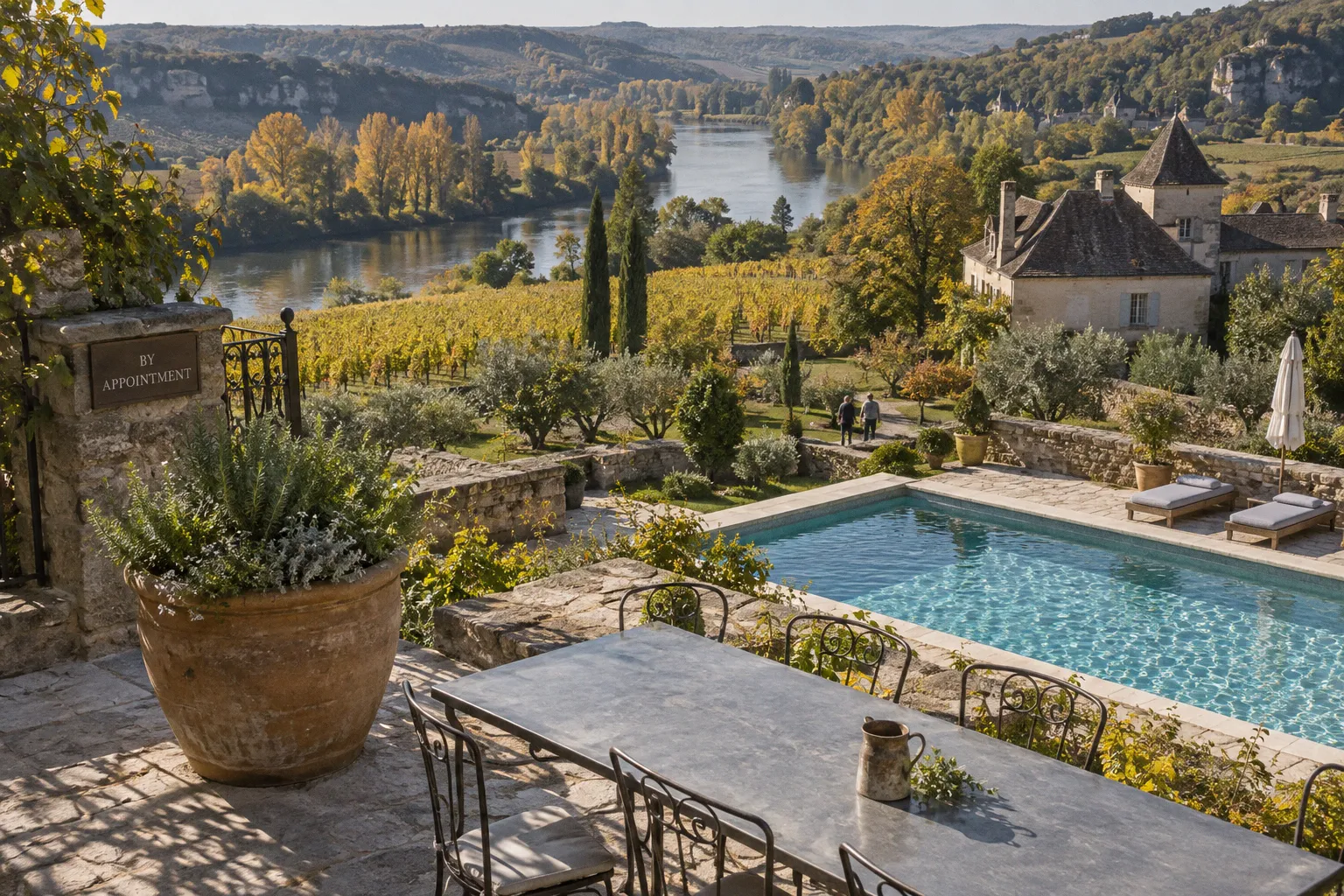
Quite a lot, actually. In the Bergerac and Monbazillac appellations, the default setting for a proper estate visit is reservation-only, and the calendar that decides when you can tour a cellar is set by the harvest, not by your itinerary. Sorting out your vineyard bookings before you arrive is the single most useful thing you can do for the wine half of your holiday.
It's a different rhythm from the Bordeaux grands-châteaux circuit. Here you're dealing with smaller estates, fewer staff, and a hospitality culture that quietly expects you to ring ahead. The walk-in experience still exists — but it lives in specific places, at specific times, and only for specific kinds of tasting. Knowing where that line sits is what turns a hopeful drive along the country lanes into a relaxed afternoon in a barrel room rather than a wasted hour outside a locked gate.
The Reality of Walk-ins vs. Scheduled Estate Tours
The first thing to understand is the two-track nature of Dordogne wine tasting. There is the casual, on-the-spot tasting — the kind where you walk into a tasting room, pour yourself a few glasses from open bottles, pay a small fee, and leave. Then there is the formal estate experience: a guided walk through the vines, a visit to the chai to see the tanks and barrels, a structured tasting flight explained by the winemaker or a trained guide. The first kind is often available without an appointment. The second kind almost never is.
A useful illustration. Château Bélingard in Monbazillac offers free self-guided smartphone tours during opening hours — you simply arrive, pick up a route on your phone, and wander the estate at your own pace. That is a different experience from their scheduled guided tours, which run at 3pm in English from July through September and require a prior appointment plus a per-adult fee. The crucial distinction is between "the door is open" and "someone is expecting you." The former is a retail experience; the latter is a hospitality experience, and hospitality in a working vineyard requires planning.
Most small family-owned châteaux in the Bergerac wine area, including estates like Château Laulerie in Montravel, operate exclusively by appointment for estate tours and formal tastings. A working vineyard is also someone's workplace, with active equipment, fermentation tanks in use, and a small team trying to keep up with orders. Showing up unannounced isn't a social faux pas exactly, but it does put the winemaker in the awkward position of either turning you away or abandoning whatever they were doing in the chai.
A working vineyard is a private workplace first and a tourist destination second. The booking form is the polite handshake that lets you in.
The other practical reality is that "open" and "open for tours" are not the same thing. Several châteaux keep their tasting shop and shop counter accessible to walk-ins while keeping their vineyard walks and cellar visits strictly appointment-based. If a particular estate matters to you, look at the website carefully: there is usually a clear separation between the boutique (drop-in welcome) and the visite de chai or dégustation commentée (guided, by reservation only). When in doubt, ring.
Navigating Seasonal Constraints: Harvest and Peak Summer Demands
The Dordogne wine region has three distinct booking windows, and your approach should change for each.
Late spring through early summer (roughly April to June) is the gentlest. The vines are growing, the cellars are calm, and many estates are happy to fit visitors in with a few days' notice. You won't necessarily need to book weeks ahead, but a 24-to-72-hour call is still wise for guided tours — that's roughly the minimum notice many châteaux ask for set winemaking and cellar visits.
Peak summer (July and August) is the first crunch. English-speaking guides are in heavy demand because that's when most international visitors arrive, and many estates deliberately limit guided tour slots to keep the team from being stretched. In harvest season (September to October), the French call this les vendanges, the winemakers themselves are working — cellars are at capacity with incoming fruit, fermentation tanks are running, and there is simply no staff to spare for unscheduled tours. During these months, wineries in Bergerac and Monbazillac heavily restrict unannounced walk-ins and mandate advance online or phone bookings for any guided cellar experience. You may also find that the format of the visit shifts at harvest time: some estates pause their standard vineyard walks entirely and offer shortened "harvest experiences" instead, focused on the cellar and the incoming fruit.
November through March is the low season, and paradoxically it is also when many small estates operate exclusively by appointment — sometimes with reduced hours, sometimes closed entirely for parts of January and February. Don't assume the off-season means easier access. It often means shorter opening windows and a smaller team on duty.
If you're planning a tasting trip that overlaps with the harvest window, think of it like booking a small hotel during a wedding weekend: early reservation isn't optional, it's the price of entry. A quick seasonal map:
| Season | Walk-in feasibility | Recommended lead time |
|---|---|---|
| Late spring (April–June) | Often possible for tastings; less so for guided tours | 24–72 hours |
| Peak summer (July–August) | Limited; English guides book out early | 1–4 weeks |
| Harvest (September–October) | Very restricted; winemakers are working | 2–6 weeks |
| Low season (November–March) | Many estates by appointment only; some closed | 1–2 weeks; check winter hours |
A useful sanity check: if your trip falls between mid-September and mid-October, plan to book your top two or three estate visits before you leave home. The remaining day can be left open for a regional hub or a shop drop-in, which brings us to the money question.
Financial Etiquette: Understanding Tour Fees and Cancellation Policies
The second part of the booking equation is money, and this is where a lot of travellers get caught out. Wine tastings in the Dordogne are not always free, and the fee structure changes meaningfully depending on what you're booking.
Standard guided château tours typically run €3 to €12 per adult. Château de la Jaubertie, for instance, prices its guided vineyard tours with tasting starting from €5 per person. Château Bélingard's scheduled English tours sit at the lower end of that range, around €3 to €5 per adult. These fees cover the guided walk plus a flight of several wines, and they aren't really negotiable — they reflect the staff time and the cost of opening bottles that aren't otherwise being sold by the glass.
Food-and-wine pairing experiences sit at a different price point, typically €25 to €35 per person. These usually involve a guided tasting paired with local charcuterie, cheese, or a small plate drawn from the Périgord pantry — sometimes a tourtière of duck, sometimes a slab of Cabécou, sometimes just a beautiful cutting board of local things arranged with care. They're worth budgeting for if you want the full estate experience, but they do require booking — group food-pairing options at places like Château de la Jaubertie are normally arranged in advance.
Then there's the cancellation and payment etiquette, and this is where the difference between booking direct with an estate and booking through a private tour operator really shows. Private operators — companies that run bespoke vineyard visits rather than the châteaux themselves — often have stricter financial terms. Dordogne Vineyard Tours, for example, requires full payment at least three days before the tour date and written cancellation at least 48 hours in advance for a full refund. That's a sensible policy given that they're coordinating multiple estates, but it does mean that if your travel plans are at all fluid you should either book through the château directly (where terms tend to be looser) or accept that you may want trip insurance.
A practical tip: when you call to book, ask for the cancellation policy in writing. Email confirmation is your friend, especially if you're booking a group. Most estates and operators are perfectly reasonable about illness, weather, or travel delays; the policy exists for the no-shows and last-minute cancellations, not to punish genuine changes. And while we're on money: bring a payment card, but a little cash is never wrong in a small estate shop — some of the smaller operations still prefer it, and it's a graceful gesture if you're buying a few bottles at the end of the visit.
Strategic Planning for Private Cellar Visits and Food Pairings
If you want something more curated than a standard group tour — a private cellar walk, a one-on-one with the winemaker, a food pairing built around a specific vintage — you are now firmly in the advance-planning territory. These experiences take the winemaker or sommelier off their regular duties, and they are scheduled deliberately, not opportunistically.
A few practical notes. Most estates offering private experiences have a minimum group size of two — Château Feely, for instance, requires a minimum reservation of two people for its discovery tours and wine-pairing experiences. That's fine for couples or friends travelling together, but if you're a solo traveller, ask specifically whether single bookings are accepted or whether you'll be matched with another party. Some operators welcome solo visitors; others don't, and it would be a shame to find that out the morning you wanted to visit.
English-language tours are not universally available either. Peak summer (July and August) is when most châteaux schedule their English-speaking guides, and those slots fill first. Outside that window, the only available guided tours may be in French, or an interpreter may have to be arranged at additional cost. Don't assume every château will have an English-speaking host on any given day — when you book, specify the language you need, and confirm it in writing.
Private cellar tours also tend to need more lead time than standard visits. Two to four weeks is a comfortable window during shoulder seasons; during peak summer and harvest, expect to plan further ahead. If there's a specific winemaker you'd like to meet, or a particular vintage you want to taste from barrel, mention it at booking. Cellars aren't supermarkets — bottles are pulled, glasses are set, sometimes a special cuvée is decanted for you, and that all takes preparation on the estate's side.
The winemaker's calendar runs on fermentation, not your itinerary. Book the moment you know your travel dates.
Two more practical notes worth knowing. First, dress for the cellar rather than the tasting room. Concrete floors, low storage temperatures, and the occasional puddle near a press mean flat shoes and a layer you can shrug off are wise; the wine flight at the end is usually at ambient temperature. Second, plan your tasting day so the more structured experiences sit early in the trip while your palate is fresh, and the looser visits — the regional hub, the drop-in shop — come later, when you've already learned what you like.
When You Can Skip the Booking
After all this talk of advance reservations, it would be misleading to suggest that every vineyard visit in the Dordogne requires formal booking. There are clear exceptions, and knowing them will save you time and frustration.
The most useful exception is the regional wine hub. Quai Cyrano in Bergerac, the wine tourism centre on the Dordogne river, operates as a walk-in tasting hall where multiple Bergerac and Monbazillac producers pour their wines side by side. It exists specifically for visitors who haven't booked ahead — you arrive, you taste, you buy if you find something you like. It isn't the intimate estate experience, but it is an excellent way to calibrate your palate across the region's appellations in a single afternoon, and then return to specific châteaux you liked for a deeper visit (which you would book ahead).
Boutique tasting rooms attached to winery shops are the second exception. Many châteaux, particularly the larger and more commercial ones, keep their shop and tasting counter open during posted hours without requiring an appointment. What you give up is the guided element: you'll taste what's open on the counter rather than necessarily the premium cuvées, and you won't get the cellar walk or the technical explanation. What you gain is spontaneity. If an estate's website lists "shop open Monday to Saturday, 10am to 5pm" without a booking form, that's usually a signal you can simply turn up.
Free self-guided tours, like the smartphone tour at Château Bélingard, sit in a middle category. You don't need a reservation in the formal sense, but you do need to be there during opening hours and have a charged phone with the right app or website loaded. These are an underrated way to learn about an estate without committing to a scheduled tour, and they don't cost anything beyond whatever you choose to spend at the tasting counter afterwards.
A short way to think about when booking is, and isn't, essential:
- Book ahead (24 hours to several weeks): guided cellar tours, English-language tours, food-and-wine pairings, private winemaker visits, harvest-season visits, and small family estates operating by appointment.
- Usually walk-in friendly: Quai Cyrano and similar regional tasting hubs, larger estates with open shop hours, free self-guided smartphone tours during posted opening times, and drop-in tastings at unlisted boutique producers.
- Always check first: estate-specific holiday closures, particularly around Christmas, the January quiet period, and the May bank holidays — these vary year to year and aren't always published online.
A Dordogne wine tasting trip rewards the traveller who treats it the way they would treat a visit to a small family-run hotel: with a phone call, a little lead time, and a willingness to be flexible about the day. The estates that make this region special are working vineyards, not visitor attractions. The booking form is what lets them do both well — keep the cellar running, keep the team employed, and still find the time to walk a small group through the vines and explain why a particular Monbazillac tastes the way it does on a warm September afternoon.
Make three or four calls or online bookings before you arrive, leave room in the schedule for one spontaneous stop at a regional hub, and you'll have the rhythm of it within a day. The harvest will do what it does; you simply plan around it.