Private chefs in Dordogne gites: is it worth the cost?
The price tag can run across a remarkably wide range. In the same region and under the same broad service label, published offers may sit anywhere from around €30 to nearly €200 per head.
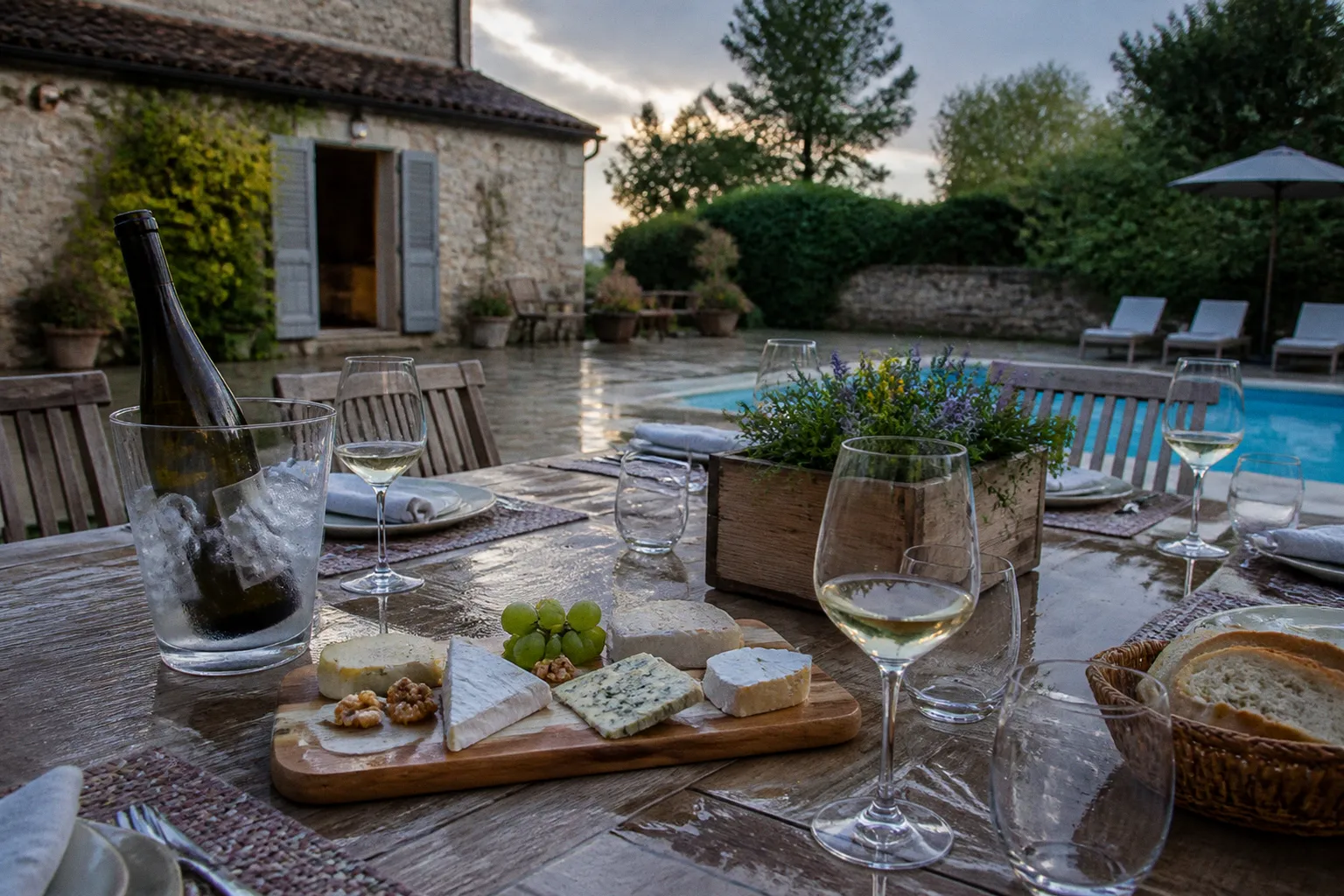
That gap is not simply a matter of choosing between a three-course dinner and a tasting menu. It is a navigation problem most travellers cross blind.
Book a private chef at a Dordogne gîte without unpacking the quote and you usually end up in one of two places: paying for a level of service the group never needed, or under-budgeting for a final bill that grows once travel, drinks, equipment and special requests are added.
The useful question is not just how much a private chef in a Dordogne gîte costs. It is what the number covers, which parts are optional, how the group size changes the calculation, and whether the experience is solving a real problem. A chef is not automatically cheaper than a restaurant. Nor is a restaurant automatically the better value once a large group is trying to leave a rural gîte, organise transport and eat at the same table.
Decoding the price tag: what you actually pay for
A private chef service in the Dordogne can bundle several separate operations into one per-head figure. The base rate may cover menu design around the group’s preferences, grocery purchasing, preparation, cooking on site, service during the meal and kitchen cleanup afterwards. That is a substantial amount of work, and the chef is being paid for more than the minutes spent carrying plates to the table.
The distinction matters because not every quote includes the same operational scope. One chef may price a prepared meal that is delivered and left for guests to serve. Another may arrive hours in advance, cook each course to order, explain the menu, serve the table and leave the kitchen ready for breakfast. Both may be described as private catering. They are not interchangeable services.
Wine is one of the clearest points of separation. It is usually excluded from the food-and-service price. A chef may recommend bottles, arrange a pairing, or source the wine as an additional service, but the cost of the bottles and any associated handling should be treated as a separate line until the booking says otherwise. Some gîte owners already have suitable glasses on site. Some groups bring their own bottles from a Bergerac wine shop or local cave. Others ask the chef to create a pairing, which can add a further charge.
Do not read a high-band menu as proof that wine is included. A tasting menu and a wine pairing are two different products. The same applies to tableware: plates, serving pieces, glassware and linen may be available at the property, may be rented, or may be supplied by the chef under a separate arrangement.
The pricing itself is better understood as a set of indicative bands than as a fixed Dordogne tariff.
The entry range, roughly €30 to €100 per person in some listings, generally describes a straightforward menu built around regional ingredients. That might mean a starter, main course, cheese and dessert, with the emphasis on reliable preparation rather than a long procession of small plates. Périgord staples such as duck, walnuts, cabécou and seasonal fruit can make a satisfying dinner without turning the kitchen into a theatre.
The middle range, roughly €78 to €143 per person in platform listings, is where the service usually becomes more elaborate. Menus may include several courses, more involved preparation and a stronger emphasis on sourcing and presentation. Duck confit, local veal or beef, mushrooms, regional cheeses and a composed dessert can all sit within this territory. The important difference is not one prestige ingredient. It is the additional preparation and service built around the meal.
The upper range, which can approach €194 per person for some four-course or tasting-style menus, is where premium ingredients, more technical cooking and a chef’s restaurant background may become part of the offer. Black truffle, foie gras, carefully sourced fish or a highly structured sequence of courses can move a quotation upwards. Wine pairing, if requested, should still be checked separately rather than assumed to be part of the top band.
| Service element | Entry range | Middle range | Upper range |
|---|---|---|---|
| Menu structure | Three or four courses, regional cooking | Four or five courses, more extensive preparation | Tasting-style menu or premium multi-course service |
| Ingredients | Seasonal and locally familiar | Regional sourcing with more costly or labour-intensive elements | Premium ingredients where specified |
| Wine | Normally excluded | Pairing may be available as an add-on | Pairing may be arranged separately; confirm the charge |
| Table service | May be limited or straightforward | Full service is more likely | Full table service and detailed presentation may be included |
| Chef profile | Local caterer or experienced independent chef | Established private-chef service or platform listing | Restaurant-trained chef or specialist with a stronger premium position |
| Cleanup | Confirm whether included | Often included, but not automatic | Usually specified in the service agreement |
The word “chef” also needs careful handling. A chef with restaurant experience may offer a highly polished service, but that does not automatically mean the menu is better suited to a holiday house. A gîte kitchen has different constraints from a professional brigade kitchen. The best choice is the person whose menu, equipment requirements and working method fit the property.
A wide price spread does not tell you which quote is good value. It tells you to find out what each chef is actually agreeing to do.
Before comparing two prices, put them on the same footing. Ask whether the quote includes:
- Menu planning and a consultation before arrival.
- Ingredient purchasing and the cost of the ingredients themselves.
- Travel to the gîte.
- Preparation on site or delivery from elsewhere.
- Table service for the whole meal.
- Wine sourcing or pairing.
- Extra equipment, tableware or glassware.
- Kitchen cleanup and removal of rubbish.
- VAT or other charges shown in the booking terms.
- A minimum number of guests or a minimum booking fee.
A lower figure can be perfectly legitimate if it describes a simpler service. It becomes misleading only when the missing work appears at the end of the booking process.
The economics of group dining: when a chef beats a restaurant
The break-even calculation is where the decision becomes practical. A private chef charging around €90 per head for ten guests produces a food-and-service bill of about €900 before any extras that the quotation excludes. That is a useful benchmark for comparison, but it is not a universal final price.
The restaurant alternative has its own moving parts. A table for ten at a well-regarded address in Sarlat or Bergerac may look reasonable when judged by the menu price alone. The group then has to account for transport from a rural gîte, the cost and availability of taxis, drinks, bottled water and any extras ordered at the table. France’s displayed restaurant prices already include the service charge — service compris is part of the advertised price, not a second fee that rises simply because the restaurant has Michelin recognition. A starred or highly regarded address may still be expensive, but the reason is the menu, the ingredients, the setting and the restaurant’s overall pricing, not a hidden service charge added after guests sit down.
The private chef has a different advantage: the group stays where it is. There is no drive back after wine, no attempt to coordinate several cars on a dark rural road and no need to make a large table behave like a restaurant booking. For a group sharing a luxury gîte, that convenience has a value even when the chef is not the cheapest way to feed everyone.
For five to ten guests, the comparison often becomes credible. A private dinner can be competitive with a restaurant meal once transport and the practical cost of moving a group are considered. The result depends on the menu and the restaurant, but the larger the party, the more meaningful the fixed elements become. One chef, one kitchen and one table can be easier to organise than several vehicles and a restaurant reservation that may not offer the same privacy.
For two or three guests, the calculation usually moves in the other direction. A chef’s minimum fee, preparation time and travel are spread across very few people. The result may be substantially more expensive per head than eating at a local bistro. That does not make the chef a poor choice. It means the purchase is about intimacy, convenience and a menu built around the guests rather than raw economy.
Groups above ten introduce a different constraint. The per-person figure may become more attractive, but the gîte kitchen starts to matter more. A twelve-person tasting menu can put pressure on a single domestic oven, a small refrigerator and limited counter space. The chef may respond with a simplified menu, extra equipment, a different cooking timetable or a flat day rate rather than continuing to scale the per-head price.
| Group size | Where the private chef tends to make sense | What can undermine the value |
|---|---|---|
| Two or three guests | Privacy, dietary control and a special occasion | Minimum fees and travel are concentrated among very few diners |
| Four to six guests | A strong balance between shared cost and a more personal evening | A premium menu can still cost more than a local restaurant |
| Seven to ten guests | Transport savings and one coordinated meal improve the comparison | The quote may rise with service complexity or special requests |
| More than ten guests | The gîte becomes a useful private dining room for a large party | Kitchen capacity, timing and equipment become the limiting factors |
There is also a difference between a chef beating a restaurant on price and beating it on friction. A dinner cooked at the gîte may eliminate transfers, waiting for a table, split bills and arguments about who is driving. It may also allow children to eat earlier, guests to use the pool before dinner and the group to continue the evening without disturbing other diners. Those are not accounting tricks. They are part of the product.
At small group sizes, you are usually buying exclusivity. As the table grows, the chef starts to earn the premium through logistics as well as food.
Hidden variables: understanding dynamic pricing and seasonal surcharges
The headline rate is a waypoint, not a destination. The final quotation can change according to timing, location, menu complexity and the amount of work required before and after service. Not every chef uses the same formula, so the safest approach is to treat each modifier as a question rather than assume a standard tariff.
Weekday versus weekend
Independent chefs often have more flexibility on a weekday than on a Saturday evening. A Tuesday booking may therefore attract a different quote from the same menu requested for a busy weekend. This is a matter of availability and demand, not a rule that applies uniformly across the region.
The difference can also be indirect. A chef who is already nearby for another booking may be able to accept a weekday dinner with less travel. A Saturday booking may require the chef to protect the whole evening and turn down another enquiry. Ask whether the quotation reflects a particular date or whether it is the chef’s standard rate.
Peak season
July and August are the obvious pressure points for Dordogne bookings. Christmas, New Year and Easter can also narrow availability, especially for chefs who work with holiday properties and private groups. During these periods, the strongest options may disappear from the calendar long before the guests arrive.
A late enquiry does not necessarily produce a higher price. It may simply produce fewer choices. The remaining chef may be less suited to the gîte, less flexible about the menu or unable to offer the service level the group had in mind. In peak season, booking early protects optionality as much as it protects the rate.
Rural travel
Travel is the least standardised part of the calculation. A gîte near a chef’s usual service area may involve little or no extra charge. A property in a remote valley, or one that is difficult to reach at night, may require additional travel time and expense. Some chefs charge a separate travel fee; others build the cost into the quotation or decline locations beyond a practical radius.
There is no reliable distance rule that can be applied to every gîte near Sarlat, Bergerac or Périgueux. The relevant question is where the chef is based, how long the round trip takes and whether the chef must transport equipment or ingredients. Get the answer in writing. If the property address is still being finalised, send the likely location rather than relying on a town name.
Menu complexity
A four-course menu with one main component is not equivalent to a four-course menu requiring separate versions for vegetarians, children and guests with allergies. Nor is a simple dessert equivalent to a plated dessert assembled in several stages. The number of diners matters, but so does the number of separate preparations.
These variables do not produce a dependable combined percentage. They may change the quote, leave it unchanged, or make a particular chef unavailable. The only useful final figure is the one attached to the exact date, property, guest count and menu brief.
Travel and season do not follow a universal surcharge table. They are part of the individual chef’s quotation, which is why the address and date belong in the first enquiry.
Request an all-in estimate before confirming. It should distinguish the base food-and-service rate from travel, drinks, pairing, equipment hire and any minimum booking requirement. If the chef cannot give a final total because the menu is not yet fixed, ask for a range and the conditions that would move it.
Logistics and expectations: from menu planning to kitchen cleanup
The on-site execution begins before anyone sits down. A competent booking process should establish the menu, guest count, allergies, dietary restrictions, arrival time and kitchen arrangements in advance. The group organiser should not assume that a message sent to the property owner has reached the chef.
Guest preferences need to be communicated early. A single vegetarian in a group of ten may be easy to accommodate if the chef knows before shopping. It can become a serious disruption if the request arrives after ingredients have been bought and the preparation plan is underway. The same applies to allergies: explain the severity clearly, identify cross-contamination concerns and ask whether the chef can safely provide the requested menu.
On the day of service, the chef may arrive several hours before the first course. That time is used for mise en place, cooking, chilling, reheating, sauce preparation and the final organisation of the kitchen. The precise arrival time depends on the menu and the property. Guests should not treat the kitchen as an extension of the living room while the chef is working.
The kitchen needs to be accessible and reasonably clean. Luggage on the counters, a dishwasher full of breakfast plates and food left in the refrigerator can all slow down service. Counter space is often more important than the number of burners. A menu can be designed around a small kitchen, but the chef needs to know the limitation before committing to a sequence of dishes.
Cleanup is another contract line, not a courtesy to be assumed. Many full-service private chef bookings include washing dishes, cleaning pans and leaving the main work surfaces in order. Some simpler catering arrangements do not. If the group wants to wake up to a usable kitchen, that requirement should appear in the written quotation.
Removing cleanup from the service may reduce the quote, but there is no universal saving per head. The value depends on the chef’s normal workflow and the size of the booking. A low-cost delivery service may leave guests with most of the work; a full-service chef may include cleanup because it is already part of the evening’s operation. Compare the scope, not an invented discount.
The kitchen inventory
A standard gîte kitchen may have four burners, one oven, a refrigerator and a small collection of pans. That can be entirely adequate for a carefully planned meal. It may be unsuitable for a long tasting menu requiring several dishes to be held at different temperatures.
Ask the property owner or manager for a current equipment inventory. The chef may need to know:
- Number and type of burners.
- Oven size and whether it works reliably.
- Refrigerator and freezer capacity.
- Availability of sharp knives, pans, trays and serving dishes.
- Counter space for preparation and plating.
- Dishwasher capacity and access to a working sink.
- Outdoor cooking options, if the menu includes a barbecue or plancha.
- Whether extra equipment can be brought to the property.
A portable induction hob, food processor, additional cooling or specialist serving equipment may be useful. Those items can add to the bill or affect the menu. They should not appear as a surprise after the booking has been accepted.
Drinks and tableware
The group should decide who is responsible for drinks. If the chef is not sourcing wine, nominate one person to buy it and establish how much is needed for the menu. Keep bottles at the correct temperature before service and check whether the gîte has suitable glasses. A chef can advise on pairing without supplying the wine, and a restaurant-style menu does not require a formal flight.
The same practical question applies to plates and serving pieces. A holiday rental may have enough crockery for breakfast but not enough matching dishes for a multi-course dinner. Some chefs are comfortable using the property’s everyday tableware; others bring or rent what they need. Confirm this during menu planning.
The kitchen is part of the route to dinner. Confirm the route before you commit the chef to the menu.
Strategic booking: timing your request for the best culinary experience
The booking window determines how much choice the group has. An off-peak enquiry with a flexible date may be possible around two weeks ahead, particularly when the menu is straightforward and the location is within the chef’s usual service area. That should be treated as a practical baseline, not a guarantee.
A Saturday dinner in July needs a different approach. Popular dates can require several months of notice, especially if the group wants a chef with a restaurant background, a particular regional speciality or experience with a larger party. For August, Christmas and New Year, the most in-demand chefs may be committed many months in advance.
The gîte and the chef are linked calendar assets. If the property is already booked, send the exact address and dates as soon as possible. If the property has not yet been chosen, a chef’s availability can be a useful factor in deciding between otherwise similar locations.
| Booking period | Sensible planning approach | What the timing changes |
|---|---|---|
| Weekdays outside peak season | Enquire with a flexible menu and date if possible | More scope to compare chefs and service formats |
| April to June and September to October | Book before arrival rather than leaving it to the last week | Better choice of menus and less pressure on busy dates |
| July and August | Start several months ahead for a preferred Saturday | Availability may narrow before price becomes the main issue |
| Christmas and New Year | Treat the chef as an early part of the holiday planning | Fixed menus, minimum bookings or limited availability may apply |
Shoulder-season travel can improve the experience without requiring the most expensive service. The best result is not necessarily a premium chef at a discounted rate. It may be a chef who has enough time to discuss the property, source ingredients properly and design a menu that works in the available kitchen.
The first enquiry should be concise but complete. Include the gîte location, date, number of diners, preferred mealtime, rough budget, dietary requirements, desired level of service and whether wine is required. Mention children, outdoor dining and any equipment concerns. A chef can price a real brief. A vague request produces a vague answer.
What to settle before paying a deposit
1. The exact service. Establish whether the chef is delivering food, cooking on site, serving the table or handling the entire evening.
2. The menu and substitutions. Confirm what is included and how dietary requirements will be handled. If the final menu is still provisional, ask when it will be fixed.
3. The all-in price. Separate food, labour, travel, wine, pairing, equipment hire and any minimum fee. Confirm whether taxes and other mandatory charges are already shown.
4. The kitchen plan. Share the property’s equipment list and ask whether the proposed menu is realistic for the space.
5. The timing. Agree on the chef’s arrival, the first course, the expected duration and whether guests can use the kitchen during preparation.
6. Cleanup. Put the responsibility in writing. Do not assume that a private chef booking includes a spotless kitchen unless the service description says so.
7. Cancellation terms. Peak dates, ingredient purchases and staff commitments may have different cancellation conditions. Read them before transferring a deposit.
8. Drinks and tableware. Decide who buys wine and water, whether a pairing is being added, and whether the gîte’s glasses and plates are adequate.
A single point of contact keeps the booking functional. Large groups generate conflicting preferences quickly: one person wants duck, another is avoiding meat, someone else has an allergy and the host has promised an early dinner for the children. One organiser should collect those details and send a settled brief to the chef.
Final position
A private chef at a Dordogne gîte pays off when the service matches the reason for booking it. For a group of five to ten, the cost can compare favourably with a restaurant evening once transport, privacy and the convenience of dining at home are included in the calculation. For two or three guests, it is more often an experience purchase than a way to reduce the food bill. For a large group, the kitchen and the timing may matter more than the headline per-head rate.
The most useful way to assess a private chef Dordogne gîte cost is to stop treating the number as a finished price. Identify the service band, then check the date, location, guest count, menu ambition, drinks, equipment and cleanup. Wine pairing may be available, but it is normally an extra. Travel charges may apply, but their structure is chef- and location-dependent. A final total can only be trusted once those variables are attached to the actual booking.
That is the difference between hiring a chef in Dordogne because the idea sounds luxurious and hiring one because the evening genuinely works. The chef should remove friction, not replace a clear brief with a more expensive mystery.